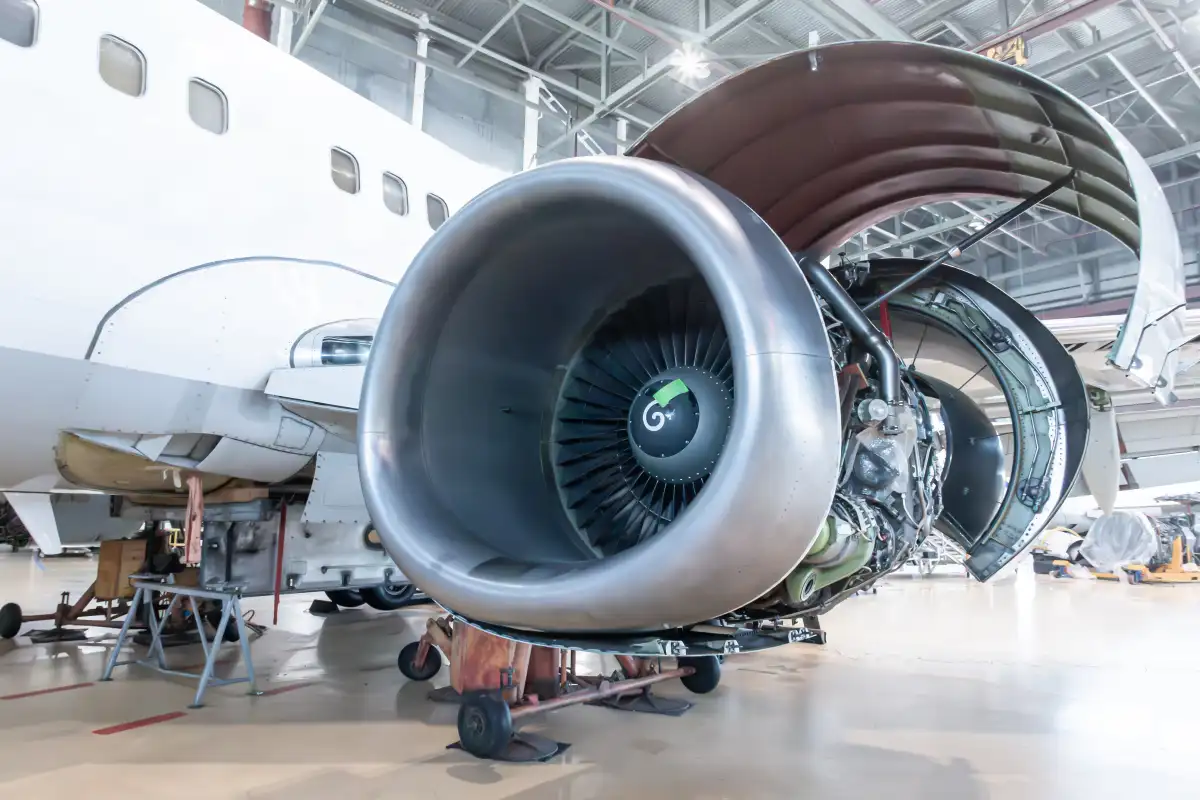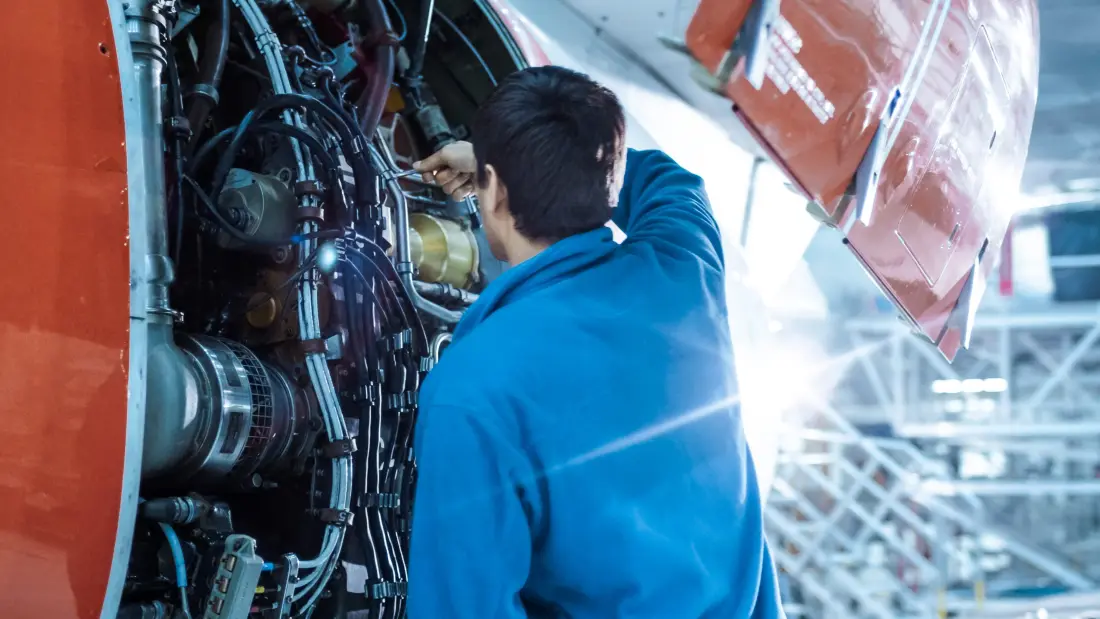

A licensed Aircraft Maintenance Engineer (AME) in Pakistan typically earns between PKR 1.2 million and PKR 1.85 million a year after a two-year, roughly PKR 1.7 million training investment, while a commercial pilot's entry-level pay of PKR 180,000 to 350,000 a month sits on top of a much larger PKR 12.5 million to 21.5 million investment in flight training and a type rating. On pure earning ceiling, an experienced international captain out-earns a senior AME several times over, but the AME path breaks even far faster and carries a fraction of the financial risk.
Both careers keep an aircraft in the sky, one from the cockpit and one from the hangar, and both are short-staffed in Pakistan right now. This guide compares the real 2026 numbers for aircraft maintenance engineers and commercial pilots in Pakistan: entry requirements, training duration, total training cost, salary at every career stage, lifestyle, job security, and how long each path takes to pay for itself. Where useful, it draws on Aviation Training Hub's (ATH) own AME program as a worked example of how the maintenance-engineering path plays out in practice.
What Does a Commercial Pilot Do in Pakistan?
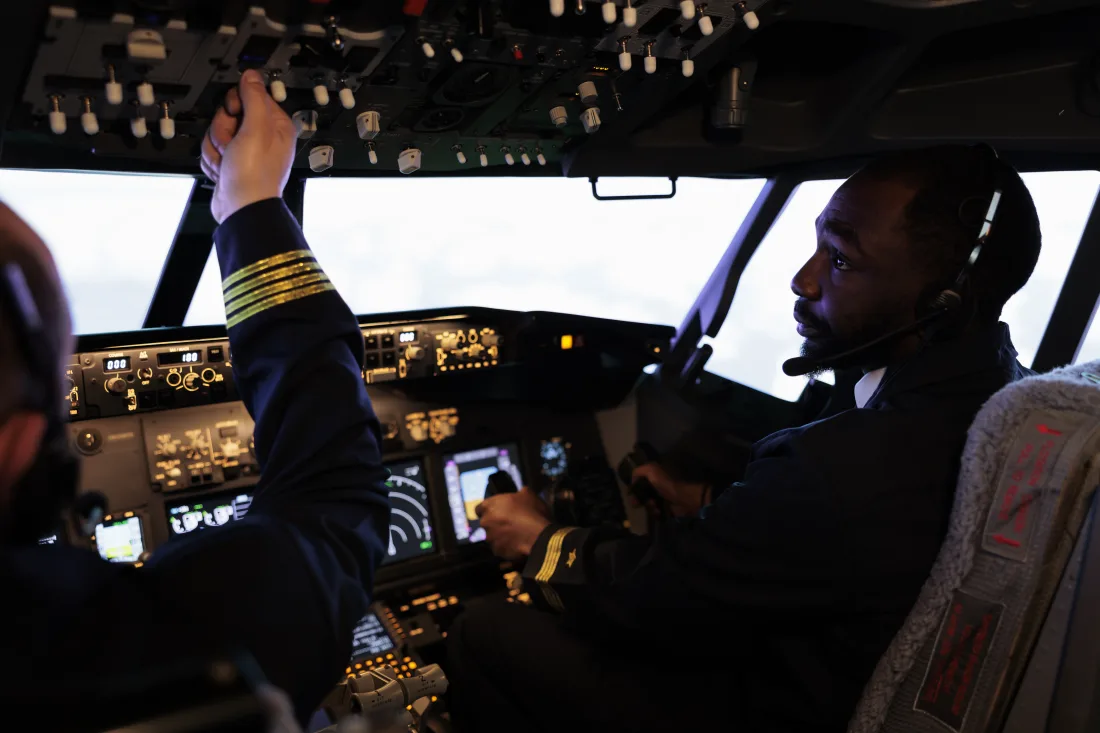
A commercial pilot is legally responsible for safely operating an aircraft from departure to arrival, covering pre-flight planning, in-flight decision-making, and every emergency procedure in between. Pilots in Pakistan operate under Pakistan Civil Aviation Authority (PCAA) regulations and each airline's own standard operating procedures (SOPs).
- Pre-flight planning: weather briefings, route analysis, fuel calculations, and weight and balance checks before every departure.
- Aircraft operation: executing takeoffs, cruise, approach, and landing in line with PCAA rules and airline SOPs.
- Air Traffic Control (ATC) communication: coordinating with controllers through every phase of flight.
- In-flight decision-making: managing systems, fuel, and unplanned events such as weather diversions or technical faults.
- Crew coordination: working with the co-pilot and cabin crew to keep the flight safe and on schedule.
What Does an Aircraft Maintenance Engineer Do in Pakistan?
An Aircraft Maintenance Engineer is a licensed professional who inspects, repairs, and certifies aircraft as airworthy before every flight, and no aircraft legally departs a Pakistani airport without an AME's sign-off. The role combines mechanical, electrical, and avionics expertise with direct legal responsibility for the aircraft's safety.
- Scheduled and unscheduled inspections of airframes, engines, and systems between flights and during heavier maintenance checks.
- Diagnosing and rectifying defects across mechanical, hydraulic, electrical, and avionics systems.
- Issuing a Certificate of Release to Service (CRS), the legal document confirming an aircraft is fit to fly.
- Maintaining compliance records against the manufacturer's maintenance schedule and PCAA/EASA airworthiness directives.
How Do You Become a Commercial Pilot in Pakistan?
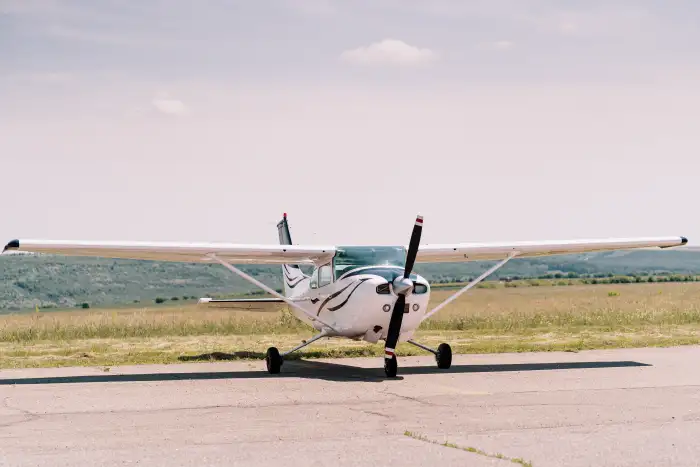
Becoming a commercial pilot in Pakistan means clearing a PCAA-regulated CPL(A)/IR (Commercial Pilot License with Instrument Rating) programme built on a minimum of 180 flying hours and 500 hours of ground theory, followed by a type rating on the specific aircraft an airline flies.
- Step 1: Meet the entry requirements. Applicants must be at least 18 years old, hold an Intermediate (10+2 equivalent) qualification with Physics and Mathematics, and be able to read, write, and speak English confidently.
- Step 2: Pass the PCAA Class 1 Medical. Certification comes from Pakistan's Civil Aviation Medical Board (CAMB); most schools also require a Class 2 Medical before flight training begins.
- Step 3: Complete ground school. A CPL(A)/IR theoretical knowledge course runs to at least 500 hours of instruction, covering navigation, meteorology, air law, aircraft technical knowledge, and flight performance and planning, typically over about six months.
- Step 4: Log the required flying hours. The flying portion totals a minimum of 180 hours, including at least 80 hours of dual instruction, 70 hours as pilot-in-command, 50 hours of cross-country flying, 5 hours at night, and 100 hours of instrument time.
- Step 5: Clear the CPL and IR skill tests. Once flying and theory requirements are met, candidates sit a practical skill test for both the Commercial Pilot License and the Instrument Rating.
- Step 6: Complete a type rating. Before an airline will hire a pilot to fly a specific aircraft (an Airbus A320 or Boeing 737, for example), the candidate must complete a type rating on that airframe, usually at a dedicated training centre.
- Step 7: Apply for airline positions. Airlines typically hire ab-initio cadets into structured programmes or hire type-rated first officers directly; some, like Airblue in 2026, specifically recruit A320-rated pilots with 1,000-plus flight hours.
The PCAA allows up to two years to finish the CPL/IR course, but dedicated students at established flying clubs have completed it in 9 to 18 months.
How Do You Become an AME in Pakistan?
Becoming a licensed AME in Pakistan follows a defined sequence built on a PCAA and/or EASA Part-147 approved institute, foundational and specialised coursework, progressive module exams, and mandatory on-the-job training (OJT).
- Step 1: Meet the entry requirements. A Matric certificate with at least 50% marks in Mathematics and Physics, or an FSc (Pre-Engineering or Pre-Medical) qualification at the same 50% threshold.
- Step 2: Choose an approved institute. Verify PCAA and/or EASA Part-147 approval directly, and confirm the institute runs in-house EASA module exams rather than requiring travel abroad.
- Step 3: Complete foundational modules (Year 1). Mathematics, Physics, Electrical and Electronic Fundamentals, Digital Techniques, Materials and Hardware, Basic Aerodynamics, and Human Factors.
- Step 4: Complete specialised modules (Year 2). Maintenance Practices, Aviation Legislation, Aeroplane Aerodynamics, Gas Turbines, Propulsion, and avionics systems, mapped to Part-66 B1/B2 category requirements.
- Step 5: Sit EASA/PCAA module exams progressively. The full pathway involves 16 module exams, sat one by one as each module is completed, at roughly €139 per exam under the EASA structure most Pakistani institutes follow.
- Step 6: Complete on-the-job training (OJT). Practical hours on live aircraft with a partner MRO, airline, or maintenance organisation, a mandatory step before license issuance.
- Step 7: Obtain the license. Apply for a PCAA Aircraft Maintenance License (AML) in category B1, B2, or both, positioning the graduate for a parallel EASA Part-66 license where the institute offers it.
For a full walkthrough of this path, see ATH's step-by-step AME guide and the PCAA licensing requirements breakdown.
How Much Does Pilot Training Cost Compared to AME Training in Pakistan?
Pilot training in Pakistan costs roughly seven to twelve times more than AME training once a type rating is included, because flying hours, aircraft rental, and type-specific simulator time are priced far higher than classroom-based maintenance modules. A commercial pilot needs somewhere between PKR 12.5 million and PKR 21.5 million to become airline-ready, while a licensed AME needs roughly PKR 1.7 million across the full two-year programme.
| Cost Component | Commercial Pilot (CPL/IR + Type Rating) | Aircraft Maintenance Engineer (2-Year Programme) |
|---|---|---|
| Core training fees | PKR 5.7 million–9 million (ground school, aircraft rental, 180+ flying hours) | PKR 990,000 (admission fee plus 6 semester fees) |
| Licensing exam fees | Included in most CPL/IR course fees | ~PKR 711,000 (16 EASA module exams at €139 each) |
| Type rating / OJT | PKR 6.9 million–12.5 million (A320/B737 type rating, $25,000–$45,000 at current exchange rates) | From PKR 8,000 (on-the-job training, varies by partner) |
| Approximate total | PKR 12.5 million–21.5 million | ~PKR 1.7 million |
These figures come from Karachi Aero Club's published CPL/IR fee schedule and current type-rating market rates converted at the August 2026 PKR/USD rate of roughly 277.6. Actual costs vary by institute, aircraft type, and whether a cadet programme subsidises part of the type rating, but the gap between the two career paths stays wide across every provider.
How Much Do Pilots and AMEs Earn in Pakistan?
Entry-level AMEs in Karachi earn roughly PKR 100,000 a month, while entry-level airline pilots earn between PKR 180,000 and 350,000 a month, and the gap widens sharply at the senior end, where international captains can out-earn senior AMEs by ten times or more.
| Career Stage | Commercial Pilot (Monthly, PKR) | Aircraft Maintenance Engineer (Monthly, PKR) |
|---|---|---|
| Entry level | 180,000–350,000 | ~100,000 (PKR 1.2 million/year) |
| Mid-career | 350,000–900,000 (Junior to Senior First Officer) | ~135,000 (PKR 1.6 million/year, median) |
| Senior level | 900,000–1.4 million (domestic Captain) | ~154,000 (PKR 1.85 million/year, 8+ years) |
| Top of scale | 1.5 million–2.8 million+ (international/wide-body Captain) | Chief Engineer/Quality Manager roles trend higher but are not separately benchmarked |
These pilot figures reflect Pakistan-specific compensation research; note that broader benchmarking data from ERI's Airline Pilot Captain salary data for Pakistan puts the average captain salary closer to PKR 3.7 million a year (about PKR 310,000 a month), with a typical range of PKR 2.5 million to 4.5 million a year. Pilot pay varies enormously by airline, aircraft type, route network, and seniority, so treat any single number as a range, not a guarantee. AME salary data comes from SalaryExpert's July 2026 Karachi compensation data and reflects Karachi specifically; Lahore and Islamabad salaries for both roles tend to run somewhat lower, while Gulf-based MRO and airline roles typically pay more once a licensed professional has a few years of experience.
Which Career Pays Back Its Training Cost Faster?
The AME path pays back its training investment in roughly a year and a half of entry-level salary, while the pilot path takes an estimated five to eight years, assuming continuous employment from the day training ends. This is the single most important number missing from most career comparisons, because a high salary ceiling means little if the debt behind it takes a decade to clear.
| Metric | Commercial Pilot | Aircraft Maintenance Engineer |
|---|---|---|
| Approximate total training investment | PKR 12.5 million–21.5 million | ~PKR 1.7 million |
| Approximate entry-level annual salary | PKR 2.16 million–4.2 million | ~PKR 1.2 million |
| Estimated years to break even | ~5–8 years (from first airline job) | ~1.4 years |
| Realistic long-term earning ceiling | Very high (senior international Captain) | Moderate to high (Chief Engineer / MRO leadership) |
This breakeven estimate assumes a pilot moves straight into a paid first officer role after the type rating, which is not guaranteed. Industry commentary on the equivalent Indian market notes that new pilots can wait one to three years for a first airline placement, and every month of that wait extends the payback period with no income offsetting the sunk training cost. AMEs face a shorter and less financially punishing wait, since OJT placements are built into the licensing process itself rather than sought afterward.

How Do Pilot and AME Lifestyles Compare?
Pilots work irregular rosters built around flight schedules, while AMEs work fixed shifts and go home after every shift, making the AME lifestyle considerably more predictable.
Pilot Lifestyle
Pilots live around flight rosters that include early mornings, late nights, weekends, and holidays. Domestic pilots may spend two to three nights away from home each week, while international pilots can be away for longer stretches. The trade-off comes with travel perks, layover allowances, and airline benefits, but it demands discipline and adaptability from anyone building a family or routine around it.
AME Lifestyle
AMEs work shift-based schedules at airline hangars, airport maintenance bays, or MRO facilities. The work is physically demanding and includes night shifts, but engineers typically return home after each shift, giving them a more stable routine than pilots and making it easier to maintain family and personal commitments.
What Does Career Growth Look Like in Each Path?
A pilot's career trajectory is seniority-based and centres on aircraft command, while an AME's trajectory branches into technical specialisation, quality assurance, or maintenance leadership.
- Pilot trajectory: Second Officer/Junior First Officer → Senior First Officer → Captain → Training Captain/Check Pilot → Chief Pilot/Fleet Manager. Captaincy typically takes 8 to 12 years, depending on airline growth and fleet expansion, and wide-body or international routes carry the highest pay.
- AME trajectory: Trainee AME → Licensed AME (Line Maintenance) → Base Maintenance Engineer → Quality Inspector → Shift-in-Charge → Chief Engineer/VP Engineering. AMEs can also branch into avionics, composites, engine overhaul, or regulatory and quality-assurance roles with PCAA or international aviation bodies.
Both trajectories benefit from Pakistan's current fleet expansion: more aircraft in service means more command upgrades for pilots and more certifying signatures needed from AMEs.
Is There Strong Job Demand for Pilots and AMEs in Pakistan Right Now?
Job demand for both pilots and AMEs in Pakistan is currently rising faster than the domestic training pipeline can supply qualified graduates, driven by PIA's 2026 privatisation, the country's largest-ever single-year fleet influx, and a global staffing shortage that Boeing projects will run through the mid-2040s.
- PIA's privatisation is accelerating fleet growth. In January 2026, a private consortium led by Arif Habib Corporation took 75% management control of Pakistan International Airlines, with no government "golden share" retained. Under the new ownership's business plan, PIA's fleet is projected to more than double, from 18 operational aircraft to 38 by 2029, with its route network expanding from roughly 30 cities to more than 40.
- 2026 is bringing Pakistan's biggest single-year fleet influx on record. Industry tracking points to more than 25 new aircraft entering Pakistani fleets in 2026 alone, with AirSial, Fly Jinnah, and Airblue all adding aircraft, and Airblue specifically recruiting A320-rated pilots with 1,000-plus flight hours to crew the expansion.
- Global personnel demand is rising for both roles. Boeing's 2026 Pilot and Technician Outlook projects the industry will need 674,000 new pilots and 728,000 new maintenance technicians worldwide through 2045, with South Asia flagged as one of the fastest-growing regions and staffing needs there expected to more than triple.
Every new airframe entering a Pakistani or international fleet needs both a certifying signature and a licensed crew behind it, and neither profession currently has enough licensed graduates to fill that gap, which is exactly the kind of supply-demand imbalance that favours new entrants on both sides of this comparison.
Can You Switch Between Being a Pilot and an AME in Pakistan?
Switching from AME to pilot, or pilot to AME, is technically possible in Pakistan but uncommon, because each license requires starting its own qualification process from the beginning rather than transferring credit between them. An AME who wants to fly commercially still needs the full CPL/IR sequence, flying hours, ground exams, and medical certification, while a pilot cannot obtain an AME license without completing the required Part-66 module exams and OJT hours. Both professionals do carry transferable strengths into the switch, including aviation regulatory knowledge, safety culture, and operational awareness, but neither license substitutes for the other in the eyes of the PCAA.
How Aviation Training Hub Prepares Students for the AME Path
The following reflects Aviation Training Hub's (ATH) own programme structure, not a third-party finding. ATH runs its Aircraft Maintenance Engineering programme across two years and six semesters of four months each, with rolling intakes in January, April, July, September, and November rather than a single annual cycle. Entry requires a Matric or FSc qualification (Pre-Engineering or Pre-Medical accepted) with a minimum of 50% in Mathematics and Physics, the same threshold used industry-wide.
Assessment at ATH is deliberately assignment- and project-based rather than exam-only, so students work through practical tasks that mirror real maintenance scenarios, building applied judgment alongside theoretical knowledge. The programme runs from two campuses, Islamabad and Karachi, and its fee structure breaks down as follows.
| Fee Type | Amount | Details |
|---|---|---|
| Admission Fee | PKR 150,000 | Non-refundable, one-time |
| Semester Fee | PKR 140,000 | Per semester, 6 semesters of 4 months each |
| EASA Exam Fee | €139 per exam | 16 exams total (~€2,224 overall), payable one month before each module exam |
| On-the-Job Training (OJT) | From PKR 8,000 | Depends on partner organisation and scope |
Graduates can progress into a BSc (Hons) Aircraft Engineering Management top-up for those who want to move into leadership or management roles later in their career, extending the AME trajectory toward Chief Engineer or MRO leadership without repeating foundational coursework. Full detail on the fee and duration breakdown is available on ATH's dedicated AME course page.
Which Aviation Career Should You Choose?
The right choice depends on your budget, risk tolerance, and lifestyle preferences, since there is no universally "better" option between flying an aircraft and maintaining one.
Choose a Pilot Career If:
- You are passionate about flying and comfortable with a high-investment, high-reward financial model.
- Your family can support or finance PKR 12.5 million to 21.5 million in training and type-rating costs.
- You thrive in dynamic, high-pressure environments and are comfortable with irregular schedules and time away from home.
- You are physically fit and confident about clearing PCAA Class 1 Medical standards.
- You can absorb a possible one- to three-year wait for a first airline placement without that gap derailing your finances.
Choose an AME Career If:
- You enjoy working with complex mechanical, electrical, and avionics systems.
- You want a stable, ground-based aviation career with predictable growth and a fast financial payback.
- Your training budget is closer to the PKR 1.5 million to 2 million range.
- You prefer a structured, shift-based work schedule that lets you return home after every shift.
- You want to enter the aviation workforce with lower financial risk while the industry is actively short of licensed engineers.
Common Mistakes to Avoid When Choosing Between Pilot and AME
- Focusing only on the salary ceiling. A senior international captain's pay looks impressive next to a senior AME's, but the comparison ignores the years and interest cost required to reach it, and the very real chance of a slow start after training.
- Underestimating the type-rating cost. Many first-time researchers price out CPL training and stop there, missing the PKR 6.9 million-plus type rating that most airlines require before they will even interview a candidate.
- Skipping the institute approval check. Enrolling in either programme before confirming PCAA or EASA approval status can produce a license that is not recognised where the graduate eventually wants to work.
- Ignoring the placement gap. Assuming a licence guarantees immediate employment leads to financial strain; both paths benefit from an institute with a genuine partner network for OJT or cadet placement.
- Treating lifestyle as an afterthought. Irregular rosters suit some people and wear others down; deciding based on salary alone, without weighing years of family time and routine, is a common source of career regret in both professions.
Conclusion
Both the pilot and AME careers offer genuine, in-demand paths in Pakistani aviation in 2026, and Boeing's own 20-year forecast confirms neither profession is close to running out of open roles. The pilot path offers the higher ceiling and the higher risk: a PKR 12.5 million-plus investment, a possible placement wait, and years to break even before the high senior-captain salaries become real income. The AME path offers a faster, lower-risk route into the industry, a training cost that a typical entry-level salary can repay in under two years, and a stable, shift-based routine that still leads to Chief Engineer or MRO leadership roles over time. The right answer depends on your budget, your appetite for risk, and whether you picture yourself in the cockpit or the hangar.
If you are weighing the AME path specifically, look closely at an institute's PCAA/EASA approval, its access to real aircraft for OJT, and its module structure before enrolling anywhere.
Frequently Asked Questions
Common questions about choosing between a pilot and an AME career in Pakistan
A senior international captain earns several times more than a senior AME, with pay reaching PKR 1.5 million to 2.8 million+ a month compared to an AME's PKR 154,000 a month at the senior level. At entry level the gap is smaller: new pilots earn PKR 180,000–350,000 a month versus an AME's ~PKR 100,000 a month, but the pilot figure sits behind a training investment roughly ten times larger.
A full CPL/IR programme costs roughly PKR 5.7 million to 9 million, and a mandatory type rating on an aircraft like the A320 or B737 adds another PKR 6.9 million to 12.5 million, bringing the realistic total to become airline-ready to PKR 12.5 million to 21.5 million.
A two-year AME programme costs approximately PKR 1.7 million in total, including PKR 990,000 in core tuition, roughly PKR 711,000 in EASA module exam fees across 16 exams, and on-the-job training costs starting from PKR 8,000.
The AME path breaks even in roughly 1.4 years of entry-level salary. The pilot path takes an estimated 5 to 8 years, assuming continuous employment starting immediately after the type rating, and longer if there is a gap before the first airline placement.
You need to be at least 18 years old, hold an Intermediate (10+2) qualification with Physics and Mathematics, pass a PCAA Class 1 Medical through the Civil Aviation Medical Board, and demonstrate confident English proficiency.
A Matric or FSc qualification (Pre-Engineering or Pre-Medical accepted) with a minimum of 50% marks in Mathematics and Physics. No prior engineering degree is required to start.
Yes, but each license requires starting its qualification process from scratch. An AME switching to piloting still needs the full CPL/IR sequence, and a pilot switching to maintenance still needs the Part-66 module exams and OJT hours. Neither license transfers credit to the other.
Yes. Boeing's 2026 Pilot and Technician Outlook forecasts 674,000 new pilots and 728,000 new maintenance technicians needed globally through 2045, while Pakistan is adding more than 25 aircraft in 2026 alone and PIA's fleet is projected to grow from 18 to 38 aircraft by 2029 following its January 2026 privatisation.
The AME career offers a more predictable lifestyle. AMEs work fixed shifts and typically return home after each one, while pilots work irregular rosters that can include early mornings, overnight layovers, and several nights away from home each week.