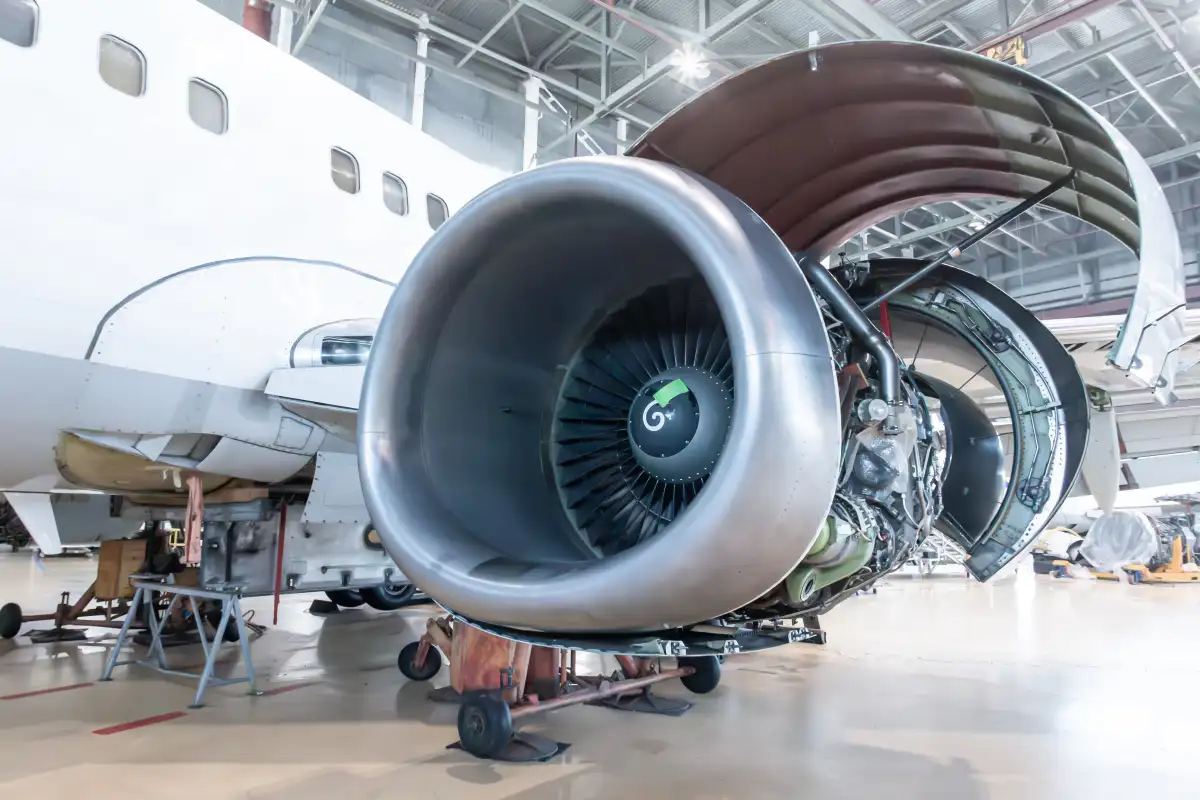
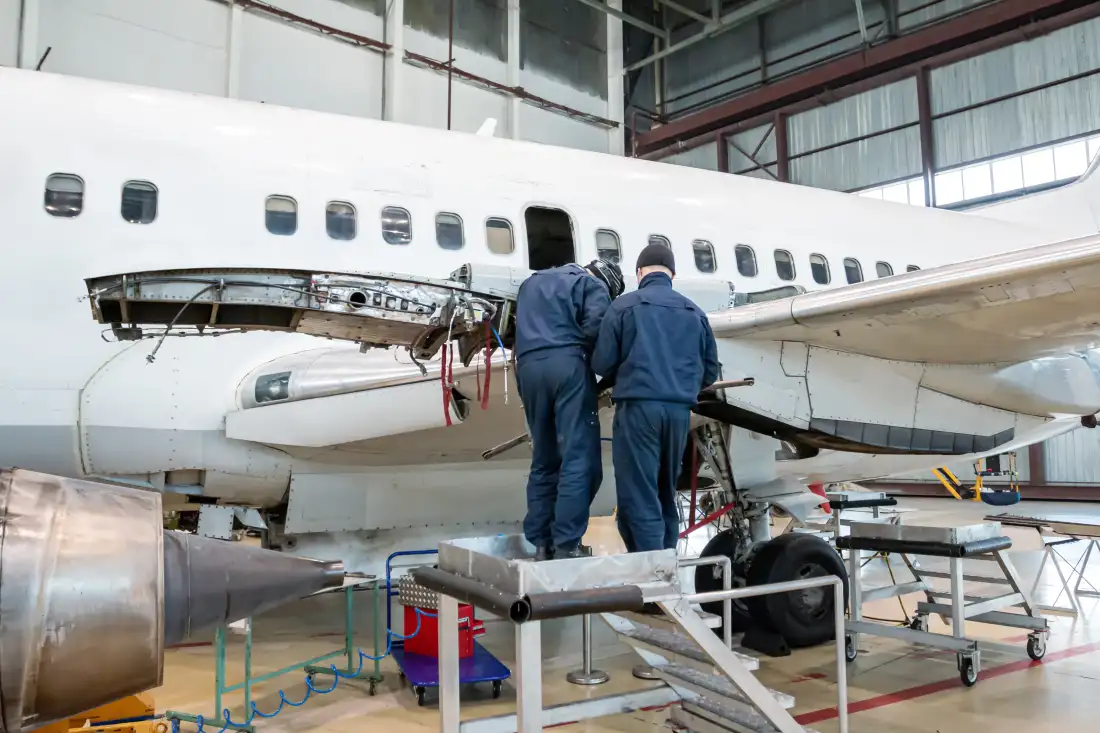
An aircraft type rating for an AME is an endorsement on a Part-66 licence that lets a B1 or B2 engineer certify maintenance on one specific aircraft type, such as the Airbus A320 family. You earn it through Part-147 type training, a theory exam with a 75% minimum pass mark, practical training and, for your first type, on-the-job training.
That is the short version. The detail decides your budget and your timeline: which licence categories need a type rating, how the aircraft groups work, what a course costs, and why the training must fall inside a 3-year window before you apply. Demand is real, too. Boeing's 2026 Pilot and Technician Outlook projects 728,000 new maintenance technicians will be needed globally through 2045, and every one of them who signs a release to service needs the right type on their licence. This guide is part of Aviation Training Hub's wider look at aviation careers in Pakistan, and it focuses on the AME side of type ratings, which most online guides skip. Last reviewed October 2026.
What Is an Aircraft Type Rating for an AME?
An aircraft type rating for an AME is a licence endorsement that proves you were trained and examined on a specific aircraft type, so you may sign for maintenance on it. Under EASA Part-66, a B1 or B2 engineer cannot exercise certification privileges on a type until that type appears on the licence (point 66.A.45). The basic licence says you understand aircraft engineering. The type rating says you understand this aircraft.
A type course normally covers four things:
- Systems, structure and powerplant of the type, taught to the depth of your category (B1 or B2).
- Type-specific procedures, from troubleshooting logic to the maintenance documentation you will use on shift.
- A practical element in a maintenance environment, assessed by the training organisation.
- An examination that you must pass before the rating can be endorsed.
If you are still deciding between categories, our B1 vs B2 licence comparison explains how the two certify different systems, and the type course you take will follow that choice.

How Is an AME Type Rating Different From a Pilot Type Rating?
An AME type rating authorises you to certify maintenance on a type, while a pilot type rating authorises you to fly it. The words match, the jobs do not. In the United States, for example, 14 CFR 61.31 requires a pilot type rating to act as pilot in command of large aircraft (over 12,500 pounds maximum certificated takeoff weight) and turbojet-powered airplanes (eCFR text of 61.31). Nothing in that rule touches the engineer who signs the aircraft back into service.
| Question | AME type rating | Pilot type rating |
|---|---|---|
| What it authorises | Certifying maintenance and release to service on the type | Operating the type as a flight crew member |
| Where it is recorded | Part-66 (EASA) or PCAA maintenance licence | Pilot licence, under flight crew licensing rules |
| Who trains you | A Part-147 maintenance training organisation | An approved flight training organisation |
| Practical element | Maintenance tasks on aircraft or in a maintenance environment | Simulator and flight training |
Most pages that rank for "type rating" explain the pilot version only. If your goal is the hangar rather than the cockpit, our comparison of the AME and pilot career paths in Pakistan sets out how the two jobs differ in pay and entry route.
When Is a Type Rating Required for an AME?
A type rating is required for B1, B2 and C certifying staff on the aircraft they release to service, but not for Category A. Even with the rating on your licence, you still need your employer's certifying staff authorisation before you can sign anything, because Part-145 organisations authorise people individually. The rating is the licence side of that equation, not the whole of it.
| Licence category | Type rating needed? | What it involves |
|---|---|---|
| Category A | No type rating on the licence | Privileges are limited to tasks in your employer's authorisation, backed by task training. |
| Category B1 | Yes, to certify on that type | Theory plus exam, practical plus assessment, and on-the-job training for your first type. |
| Category B2 | Yes, to certify on that type | Same structure as B1, taught to avionics and electrical depth. |
| Category C | Yes, for base maintenance certification | Theory plus examination only. |
The structure above comes from EASA's AMC and GM to Part-66, which describes the Group 1 requirement for each category. Category C holders are usually experienced engineers, so the shorter course reflects what they already know. For the practical side of Category A, B1 and B2 work on the floor, see our guide to line maintenance vs base maintenance.

Which Aircraft Groups Decide What Training You Need?
Part-66 sorts aircraft into groups, and the group decides whether you need an individual type rating or can hold a broader manufacturer or group rating. Most airline engineers work on Group 1, which is where individual type ratings apply.
| Group | What it covers | How ratings work |
|---|---|---|
| Group 1 | Complex motor-powered aircraft, multi-engine helicopters, aeroplanes certified above FL290 and aircraft with fly-by-wire systems | Individual type rating, with OJT for the first aircraft in the licence (sub)category |
| Group 2 | Aircraft not in Group 1: single-turboprop aeroplanes (2a), single-turbine helicopters (2b), single-piston helicopters (2c), electric aeroplanes (2E) | Manufacturer subgroup or full subgroup rating |
| Group 3 | Piston-engine aeroplanes other than Group 1 | Linked to the B1.2 licence |
The same source notes that a licence can carry an individual type rating, a manufacturer (sub)group rating or a full (sub)group rating, at the applicant's choice. A manufacturer subgroup rating needs training or examination on fewer representative aircraft than a full subgroup rating. If you are comparing B1 routes, our explainer on B1.1, B1.3 and Category A sub-categories shows which aircraft each one points you toward.
How Do You Get Your First Aircraft Type Rating?
You get your first type rating by completing theory and practical type training with an approved Part-147 organisation, passing the exam, finishing on-the-job training and applying for the endorsement. Appendix III to Part-66, titled "Aircraft type training and examination standard", sets the rules (read Appendix III).
- Finish your basic knowledge first. Type courses build on the Part-66 modules, so most providers expect you to hold the basic licence or to have passed the relevant modules before you enrol.
- Pick the type and the level. Your target employer usually decides this. You choose B1, B2 or a combined B1&B2 course, and the course price follows that choice.
- Complete the theoretical training. It must be run by a maintenance training organisation approved under Part-147, or by an organisation directly approved by the competent authority.
- Pass the written exam. The minimum pass mark for the theoretical written examination is 75%, and where the exam is split, each part must reach 75%.
- Complete the practical training and assessment. For aeroplanes at or above 30,000 kg MTOM, EASA recommends a practical element of not less than two weeks, unless a shorter duration is justified to the competent authority.
- Complete on-the-job training for your first type. It takes place at an approved maintenance organisation and is assessed by a designated assessor.
- Apply for the endorsement. Theory, practical training and OJT must each have been started and completed within the 3 years preceding your application.
The practical-duration recommendation is stated in EASA's own FAQ on the minimum duration of practical type training. Modules and licence prerequisites are covered in our guide to Part-66 modules by AME category.

What Does an AME Type Rating Cost?
An AME type rating costs a few thousand euros, and the exact figure depends on the type, the level and where you train. As a published example, Magnetic MRO lists its A320 NEO (LEAP-1A and PW1100) B1&B2 course at €2,790 excluding VAT for theory and practical together (course listing).
| Cost item | Example: A320 NEO, B1&B2 | Note |
|---|---|---|
| Theoretical training | €1,600 (33 training days) | Delivered online, with exams in the classroom |
| Practical training | €1,500 (10 training days) | Delivered in the maintenance environment |
| Theory plus practical package | €2,790 | Cheaper than buying the two parts separately |
All figures above exclude VAT. If you train abroad, budget separately for flights, accommodation and visa fees, because none of those sit inside a course price. One provider's price is a data point, not a market average, so request quotes from at least two approved organisations before you commit.
Three things move the price most. A combined B1&B2 course costs more than B1 alone. Some types need longer practical training than others. And a provider with its own aircraft or a hangar partner prices practical training differently from one that rents access. Who pays also varies: airlines and MROs frequently fund the first type for staff they plan to authorise, while engineers who self-fund usually do it to become hireable on a type the local market wants.
How Long Does Aircraft Type Training Take?
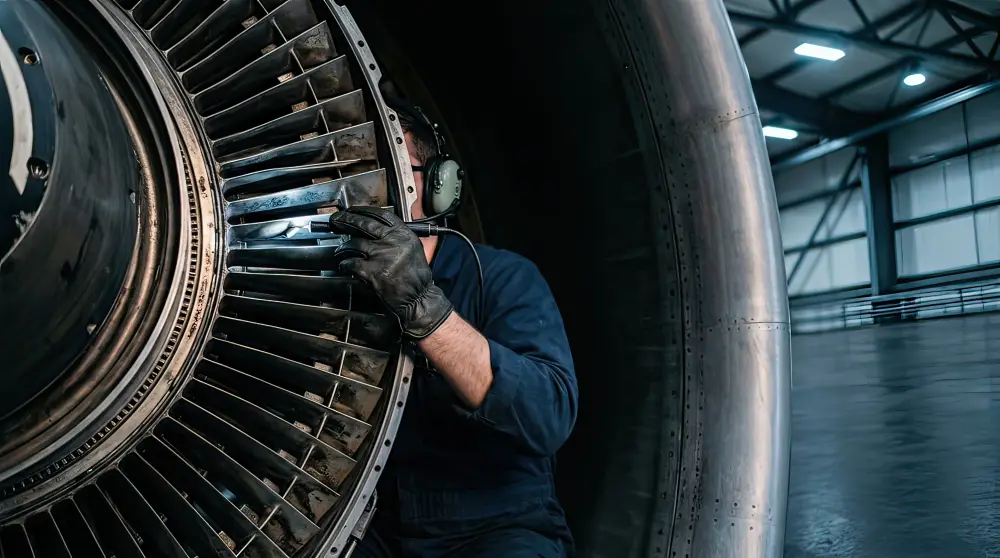
An airliner type course takes several weeks of training days, plus on-the-job training if it is your first type. In the A320 NEO example above, the provider schedules 33 training days of theory and 10 training days of practical, which is 43 training days in total and roughly two working weeks for the practical part.
- Theory: the longest block, because it covers every system chapter on the type. Online delivery with classroom exams is common.
- Practical: EASA recommends not less than two weeks for aeroplanes at or above 30,000 kg MTOM.
- OJT: separate from the course. The maintenance organisation and its assessor set the timing, and it applies to your first type in the licence (sub)category only.
- The 3-year clock: all three parts must fall within the 3 years before you apply, so do not let a finished theory course sit idle.
For the full picture of licence timelines before you reach type training, see how long it takes to get an aircraft maintenance engineering licence.
Which Type Rating Should You Choose First?
Choose the type your target employer operates, at the level that employer needs. A rating nobody near you uses is an expensive line on a licence. Start from job adverts and the fleets listed in our guide to top employers hiring aircraft maintenance engineers in Pakistan, then work backwards to the course.
- Match the fleet. Look at what your shortlisted airlines and MROs actually fly and ask which types they authorise staff on.
- Prefer a type family. One rating can cover several variants. EASA's list treats the A318, A319, A320 and A321 (CFM56) as one rating, so a single course opens the whole family.
- Pick B1, B2 or both on purpose. Mechanical engineers usually follow B1, avionics engineers B2. A combined course costs more but widens your options.
- Remember the first type is the heavy one. It carries the OJT requirement, so it deserves the most careful choice.
Pay is part of the choice too. Our AME salary in Pakistan for 2026 breakdown shows how pay moves with licence and experience, and the AME job outlook for 2026 and beyond covers where demand is heading.
How Do You Add More Types and What Is Differences Training?
You add more types by completing type training for each new rating, and you do not repeat on-the-job training for later types. EASA's guidance states that OJT is only required for the first aircraft rating in the applicable licence (sub)category.
Whether a second type needs a full course depends on how close it is to the first. The A320 to A321 move is not a new rating, because the A318, A319, A320 and A321 on CFM56 engines share one. The A330 (GE CF6) is a separate rating, and EASA's FAQ on adding a similar type from the same manufacturer explains that the knowledge gap is why an A320 rating alone does not endorse it. Ask your Part-147 provider whether a differences course is approved for the pair you want, rather than assuming a full course or assuming a short one.
How Long Does a Type Rating Stay Valid?
A type rating stays on your licence, but you can only use it while you stay current. A Part-66 licence is valid for 5 years, and to exercise certification privileges you need 6 months of maintenance experience in the preceding 2 years (point 66.A.20). The 3-year rule is a different clock: it limits how old your training can be when you apply for the endorsement, not how long the rating lasts afterwards.
| Rule | Number | What it controls |
|---|---|---|
| Licence validity | 5 years | How long the licence document stays valid |
| Recent experience | 6 months in the last 2 years | Whether you may exercise privileges |
| Training window | 3 years before application | How old theory, practical and OJT can be at endorsement |
Where Can Pakistani Engineers Take Type Training?
Pakistani engineers can take type training with organisations approved by the Pakistan Civil Aviation Authority (PCAA) or by EASA under Part-147, and several operate in or near Pakistan. Two published examples show how the approvals work.
- PIA Training Centre (PTC) Examination Unit: describes itself as a PCAA and ISO 9001 approved examination centre. It says it won the first PCAA ANO-147 approval in Pakistan to conduct modular examinations in 2014, and lists "Type Training Examinations for B1 and B2 Trade" among its examinations (PTC examination unit page).
- AVIET: announced in July 2026 that its PCAA Maintenance Training and Examination Organization approval (PCAA.147.513) was renewed through June 2027, alongside an existing EASA Part-147 approval (AVIET approval announcement).
Approval is never blanket. Ask any provider for the list of types and levels its approval covers, and confirm that your chosen authority will endorse certificates from that provider. If you hold or plan to hold both PCAA and EASA licences, our guides on PCAA AME licence requirements and on whether a Pakistani AME licence can convert to EASA or FAA cover how the two systems relate.

How Aviation Training Hub Prepares You for Your First Type Course
This section describes Aviation Training Hub's (ATH) own programme, not a third-party finding. ATH does not run aircraft type courses. Its Aircraft Maintenance Engineering programme is a two-year, six-semester route built around the basic Part-66 modules, 16 EASA module exams at roughly €139 each, and on-the-job training. The type course comes after that, with an approved Part-147 provider.
What ATH's programme gives you is the foundation a type course assumes. Aeroplane aerodynamics, structures and systems (M11), Propulsion (M14) and Gas Turbines (M15) are the modules whose content reappears in every airliner type course, so students who have worked through them tend to meet type-specific material as a deeper layer rather than a new subject. That is the design intention, not a measured result, and ATH does not publish type-course pass rates. OJT with partner organisations is where students first work around live aircraft.
Costs for the basic programme are on the official fee structure page. Graduates who later want a management track can continue to the BSc (Hons) Aircraft Engineering Management top-up.
What Mistakes Do Engineers Make With Type Ratings?
- Buying a type before a job needs it. A rating without an employer who authorises you on it earns nothing until one appears.
- Treating the rating as authorisation. The licence endorsement and the employer's certifying staff authorisation are two separate things.
- Letting the 3-year window lapse. If theory finishes early and the practical slips, you may have to repeat parts of the training before you can apply.
- Skipping the approval check. A provider can be approved for some types and not others, so ask for the scope in writing.
- Ignoring the level. A B1 course will not give you B2 privileges, and the reverse is also true.
Conclusion
An aircraft type rating for an AME turns a basic Part-66 licence into permission to certify a specific aircraft. B1, B2 and C engineers need it, Category A does not, and the route runs through Part-147 theory, a 75% exam, practical training and OJT on your first type. Plan the cost around a published example such as €2,790 for an A320 NEO B1&B2 course, plan the time around roughly 43 training days plus OJT, and plan the paperwork around the 3-year window.
If you are still earning your basic licence, get that foundation right first, because every type course builds on it. A short conversation about your route can save months of guesswork.
Frequently Asked Questions
Common questions about the aircraft type rating for AME
It is an endorsement on a Part-66 licence that lets a B1 or B2 engineer certify maintenance on one specific aircraft type. You earn it through Part-147 type training, a theory exam, practical training and, for your first type, on-the-job training.
No. Category A has no type rating on the licence and works under the employer's task-based authorisation. B1, B2 and C engineers need the type rating to certify on that aircraft, plus their employer's certifying staff authorisation.
It depends on the type, level and provider. One published example, an A320 NEO B1&B2 course at Magnetic MRO, is €2,790 excluding VAT for theory and practical. Travel, accommodation and visas are extra if you train abroad.
In the A320 NEO example it is 33 training days of theory and 10 of practical, so 43 in total. EASA recommends at least two weeks of practical for aeroplanes at or above 30,000 kg MTOM. On-the-job training for your first type is separate.
Appendix III to Part-66 sets a minimum pass mark of 75% for the theoretical written examination. If the exam is split into parts, each part must be passed with at least 75%.
The rating stays on the licence, but you must stay current. A Part-66 licence is valid for 5 years, and you need 6 months of maintenance experience in the preceding 2 years to exercise privileges.
An AME type rating lets you certify maintenance on a type. A pilot type rating lets you fly it. They sit on different licences, are taught by different approved organisations and carry different legal responsibilities.
Choose the type your target employer operates, at the level (B1, B2 or both) it needs. A type family helps: one EASA rating covers the A318, A319, A320 and A321 on CFM56 engines. Your first type also carries the OJT requirement.
Yes, through organisations approved by the PCAA or under EASA Part-147. The PIA Training Centre examination unit lists type examinations for B1 and B2, and AVIET holds PCAA and EASA Part-147 approvals. Always check each provider's approved scope.