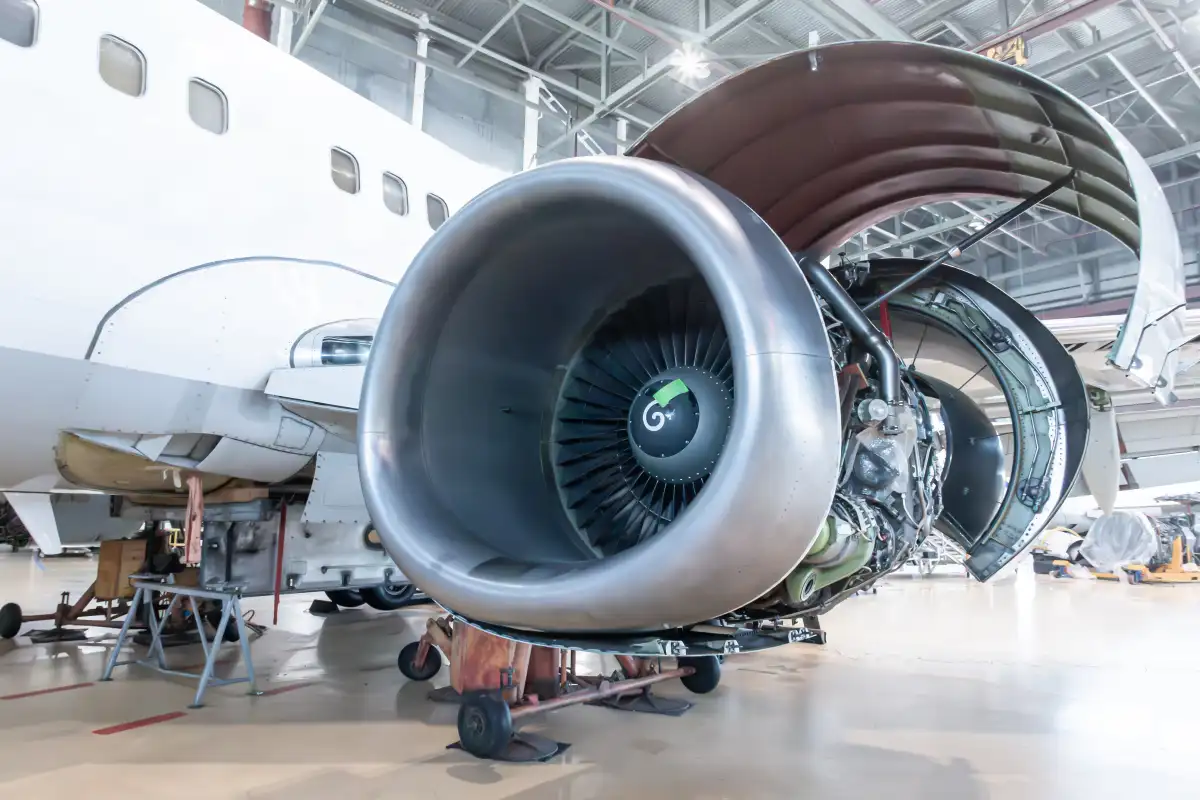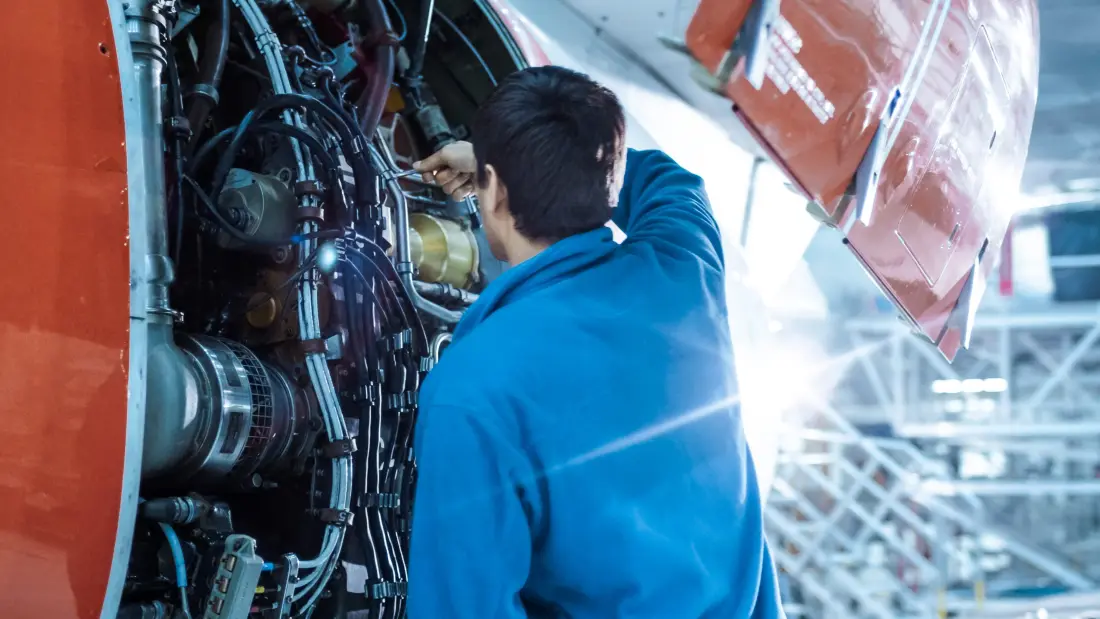
The job outlook for Aircraft Maintenance Engineers (AMEs) in 2026 and beyond is strongly positive. Boeing's 2026 Pilot and Technician Outlook projects a global need for 728,000 new maintenance technicians through 2045, including 48,000 in South Asia, while Pakistan's own fleet is expanding fast under PIA's 2025 privatization and new private-carrier orders.
This isn't a one-line headline stat. It's a hiring picture built from four separate forces moving at once: a retiring global workforce, fast fleet growth in South and Southeast Asia, a newly privatized national carrier rebuilding from 19 aircraft toward 64, and a Gulf MRO market that already absorbs a steady stream of PCAA and EASA-licensed engineers trained in Pakistan. This guide walks through what the data actually says, where the demand sits by region and specialization, what AMEs earn, and how Aviation Training Hub's (ATH) Aircraft Maintenance Engineering programme is structured around exactly this hiring window.
What Is the Job Outlook for Aircraft Maintenance Engineers in 2026?
The job outlook for Aircraft Maintenance Engineers in 2026 is one of sustained, multi-year hiring demand rather than a short-term spike. Three separate demand drivers are stacking on top of each other at the same time, which is unusual and worth naming directly rather than treating as one generic "shortage" story.
- A global retirement wave. About two-thirds of the 728,000 new technician positions Boeing projects through 2045 exist to replace engineers leaving the workforce, not to staff brand-new roles, meaning the openings are already locked in regardless of how fast airlines grow.
- Regional fleet growth outpacing the global average. South and Southeast Asia are flagged by Boeing as the fastest-growing personnel markets worldwide for the 2026-2045 period, ahead of the more mature North American and European markets.
- A Pakistan-specific catalyst. PIA's move to private ownership and its published fleet-expansion plan, alongside new aircraft orders from AirSial and Airblue, is adding a domestic hiring cycle on top of the regional trend, rather than Pakistan simply riding the global average.
Put together, an AME qualifying in 2026 or 2027 is stepping into a market where demand is rising on three fronts at once rather than one.
Global Demand: What Boeing's 2026 Outlook Says About Technician Jobs
Boeing's 2026 Pilot and Technician Outlook, released in July 2026, forecasts that commercial aviation will need 728,000 new maintenance technicians worldwide between 2026 and 2045, up from the 710,000 figure in Boeing's 2025 report. That increase in a single year is itself a signal: the industry's own forecasters keep revising the number upward, not down.
| Region | New Technicians Needed (2026-2045) | Services Market Value |
|---|---|---|
| Global | 728,000 | $4.9 trillion |
| South Asia | 48,000 | $220 billion |
| Middle East | 65,000 | $475 billion |
| North America | 125,000 | $995 billion |
South Asia's 48,000-technician requirement is not evenly spread across the region's existing workforce, it is concentrated in the countries adding aircraft fastest, and Pakistan's own fleet renewal (covered below) places it squarely inside that growth curve rather than on its edge.
The International Benchmark: What U.S. Labor Data Shows
Outside Boeing's forecast, the clearest independent confirmation of a genuine, government-measured hiring trend comes from the U.S. Bureau of Labor Statistics, which projects employment of aircraft and avionics equipment mechanics and technicians to grow 6 percent from 2025 to 2035, faster than the 3 percent average across all U.S. occupations, with about 13,100 openings projected every year over that decade.
| Occupation (U.S. Data) | 2025 Employment | Projected 2035 | Growth | 2025 Median Pay |
|---|---|---|---|---|
| Aircraft mechanics and service technicians | 140,000 | 147,600 | 5% | $79,870/year |
| Avionics technicians | 19,800 | 21,600 | 9% | $82,280/year |
| Combined occupation group | 159,800 | 169,200 | 6% | $80,180/year |
This is a government-measured, not industry-marketed, data point, which is exactly why it matters here: an independent labor authority in one of the world's largest aviation markets is confirming the same direction Boeing's own forecast shows, growth faster than the general economy, driven mainly by an aging workforce leaving faster than new aircraft alone would require.
Why Pakistan's Job Market Is Set to Outpace the Regional Average
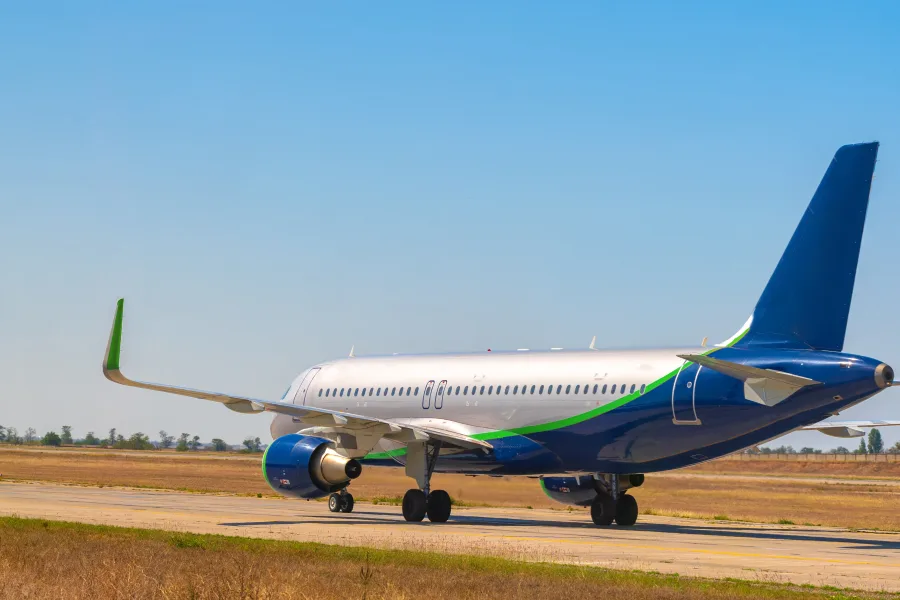
Pakistan's aviation job market is positioned to grow faster than the South Asian average because of one specific, dated event: PIA's privatization, which completed on June 29, 2026, when the Arif Habib-led consortium took full operational control in a transaction valued at roughly Rs180 billion (about $645 million).
As of December 2025, PIA was operating just 19 active aircraft. Under the new ownership's published plan, the fleet is set to expand in two phases: to 38 aircraft in the near term, then to somewhere between 64 and 65 aircraft over roughly the following eight to ten years. Of the Rs135 billion winning bid, Rs125 billion is earmarked as fresh equity injected directly into PIA for fleet renewal, route expansion, and operational restructuring, not simply absorbed into paying down old liabilities.
| Stage | PIA Fleet Size | Timeline |
|---|---|---|
| Baseline | 19 aircraft | December 2025 |
| Phase 1 | 38 aircraft | Near-term, post-privatization |
| Phase 2 | 64-65 aircraft | Approx. 8-10 years |
PIA is not the only carrier adding capacity. Pakistan's private airlines are expanding on their own timelines too: AirSial signed a lease for two new Airbus A320neo aircraft in August 2026, while Airblue separately committed to three A320neo aircraft, both deliveries scheduled toward the end of the decade. Every one of those airframes needs a certifying AME behind it before it can legally carry a passenger, and none of that hiring shows up in a generic "South Asia" regional average.
Where the Jobs Actually Are: Career Paths Beyond the Hangar
Most of the demand above is not limited to line maintenance alone. As fleets and regulatory requirements grow more complex, employers are hiring AME-qualified professionals across a wider set of roles than a "mechanic" job title suggests.
| Career Path | What It Involves |
|---|---|
| Line and base maintenance | Scheduled inspections, defect rectification, and certifying release to service on live aircraft |
| Avionics and systems | Electrical, instrument, and flight-systems work under a B2 category rating |
| Technical records and planning | Managing maintenance documentation, lease transitions, and materials planning |
| Quality and compliance | Auditing, airworthiness oversight, and regulatory interpretation |
| AOG and technical support | Rapid-response troubleshooting when an aircraft is grounded unexpectedly |
| Management progression | Base maintenance manager, quality manager, or technical director roles, often via a top-up qualification such as ATH's BSc (Hons) Aircraft Engineering Management top-up |
A licensed AME who develops strengths beyond the hangar floor, records accuracy, audit readiness, or lease-transition documentation, becomes considerably harder to replace than a generalist mechanic, which matters directly for job security as fleets modernize.

How AI and Digital Systems Are Reshaping AME Work, Not Replacing It
AI is not replacing Aircraft Maintenance Engineers; it is changing which tools they use and how much digital fluency employers expect alongside the technical license. Boeing's own 2026 outlook notes that nearly 90 percent of the global commercial fleet is expected to be digitally enabled by 2045, up from a small fraction of today's fleet, which Boeing directly links to rising demand for technicians comfortable with data systems rather than mechanical work alone.
In practice, this shows up as predictive maintenance software flagging component wear before a fault occurs, digital technical records replacing paper logbooks, and diagnostic tools that shorten troubleshooting time on newer aircraft types. None of this removes the legal requirement for a licensed engineer's signature on a Certificate of Release to Service. It does mean that an AME who can read a maintenance dashboard as confidently as a wiring diagram will be first in line for the newer aircraft types entering Pakistani and Gulf fleets over the next decade.
For a new engineer, the practical effect shows up earliest in hiring interviews rather than on the hangar floor. Employers now routinely ask about experience with electronic technical records systems and computerized maintenance tracking alongside the standard questions about type experience and fault history, simply because so much of a modern aircraft's paperwork now lives in software rather than a binder.

Sustainability's Effect on Maintenance Careers
Sustainability is adding new specializations to AME careers rather than replacing existing ones. Airlines and MROs are under growing pressure to cut fuel burn and emissions, which is shaping maintenance work in a few concrete ways.
- Newer, more fuel-efficient engine types requiring different type-rating training than the older-generation engines many institutes still teach on.
- Sustainable aviation fuel compatibility checks becoming part of routine servicing as more carriers blend SAF into standard fuel loads.
- Component life-cycle tracking gaining more weight in technical records, since extending a part's usable life is now a cost and environmental consideration, not just a compliance one.
For a Pakistani AME, the practical takeaway is narrower than it sounds: type-rating breadth on newer-generation airframes, the kind entering PIA's and AirSial's fleets now, is becoming a more valuable credential than experience on older aircraft alone.
What Do AMEs Earn? Pakistan, the Gulf, and the Global Benchmark
AME compensation varies more by license category, employer, and geography than almost any other factor, which is exactly why comparing benchmarks side by side matters more than quoting one national average.
| Market | Typical Range | Source and Basis |
|---|---|---|
| United Arab Emirates / Gulf | $4,000 to $8,000 per month | Glassdoor, based on 50 self-reported salaries |
| United States | $79,870 to $82,280 per year (median) | U.S. Bureau of Labor Statistics, May 2025 |
| Pakistan (domestic) | Rises sharply with B1/B2 dual licensing and completed OJT | Entry pay trails the two benchmarks above; an EASA Part-66 license is what unlocks them |
That last row is the point most students underweight. Domestic entry-level pay in Pakistan is genuinely lower than the Gulf or U.S. benchmarks above, but a PCAA license trained alongside EASA Part-66 modules, which is how ATH structures its own programme, is a passport into those higher benchmarks rather than a separate, lesser qualification. The Rs 990,000 typical total cost of a two-year AME programme in Pakistan is small relative to the earning ceiling an EASA-recognized license opens abroad.

How Aviation Training Hub Prepares Students for This Job Market
The following reflects Aviation Training Hub's (ATH) own programme structure, not a third-party finding. ATH runs its Aircraft Maintenance Engineering programme across two campuses, Islamabad and Karachi, with rolling intakes in January, April, July, September, and November rather than forcing students to wait for a single annual admission cycle.
The programme is built specifically around the dual-licensing opportunity described above: students work through PCAA requirements alongside EASA Part-66 modules from year one, sit the 16 module exams progressively rather than in one block at the end, and complete genuine on-the-job training with partner MROs and airlines rather than simulated-only practical hours. Assessment is deliberately assignment- and project-based rather than exam-only, which is intended to mirror the kind of real fault-diagnosis judgment employers actually test for during hiring, not just theoretical recall.
That structure exists because of the job market described above, not despite it: a student who finishes with both a PCAA license and EASA Part-66 module credits is qualified to compete for the domestic PIA and private-carrier roles opening up through 2026 and 2027, and for the Gulf and international roles that the same license unlocks afterward.
Set against the earnings picture above, the cost of getting there is modest. A two-year AME programme at ATH totals close to PKR 990,000 in core tuition (a PKR 150,000 admission fee plus six semester fees of PKR 140,000 each), with EASA module exams billed separately at roughly €139 per exam across 16 exams, and OJT costs starting from PKR 8,000 depending on the partner organization. Weighed against a Gulf salary range of $4,000 to $8,000 a month, the qualification pays for itself well inside the first year of licensed work abroad.

Skills That Will Matter Most for AMEs Through 2030
Technical competence stays non-negotiable, but employers hiring for the 2026-2030 window are screening for a specific set of additional qualities beyond the license itself.
- Digital fluency: comfort reading maintenance-tracking software and predictive-maintenance dashboards, not just paper technical manuals.
- Dual-category licensing: holding both B1 and B2 ratings meaningfully widens the roles and employers open to a single engineer.
- Documentation precision: maintenance records, lease-transition paperwork, and CRS documentation are treated as seriously as the physical repair by regulators and auditors.
- English proficiency: manuals, airworthiness directives, and international employer interviews all run in English, and weak documentation English slows down both licensing and hiring.
- Adaptability across aircraft types: mixed fleets, older aircraft alongside new-generation deliveries, mean an engineer comfortable moving between type ratings is more employable than a single-type specialist.
Common Mistakes That Hurt Your Job Prospects as a New AME
- Choosing an institute without verifying its PCAA or EASA Part-147 approval directly. A license from an unapproved or narrowly approved institute can close doors at exactly the employers offering the roles described above.
- Treating OJT as a formality. Employers specifically look for genuine hands-on hours on live aircraft, not simulated-only practical training, when shortlisting new licensees.
- Assuming one license category is enough. Sticking to B1 or B2 alone narrows the roles available; dual-category graduates are consistently more competitive.
- Ignoring digital and documentation skills. As maintenance becomes more data-led, weak digital confidence quietly limits which roles a technically strong engineer gets considered for.
- Underestimating the Gulf pathway. Some graduates default to domestic-only job searches without realizing an EASA Part-66 license was the qualification needed to access the higher Gulf and international pay bands from day one.
Conclusion: The Job Outlook for Aircraft Maintenance Engineers in 2026 and Beyond
The job outlook for Aircraft Maintenance Engineers in 2026 and beyond is genuinely strong, backed by Boeing's 728,000-technician global forecast, the U.S. Bureau of Labor Statistics' independently measured 6 percent growth rate, and a Pakistan-specific fleet-renewal cycle that is still in its early phases. What separates an AME who benefits fully from this outlook from one who only partly benefits is licensing breadth: a PCAA license paired with EASA Part-66 modules opens both the domestic hiring wave and the higher-paying Gulf and international markets, while a narrower qualification opens only one.
For anyone weighing this career in 2026, the data points in one direction: demand is rising faster than the supply of licensed engineers, in Pakistan and globally, and that gap is the opportunity.
Frequently Asked Questions
Common questions about the AME job outlook in 2026 and beyond
Strongly positive. Boeing's 2026 Pilot and Technician Outlook projects 728,000 new maintenance technicians needed globally through 2045, and Pakistan's own fleet is expanding rapidly following PIA's 2025 privatization and new private-carrier aircraft orders.
Boeing projects 728,000 new maintenance technicians worldwide between 2026 and 2045, including 48,000 in South Asia alone, part of a wider 2.4 million new aviation personnel requirement across pilots, technicians, and cabin crew.
Yes. South and Southeast Asia are flagged by Boeing as the fastest-growing personnel markets worldwide, and Pakistan adds a further domestic catalyst: PIA's fleet is set to grow from 19 to as many as 64-65 aircraft over the coming years, alongside new orders from AirSial and Airblue.
Beyond the core technical license: digital fluency with maintenance-tracking software, dual B1/B2 licensing, precise documentation, strong technical English, and comfort working across mixed and newer-generation aircraft types.
Domestic entry-level pay in Pakistan trails the Gulf significantly. UAE-based AMEs report $4,000 to $8,000 per month on Glassdoor, while U.S. data puts the median at $79,870 to $82,280 per year. An EASA Part-66 license is what makes those higher markets accessible to a Pakistani-trained engineer.
No. AI is changing the tools AMEs use, predictive maintenance software and digital records among them, but the legal requirement for a licensed engineer's signature on a Certificate of Release to Service remains unchanged. Boeing expects nearly 90 percent of the global fleet to be digitally enabled by 2045, which raises demand for digitally fluent engineers rather than reducing the need for them.
It depends on licensing breadth rather than a fixed answer. A PCAA-only license limits options to the domestic market, which is itself growing quickly. A PCAA license paired with EASA Part-66 modules opens both the domestic hiring wave and the higher-paying Gulf and international markets, giving a graduate the choice rather than forcing it.
Generally two to four years, depending on the programme type, covering foundational and specialized modules, progressive EASA/PCAA exams, and mandatory on-the-job training before license issuance and job placement.