EASA Part-66 has 18 basic-knowledge modules, and the ones you sit depend on your licence category. Modules 1 to 10 form the common core, Category B1.1 needs 13 modules in total, and Category B2 needs 12. This guide to Part-66 modules explained by AME category shows what each module covers, how long each exam runs, and which modules your category requires.
The exam figures below come straight from the regulation text, not from training-provider summaries. They are checked against Commission Implementing Regulation (EU) 2023/989 and Regulation (EU) 2025/111. Where useful, the guide uses Aviation Training Hub's (ATH) own programme as a worked example. If you are still deciding whether to start at all, read the step-by-step guide to becoming an AME in Pakistan first.
What Are EASA Part-66 Modules?
A Part-66 module is one self-contained subject in the basic-knowledge syllabus that every aircraft maintenance licence applicant must pass by written exam. Each module has its own syllabus, its own question count and its own time limit, and you pass them one at a time rather than as a single combined test.
Three recent changes affect how you should read older study material:
- Lettered modules are gone. Regulation (EU) 2023/989 applies from 12 June 2024. Under it, Module 11 is a single module whose exam length depends on your category, instead of the old 11A, 11B and 11C split.
- Essays now sit in Module 7 only. The regulation applies essay questions to Module 7 alone, with 2 essay questions and a 40-minute essay period. Older guides that mention essays in Modules 9 and 10 describe the previous rules.
- Module 18 is new. Regulation (EU) 2025/111 adds Module 18 (Electric Power Plant) for the new B1.E subcategory, applying from 13 February 2026.
Credits do not last forever. Under point 66.A.25(f) of the EASA Part-66 text, exam credits expire 10 years after the authority grants them, so a long gap between your last module and your licence application can cost you passes you already earned.

What Is the Full List of Part-66 Modules?
The Part-66 syllabus has 18 numbered modules, running from Mathematics (Module 1) to Electric Power Plant (Module 18). Modules 1 to 10 cover fundamentals, maintenance practice, human factors and law. Modules 11 to 18 are aircraft-specific and are what separate one category from another.
| Module | Title | Group |
|---|---|---|
| 1 | Mathematics | Foundation |
| 2 | Physics | Foundation |
| 3 | Electrical Fundamentals | Foundation |
| 4 | Electronic Fundamentals | Foundation |
| 5 | Digital Techniques and Electronic Instrument Systems | Foundation |
| 6 | Materials and Hardware | Foundation |
| 7 | Maintenance Practices | Practice and regulation |
| 8 | Basic Aerodynamics | Practice and regulation |
| 9 | Human Factors | Practice and regulation |
| 10 | Aviation Legislation | Practice and regulation |
| 11 | Aeroplane Aerodynamics, Structures and Systems | Aircraft-specific |
| 12 | Helicopter Aerodynamics, Structures and Systems | Aircraft-specific |
| 13 | Aircraft Aerodynamics, Structures and Systems | Aircraft-specific (B2) |
| 14 | Propulsion | Aircraft-specific (B2) |
| 15 | Gas Turbine Engine | Aircraft-specific |
| 16 | Piston Engine | Aircraft-specific |
| 17 | Propeller | Aircraft-specific |
| 18 | Electric Power Plant | Aircraft-specific (B1.E) |
You will see some guides quote 17 modules. That count predates Module 18, and it is still the right number for every category except B1.E.
Which Part-66 Modules Does Each AME Category Need?
Each licence category maps to a fixed set of modules: Category B1.1 needs Modules 1 to 10, 11, 15 and 17, while Category B2 needs Modules 1 to 10, 13 and 14. Category A drops Module 4 and sits a shallower paper in most of the others. The table below lists every category in one place.
| Category | Covers | Modules required |
|---|---|---|
| A1 | Turbine aeroplanes, line maintenance | 1 to 3, 5 to 10, 11, 15, 17 |
| A2 | Piston aeroplanes, line maintenance | 1 to 3, 5 to 10, 11, 16, 17 |
| A3 | Turbine helicopters, line maintenance | 1 to 3, 5 to 10, 12, 15 |
| A4 | Piston helicopters, line maintenance | 1 to 3, 5 to 10, 12, 16 |
| B1.1 | Turbine aeroplanes, mechanical | 1 to 10, 11, 15, 17 |
| B1.2 | Piston aeroplanes, mechanical | 1 to 10, 11, 16, 17 |
| B1.3 | Turbine helicopters, mechanical | 1 to 10, 12, 15 |
| B1.4 | Piston helicopters, mechanical | 1 to 10, 12, 16 |
| B1.E | Electric aeroplanes below 5,700 kg MTOM | 1 to 10, 11, 17, 18 |
| B2 | Avionics and electrical systems | 1 to 10, 13, 14 |
| B3 | Non-pressurised piston aeroplanes, 2,000 kg and below | 1 to 10, 11, 16, 17 |
Two further categories sit outside this table. Category B2L is a limited avionics licence built from system ratings, so it sits Module 13 in separate parts (for example, Communication and Navigation is a 24-question paper and Instruments is a 20-question paper) and only needs Module 14 for the Instruments and Airframe Systems ratings. Category C certifies base maintenance and rests on B1 or B2 knowledge plus experience, so it has no separate module list here.
The practical difference between the two most common choices is simple. B1 is the mechanical licence, so its aircraft-specific modules are structures, engines and propellers. B2 is the avionics licence, so its modules are aircraft systems and propulsion at systems level. The B1 vs B2 licence comparison goes deeper on career outcomes, and the module-level differences are covered later in this guide.
How Many Questions and How Much Time Does Each Part-66 Module Exam Have?
Every Part-66 module exam is multiple choice, and every question gets 75 seconds: 32 questions in 40 minutes, 52 in 65 minutes, 188 in 235 minutes. The only exception is the Module 7 essay paper, which adds a separate 40-minute period. Question counts differ by category, so check your own column before planning study time.
Common modules (1 to 10) by category
| Module | Cat A | Cat B1 | Cat B2 | Cat B3 |
|---|---|---|---|---|
| 1 Mathematics | 16 Q / 20 min | 32 Q / 40 min | 32 Q / 40 min | 32 Q / 40 min |
| 2 Physics | 32 Q / 40 min | 52 Q / 65 min | 52 Q / 65 min | 32 Q / 40 min |
| 3 Electrical Fundamentals | 20 Q / 25 min | 52 Q / 65 min | 52 Q / 65 min | 24 Q / 30 min |
| 4 Electronic Fundamentals | Not required | 20 Q / 25 min | 40 Q / 50 min | 20 Q / 25 min |
| 5 Digital Techniques | 20 Q / 25 min | 40 Q / 50 min | 72 Q / 90 min | 20 Q / 25 min |
| 6 Materials and Hardware | 52 Q / 65 min | 80 Q / 100 min | 60 Q / 75 min | 80 Q / 100 min |
| 7 Maintenance Practices | 76 Q + 2 essays / 95 + 40 min | 80 Q + 2 essays / 100 + 40 min | 60 Q + 2 essays / 75 + 40 min | 80 Q + 2 essays / 100 + 40 min |
| 8 Basic Aerodynamics | 24 Q / 30 min | 24 Q / 30 min | 24 Q / 30 min | 24 Q / 30 min |
| 9 Human Factors | 28 Q / 35 min | 28 Q / 35 min | 28 Q / 35 min | 28 Q / 35 min |
| 10 Aviation Legislation | 32 Q / 40 min | 44 Q / 55 min | 44 Q / 55 min | 44 Q / 55 min |
Aircraft-specific modules (11 to 18) by subcategory
| Module | Subcategory | Questions | Time |
|---|---|---|---|
| 11 Aeroplane systems | A1 / A2 | 108 / 72 | 135 / 90 min |
| 11 Aeroplane systems | B1.1 | 140 | 175 min |
| 11 Aeroplane systems | B1.2 and B1.E | 100 | 125 min |
| 11 Aeroplane systems | B3 | 60 | 75 min |
| 12 Helicopter systems | A3 / A4 | 100 | 125 min |
| 12 Helicopter systems | B1.3 / B1.4 | 128 | 160 min |
| 13 Aircraft systems | B2 | 188 | 235 min |
| 14 Propulsion | B2 | 32 | 40 min |
| 15 Gas Turbine Engine | A1 / A3 | 60 | 75 min |
| 15 Gas Turbine Engine | B1.1 / B1.3 | 92 | 115 min |
| 16 Piston Engine | A2 / A4 | 52 | 65 min |
| 16 Piston Engine | B1.2 / B1.4 / B3 | 76 | 95 min |
| 17 Propeller | A1 / A2 | 20 | 25 min |
| 17 Propeller | B1.1 / B1.2 / B3 | 32 | 40 min |
| 18 Electric Power Plant | B1.E | 76 | 95 min |
One number stands out. Module 13 for B2 is 188 questions in 235 minutes, the largest single paper in the whole system. Module 11 for B1.1 follows at 140 questions in 175 minutes. Plan your revision calendar around those two, not around the shorter papers.
How Big Is the Total Exam Load for Each Category?
The total Part-66 exam load runs from about 650 minutes for Category A1 to about 935 minutes for Category B1.1. The table adds up every module a candidate in that category must pass, using the official question counts and time limits, and includes the 40-minute Module 7 essay period.
| Category | Modules | Multiple-choice questions | Total exam time |
|---|---|---|---|
| A1 | 12 | 488 | 650 min (10.8 hours) |
| B3 | 13 | 552 | 730 min (12.2 hours) |
| B1.2 | 13 | 660 | 865 min (14.4 hours) |
| B1.3 | 12 | 672 | 880 min (14.7 hours) |
| B2 | 12 | 684 | 895 min (14.9 hours) |
| B1.1 | 13 | 716 | 935 min (15.6 hours) |
These totals are our own arithmetic from the Appendix II figures in Regulation 2023/989, and they exclude the two Module 7 essay questions from the question count. They show something most guides miss. B2 has fewer modules than B1.1 but almost the same exam burden, because its Module 5 (72 questions) and Module 13 (188 questions) are so large.
What Do You Study in the Foundation Modules (1 to 6)?
Modules 1 to 6 are the science and materials base of the licence: mathematics, physics, electrical and electronic theory, digital systems, and the materials aircraft are built from. Every category sits most of them, and everything in Modules 7 to 18 assumes you already know them.
Module 1: Mathematics
Module 1 teaches the arithmetic, algebra and geometry needed to read maintenance data and work out tolerances, torque conversions and loads. Expect fractions, ratios, powers and roots, unit conversion, equations, areas and volumes, basic trigonometry and graph reading. Every category sits it: 16 questions for Category A, 32 for B1, B2 and B3. Treat it as a tool module, because Physics, Electrical Fundamentals and Aerodynamics all reuse the same skills.
Module 2: Physics
Module 2 covers the physical principles behind aircraft operation: matter, mechanics (statics, kinetics and dynamics), fluid dynamics, thermodynamics, optics and wave motion. B1 and B2 candidates face 52 questions in 65 minutes, while Category A and B3 get 32. The questions test understanding of units and relationships more than memorised formulas, so practise applying each concept to a real component such as a hydraulic jack or a heat exchanger.
Module 3: Electrical Fundamentals
Module 3 explains how electricity behaves in an aircraft: electron theory, direct current, resistance and power, capacitance, magnetism, inductance, alternating current, transformers, generators, motors and batteries. B1 and B2 both sit 52 questions, Category A sits 20 and B3 sits 24. It is often the biggest adjustment for a mechanical candidate, and it directly feeds Module 4, Module 5 and, for B2, Module 13.
Module 4: Electronic Fundamentals
Module 4 covers semiconductors (diodes and transistors), integrated circuits, printed circuit boards and servomechanisms. This is the first module where the categories genuinely diverge: B1 and B3 sit 20 questions, B2 sits 40, and Category A does not sit it at all. A B2 candidate should treat it as a core subject, not a formality.
Module 5: Digital Techniques and Electronic Instrument Systems
Module 5 introduces how aircraft process and display information: number systems, data buses, logic circuits, microprocessors, fibre optics, electronic displays and protection against electromagnetic and electrostatic damage. The paper is 72 questions in 90 minutes for B2, 40 for B1, and 20 for Category A and B3. For B2 it is the largest foundation paper, so budget real revision time.
Module 6: Materials and Hardware
Module 6 covers what aircraft are made of and how the parts are joined: ferrous and non-ferrous metals, composites and other non-metallic materials, corrosion, and hardware such as fasteners, pipes, bearings, gears, control cables and connectors. B1 and B3 sit 80 questions in 100 minutes, B2 sits 60, and Category A sits 52. Mechanical candidates should expect this to be the longest of the foundation papers.

What Do You Study in the Maintenance, Safety and Legal Modules (7 to 10)?
Modules 7 to 10 cover how maintenance is actually done and regulated: workshop practice, flight theory, human error and aviation law. They carry less abstract theory than Modules 1 to 6, but they are where the licence stops being a science exam and starts being a professional one.
Module 7: Maintenance Practices
Module 7 is the practical-procedure module: safety precautions, tools and test equipment, engineering drawings, fits and clearances, wiring and connector practice, riveting, pipes and hoses, springs, bearings, control cables, welding, brazing and bonding, weight and balance, aircraft handling, inspection techniques and maintenance documentation. It is also the only module with essays. Every candidate faces 2 essay questions in a separate 40-minute period, on top of 80 multiple-choice questions for B1 and B3, 76 for Category A, or 60 for B2.
Module 8: Basic Aerodynamics
Module 8 explains why aircraft fly: the atmosphere, lift, drag, airflow, and the basics of stability and control. It is the same shape for every category, 24 questions in 30 minutes. It is also the module that makes Module 11 and Module 13 easier, because aircraft systems make more sense once you know what the control surfaces are doing.
Module 9: Human Factors
Module 9 teaches how human performance and error affect safe maintenance: human limitations, stress and fatigue, communication, working environment, teamwork and the hazards of shift handovers and time pressure. Every category sits 28 questions in 35 minutes. It reads as the lightest module on paper, but it is the one most directly linked to why maintenance errors happen, so do not skim it.
Module 10: Aviation Legislation
Module 10 covers the regulatory framework that governs what a licensed engineer can sign for: certifying staff privileges, approved maintenance organisations, aircraft and component certification, continuing airworthiness and safety management. B1, B2 and B3 sit 44 questions in 55 minutes, and Category A sits 32. If you plan to be licensed in Pakistan, our guide to the PCAA AME licence requirements and exams shows how the national rules sit alongside the EASA framework.
What Do You Study in the Aircraft-Specific Modules (11 to 18)?
Modules 11 to 18 are where your category choice becomes real: aeroplane systems and structures, helicopters, avionics, engines and propellers. You sit only the ones that match your subcategory, and they are also the largest papers in the syllabus.
Module 11: Aeroplane Aerodynamics, Structures and Systems
Module 11 covers the airframe and its systems on aeroplanes: structures, flight controls, hydraulics, landing gear, fuel, electrical power, air conditioning and pressurisation, fire protection, ice and rain protection, oxygen and cabin systems. It is needed for A1, A2, B1.1, B1.2, B1.E and B3. Since June 2024 it is one module with variable length: 140 questions in 175 minutes for B1.1, 100 in 125 for B1.2 and B1.E, 108 in 135 for A1, 72 in 90 for A2 and 60 in 75 for B3.
Module 12: Helicopter Aerodynamics, Structures and Systems
Module 12 is the helicopter equivalent of Module 11, adding rotor systems, transmissions, flight controls and vibration to the airframe and systems content. It is needed for A3, A4, B1.3 and B1.4. Category A candidates sit 100 questions in 125 minutes, and B1.3 and B1.4 candidates sit 128 questions in 160 minutes.
Module 13: Aircraft Aerodynamics, Structures and Systems
Module 13 is the B2 avionics module, covering the electrical, communication, navigation, instrument, autoflight and integrated avionics systems that B2 engineers certify. It is a single paper of 188 questions in 235 minutes, the longest in the Part-66 system. Only B2 candidates sit it in full. B2L candidates sit it in smaller parts matched to their system ratings.
Module 14: Propulsion
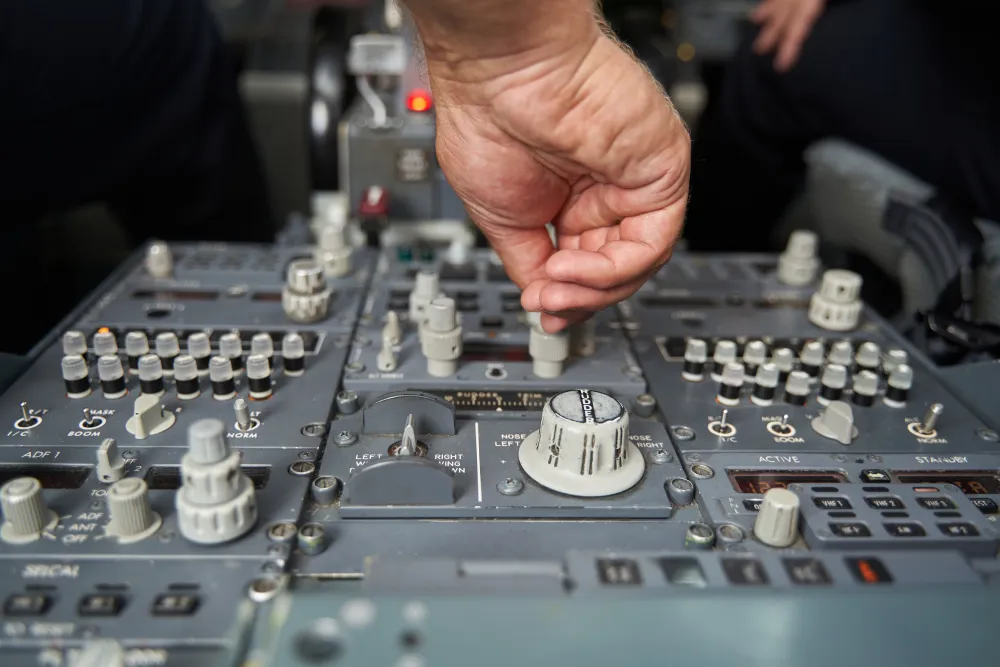
Module 14 gives B2 candidates the propulsion knowledge they need at systems level: how turbine engines work, plus the indicating, starting and ignition systems that avionics engineers troubleshoot. It is only 32 questions in 40 minutes, which makes it one of the lighter aircraft-specific papers. B2 engineers do not need the deep mechanical engine content that B1 candidates study in Module 15.
Module 15: Gas Turbine Engine
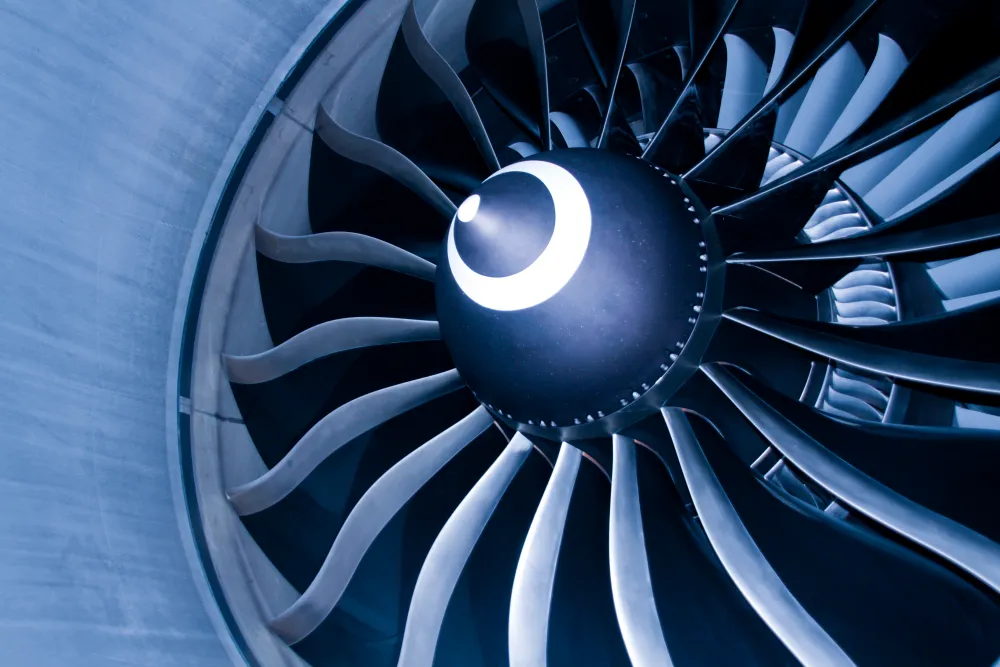
Module 15 covers how turbine engines are built and run: the compressor, combustion, turbine and exhaust sections, lubrication, fuel and air systems, starting and ignition, engine indication and monitoring, and turboprop and turboshaft variants. It is needed for A1, A3, B1.1 and B1.3. Category A candidates sit 60 questions in 75 minutes and B1.1 and B1.3 candidates sit 92 questions in 115 minutes.
Module 16: Piston Engine
Module 16 covers reciprocating engines: construction, fuel and induction systems, ignition, cooling, lubrication, starting and performance. It is needed for A2, A4, B1.2, B1.4 and B3. Category A sits 52 questions in 65 minutes and B1.2, B1.4 and B3 sit 76 questions in 95 minutes.
Module 17: Propeller
Module 17 covers propeller theory, construction, pitch control, synchronisation, ice protection and maintenance. It is needed for A1, A2, B1.1, B1.2 and B3. Category A sits 20 questions in 25 minutes and B1.1, B1.2 and B3 sit 32 questions in 40 minutes, so it is one of the shortest papers to pass.
Module 18: Electric Power Plant
Module 18 is the newest module, added for the B1.E subcategory (electric aeroplanes below 5,700 kg). Its syllabus has eight main subjects, from fundamentals through to engine storage and preservation, including batteries, fuel cells, power distribution and electronic engine control. The paper is 76 questions in 95 minutes, and the rules apply from 13 February 2026.
How Do the B1 and B2 Module Sets Differ?
B1 and B2 share the same ten core modules but at different depths in four of them. Modules 1, 2, 3, 8, 9 and 10 are identical papers for both categories. Modules 4, 5, 6 and 7 differ, and the aircraft-specific modules are completely different.
| Module | B1 paper | B2 paper | Pattern |
|---|---|---|---|
| 4 Electronic Fundamentals | 20 Q | 40 Q | B2 deeper |
| 5 Digital Techniques | 40 Q | 72 Q | B2 deeper |
| 6 Materials and Hardware | 80 Q | 60 Q | B1 deeper |
| 7 Maintenance Practices | 80 Q + 2 essays | 60 Q + 2 essays | B1 deeper |
| 11 / 15 / 17 (B1.1 only) | 140 + 92 + 32 = 264 Q | Not required | B1 only |
| 13 / 14 (B2 only) | Not required | 188 + 32 = 220 Q | B2 only |
The pattern is easy to read. The mechanical licence goes deeper on materials and practice, and the avionics licence goes deeper on electronics and digital systems. Engineers who later add the second category usually do so for one reason: the missing modules are far fewer than starting from zero. Check how your Part-147 organisation or authority credits earlier passes before you plan the order. For the career side of that decision, read the B1 vs B2 comparison.
How Do Part-66 Module Exams Work, and What Happens If You Fail?
Part-66 module exams are written multiple-choice papers, and a failed module cannot be retaken for 90 days unless you complete targeted retraining. The rules below come from Appendix II of Regulation (EU) 2023/989.
- Format: multiple-choice questions in every module, plus two essay questions in Module 7 only.
- Pass mark: 75% or more of questions answered correctly.
- Retake wait: a module cannot be retaken earlier than 90 days after a failed exam (point 1.11).
- Faster retake: after retraining at an approved Part-147 organisation tailored to the failed subjects, you can retake after 30 days.
- Attempt limit: a maximum of three attempts per examination in any 12-month period (point 1.13).
- Credit validity: exam credits expire 10 years after they are granted.
- Transition: courses that began before 12 June 2024 had to be finished, with exams, before 12 June 2026, so that window has now closed (Article 6(4)).
The 90-day rule changes how you should plan. A failed module in month 18 of a two-year programme can push your finish date out by a quarter, which is why sitting each exam progressively, right after the matching coursework, beats saving them for the end.

In What Order Should You Study the Part-66 Modules?
Study the foundation modules first, then maintenance practice and law, then the aircraft-specific modules. Each stage builds the knowledge the next one assumes, and the order below follows the dependencies between modules rather than their numbers.
- Modules 1 and 2 first. Mathematics and Physics supply the calculations and concepts every later module reuses.
- Modules 3, 4 and 5 next. Electrical, electronic and digital theory build in that order, and B2 candidates need all three at depth.
- Modules 6 and 8 in parallel. Materials and aerodynamics are largely independent and ease the load between heavy electrical blocks.
- Module 9 and Module 10 early enough to revise. They are short, but they reward repeated exposure over cramming.
- Module 7 once you have workshop exposure. The essays are far easier if you have used the tools and read real maintenance documents.
- Modules 11 to 18 last. They integrate everything before them, and Module 11 and Module 13 are the biggest papers you will sit.
Which Part-66 Modules Need the Most Study Time?
The modules that need the most study time are the ones with the most questions and the broadest syllabus: Module 13 for B2 and Module 11 for B1.1. Question volume is a reliable proxy for syllabus breadth, since every paper allows the same 75 seconds per question.
| Category | Biggest papers (questions) |
|---|---|
| B1.1 | Module 11 (140), Module 15 (92), Module 6 (80), Module 7 (80), Module 3 (52) |
| B2 | Module 13 (188), Module 5 (72), Module 6 (60), Module 7 (60), Module 3 (52) |
A few habits help across every module:
- Practise at exam pace. Doing questions at 75 seconds each trains the timing the real paper demands.
- Sit module exams soon after coursework. Recall fades quickly, and the 10-year credit window rewards steady progress.
- Write practice essays for Module 7. A candidate who has never drafted an answer under a 40-minute limit loses marks on structure, not knowledge.
- Revise from the syllabus, not the textbook. The knowledge levels in the Appendix I syllabus define how deep each topic is examined.

How Aviation Training Hub Sequences the Part-66 Modules
The following section reflects Aviation Training Hub's (ATH) own programme structure, not a third-party finding. ATH teaches the modules across a two-year, six-semester programme, with each semester lasting four months, and students sit EASA module exams progressively as coursework finishes instead of all at the end. ATH's published structure lists 16 EASA module exams in total. Ask the admissions team for the exact module-to-exam mapping for your intake and licence category.
| Stage | Modules (as published by ATH) | Theme |
|---|---|---|
| Year 1 | M1, M2, M3, M4, M5, M6, M8, M9, M17 | Science, electrical and electronic theory, materials, basic aerodynamics, human factors and propellers |
| Year 2 | M7, M10, M11, M13, M14, M15 | Maintenance practice, legislation, aircraft systems, propulsion and gas turbines |
That order mirrors the dependency logic described earlier: nobody can learn gas turbine theory without the physics, or avionics systems without the electrical and digital base. ATH's assessment is assignment- and project-based as well as exam-based, so students handle realistic maintenance tasks before they face the matching module paper. The exam fee is €139 per exam, payable one month before each module exam, and ATH's published guidance notes that a failed attempt means paying the fee again. Full figures are on the AME course duration, fees and eligibility page, and the programme overview is on the aircraft maintenance engineering in Pakistan page.
Do Part-66 Module Passes Alone Give You a Licence?
No. Passing the module exams proves your basic knowledge, but a Part-66 licence also needs practical maintenance experience. According to EASA's guidance on Part-147 training, completing a full basic course at one approved organisation allows you to claim 1 or 2 years of experience under point 66.A.30, depending on category. Taking only the examinations earns no experience credit for most applicants.
The wider job market makes the effort worthwhile. Boeing's 2026 Pilot and Technician Outlook forecasts 728,000 new maintenance technicians needed globally over 2026 to 2045, and its full report puts South Asia's technician demand at 48,000. Engineers who want to move into management afterwards can progress through the BSc (Hons) Aircraft Engineering Management top-up.
Common Mistakes When Studying Part-66 Modules
- Using out-of-date material. Guides that mention Modules 11A to 11C, essays in Modules 9 and 10, or only 17 modules describe the pre-2024 syllabus.
- Studying every module equally. Question counts range from 16 to 188, so time should follow paper size and your weak areas.
- Assuming B1 and B2 papers match. Modules 4, 5, 6 and 7 are different lengths for each category.
- Leaving Module 7 essays to the last week. Essay marks depend on structure and practice, not on last-minute reading.
- Ignoring the retake rules. A failed paper means a 90-day wait unless you retrain, and three attempts in 12 months is the ceiling.
- Letting credits lapse. Passes expire after 10 years, so a long gap before applying can undo earlier work.
Conclusion
Part-66 modules explained by category come down to one rule: Modules 1 to 10 are shared, and Modules 11 to 18 decide which licence you are building. Category B1.1 means 13 modules and 716 multiple-choice questions, Category B2 means 12 modules and 684, and the newest category, B1.E, adds Module 18. Knowing your own list, your own question counts and the 90-day retake rule turns the syllabus from a wall of subjects into a schedule you can plan.
If you are weighing which category to pursue, speak to a Part-147 programme about how its module order, exam support and on-the-job training fit your goals.
Frequently Asked Questions
Common questions about Part-66 modules and AME categories
There are 18 modules, numbered 1 to 18. Module 18 (Electric Power Plant) applies only to the new B1.E subcategory from 13 February 2026. You never sit all 18, only the ones your licence category requires.
Category B1.1 needs Modules 1 to 10, 11, 15 and 17, which is 13 modules. Category B2 needs Modules 1 to 10, 13 and 14, which is 12 modules. Modules 1 to 10 are the shared core.
B1 is mechanical and B2 is avionics. They share Modules 1 to 10, but Modules 4 and 5 are deeper for B2 (40 and 72 questions), while Modules 6 and 7 are deeper for B1 (80 questions each). The aircraft-specific modules differ completely: 11, 15 and 17 for B1.1, and 13 and 14 for B2.
Every question gets 75 seconds. Papers range from 16 questions in 20 minutes (Module 1, Category A) to 188 questions in 235 minutes (Module 13, B2). Module 7 adds 2 essay questions in a separate 40-minute period.
No official difficulty ranking exists. The largest papers are Module 13 for B2 (188 questions) and Module 11 for B1.1 (140 questions), so those need the most revision time. Module 7 is also demanding because it combines 80 or 60 multiple-choice questions with essays.
You can attempt each examination up to three times in any 12-month period. After a fail you must wait 90 days, or 30 days if you complete tailored retraining at an approved Part-147 organisation.
Exam credits expire 10 years after the authority grants them. Apply for your licence within that window, or earlier passes may need to be retaken.
Start with Modules 1 and 2, then electrical, electronic and digital theory (3, 4, 5), then materials and aerodynamics (6 and 8), then maintenance practices, human factors and legislation, and finish with the aircraft-specific modules (11 to 18).
Not on exams alone. You also need practical maintenance experience. A full basic course at an approved Part-147 organisation allows you to claim 1 or 2 years of experience under point 66.A.30, depending on category.