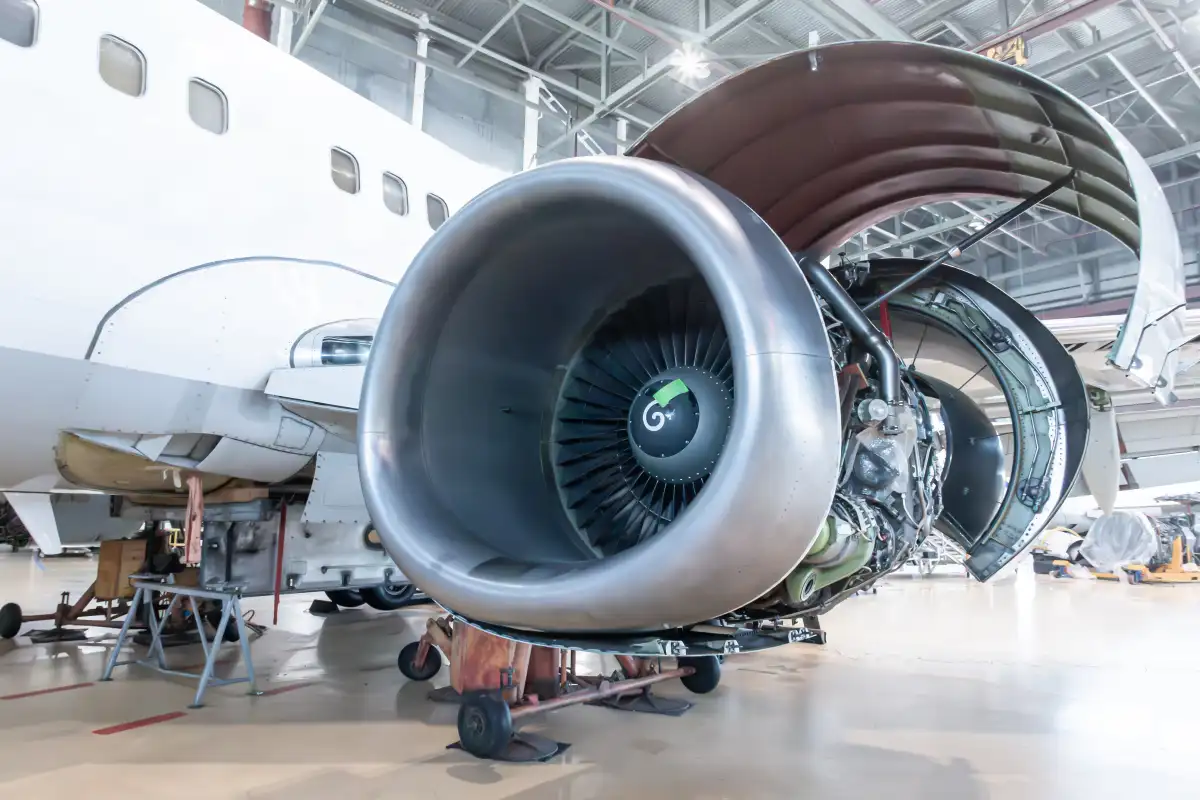

B1.1 vs B1.3 vs Category A comes down to two questions: which aircraft family you will maintain, and how much you are legally allowed to sign for. Category A lets you certify only minor scheduled line maintenance and simple defect rectification. B1.1 covers the structure, engines and systems of turbine-engined aeroplanes. B1.3 covers the same ground on turbine-engined helicopters.
The choice matters more than most students expect. Boeing's 2026 Pilot and Technician Outlook projects demand for 728,000 new maintenance technicians worldwide between 2026 and 2045, including 48,000 in South Asia. Those jobs are not interchangeable. A licence in the wrong sub-category can mean extra modules, extra logged experience and a delayed first sign-off on the aircraft your employer actually flies.
This guide compares Category A, B1.1 and B1.3 on the points that decide your path: privileges, modules, experience years, type ratings and what changed in 2026. It also shows where B1.2, B1.4, B2, B3 and Category C fit, and how Aviation Training Hub (ATH) maps its two-year programme to these categories. If you are still at the very start, read the step-by-step guide to becoming an aircraft maintenance engineer in Pakistan first.
What Are Part-66 Licence Categories and Sub-Categories?
A Part-66 licence category defines what kind of maintenance sign-off you hold, and a sub-category narrows that sign-off to one family of aircraft. Category A and Category B1 are each split into four sub-categories: turbine aeroplanes, piston aeroplanes, turbine helicopters and piston helicopters. Part-66 is Annex III of EU Regulation 1321/2014, and the table below follows its list of categories (point 66.A.3) and privileges (point 66.A.20).
| Category | Sub-categories | What the holder can certify |
|---|---|---|
| A | A1, A2, A3, A4 | Minor scheduled line maintenance and simple defect rectification, limited to tasks endorsed on the employer's certification authorisation. |
| B1 | B1.1, B1.2, B1.3, B1.4 (B1.E added from 13 February 2026) | Aircraft structure, powerplant, and mechanical and electrical systems, plus avionic work that needs only simple tests. Includes the matching A sub-category. |
| B2 | None (B2L is a limited version) | Avionic and electrical systems. Includes no A sub-category. |
| B3 | None | Piston-engine, non-pressurised aeroplanes of 2,000 kg maximum take-off mass and below. |
| C | None | Certificate of release to service after base maintenance, for aeroplanes and helicopters. |
| L | L1 to L5 variants | Light aircraft such as sailplanes, powered sailplanes, balloons and airships. |
Two rules shape everything that follows. First, a B1 licence includes the corresponding A sub-category, so a B1.1 holder also holds A1 privileges. Second, B2 does the opposite and includes no A sub-category at all. The licence only covers the aircraft family printed on it, which means a B1.1 holder has no helicopter privileges until the licence is extended.

How Do the Four Aircraft Sub-Categories Work?
Each sub-category matches one aircraft family, and Category A and B1 use the same four families. The digit tells you the family, so A3 and B1.3 cover the same helicopters at two different levels of privilege.
| Aircraft family | Category A | Category B1 | Typical aircraft | Typical operators |
|---|---|---|---|---|
| Turbine-engined aeroplanes | A1 | B1.1 | Airliners, business jets, turboprops such as the ATR 72 | Airlines, MROs, business aviation |
| Piston-engined aeroplanes | A2 | B1.2 | Light trainers such as the Cessna 172 | Flying schools, general aviation |
| Turbine-engined helicopters | A3 | B1.3 | Medium and heavy helicopters such as the Bell 412 and AW139 | Medical, search and rescue, offshore, government |
| Piston-engined helicopters | A4 | B1.4 | Light helicopters such as the Robinson R44 | Training, private and light utility work |
Not every aircraft in a family is treated the same. Group 1 in point 66.A.5 covers complex motor-powered aircraft, multiple-engine helicopters, aeroplanes certified above FL290 and fly-by-wire aircraft. On these, a B1 holder needs a type rating endorsed on the licence before issuing a certificate of release to service. Category A works differently, as the next section explains.
What Is Category A and What Can a Category A Holder Certify?
Category A is the entry-level certifying licence. It lets the holder issue a certificate of release to service for minor scheduled line maintenance and simple defect rectification, and only for the tasks written on the holder's certification authorisation. A1 covers turbine-engined aeroplanes and A3 covers turbine-engined helicopters.
That last clause is the one candidates miss. A Category A licence carries no type rating. Point 66.A.45(a) says it plainly: no rating is required, subject to the Part-145 authorisation rules. The maintenance organisation issues the authorisation and lists the exact tasks you may sign. Change employer and the new organisation decides again what you are cleared to certify.
- Scope: line maintenance, meaning the checks and fixes done between flights, as opposed to heavy base checks. The line maintenance vs base maintenance comparison shows what each looks like day to day.
- Authority: limited to endorsed tasks. Anything outside the list needs a B1 or B2 certifier.
- Experience: 3 years of practical maintenance, 2 years with relevant skilled-worker training, or 1 year plus an approved Part-147 basic course.
- Knowledge: the same subject modules as the matching B1 sub-category, except Module 4 (Electronic Fundamentals), examined at lower knowledge levels.
- Limit: no base maintenance release. That sits with Category C.
Treat Category A as a way to start signing off line work early, not as the finish line. Because B1 includes A, every B1 holder already has these privileges, and the extra modules and years are what buy the wider scope.
What Does B1.1 Cover and Who Needs It?
B1.1 is the Part-66 sub-category that certifies maintenance on the structure, engines and mechanical and electrical systems of turbine-engined aeroplanes. Under point 66.A.20, a B1 holder can also work on avionic systems that need only simple tests to prove serviceability, such as replacing a line replaceable unit when a basic check confirms it works. The licence includes A1.
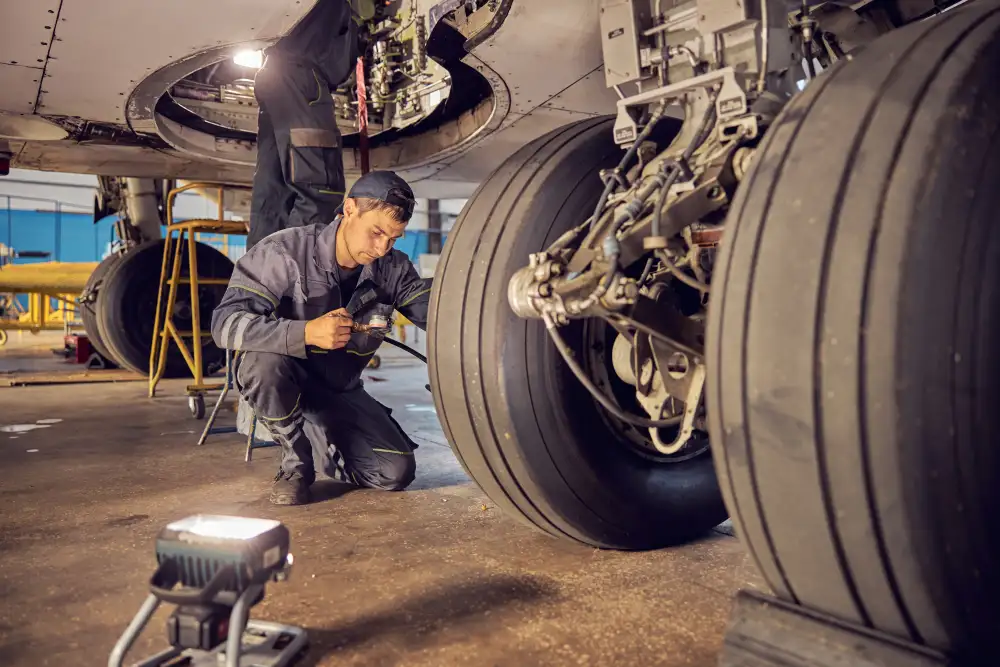
- Airframe and structure: inspection and repair of fuselage, wings, control surfaces and landing gear.
- Powerplant: turbofan, turbojet and turboprop engines, including propellers on turboprop aircraft.
- Mechanical systems: hydraulic, pneumatic, fuel, air conditioning, pressurisation and flight control systems.
- Electrical power: generation, distribution and the wiring that serves it.
- Avionics, in a limited way: simple serviceability tests only. Fault-finding on complex avionic systems belongs to B2.
B1.1 needs 13 modules: Modules 1 to 10, plus Module 11 (aeroplane aerodynamics, structures and systems), Module 15 (gas turbine engine) and Module 17 (propeller). Experience is 5 years, 3 years or 2 years depending on your training route, covered in a later section. On most commercial aircraft you also need a type rating on the licence, and the first type rating in a category requires on-the-job training under point 66.A.45.
Choose B1.1 if your target employer flies jets or turboprops. Airline fleets in Pakistan and across the Gulf are turbine aeroplanes, so B1.1 lines up with the aircraft most airline and MRO hangars handle.
What Does B1.3 Cover and Who Needs It?
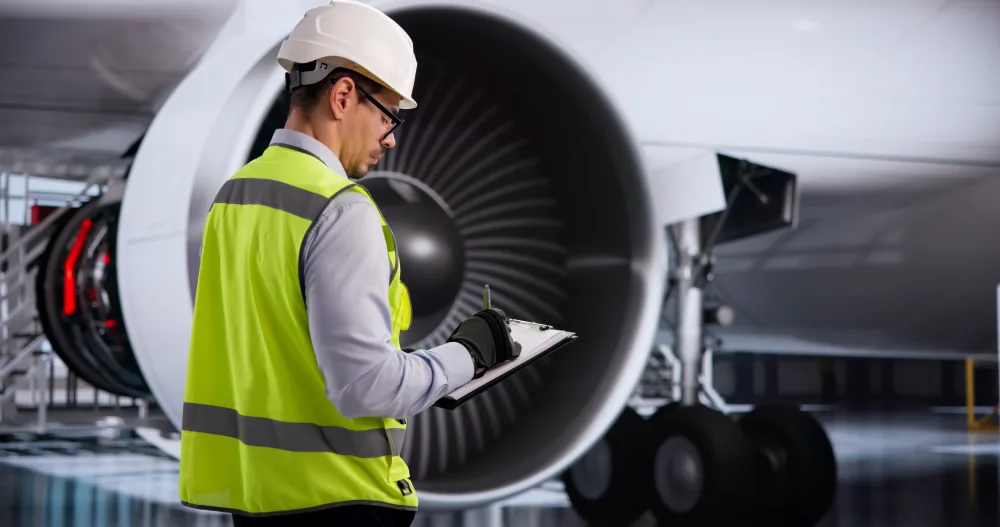
B1.3 is the Part-66 sub-category that certifies maintenance on the structure, engines and mechanical and electrical systems of turbine-engined helicopters. The privilege scope matches B1.1, applied to rotorcraft, and the licence includes A3.
The work centres on the parts that make a helicopter different: main and tail rotors, rotor controls, gearboxes and drive systems, turbine engines, and the hydraulic and electrical systems around them. Skids or wheeled landing gear and flight controls complete the picture. Rotor components cycle through inspections on strict schedules, so precision with documentation matters as much as mechanical skill.
B1.3 needs 12 modules: Modules 1 to 10, plus Module 12 (helicopter aerodynamics, structures and systems) and Module 15 (gas turbine engine). There is no propeller module because helicopters do not have one. Experience is the same 5, 3 or 2 years as B1.1. Multiple-engine helicopters fall under Group 1, so they need a type rating on the licence, while Group 2 and 3 aircraft can be endorsed after a type examination.
Helicopter fleets are smaller than airline fleets in most markets, so the pool of employers is narrower. That is a reason to be sure before you commit, not a reason to avoid B1.3 if rotorcraft is where you want to work. Typical employers include air ambulance, search and rescue, offshore, corporate and government operators.

B1.1 vs B1.3 vs Category A: Side-by-Side Comparison
Category A signs a short list of line tasks, while B1.1 and B1.3 sign for the full structure, engine and system scope of their aircraft family. The comparison below puts the decisive factors in one place so you can lift the answer without reading the whole guide.
| Factor | Category A (A1 or A3) | B1.1 | B1.3 |
|---|---|---|---|
| Aircraft family | A1: turbine aeroplanes. A3: turbine helicopters. | Turbine-engined aeroplanes | Turbine-engined helicopters |
| What you can certify | Minor scheduled line maintenance and simple defect rectification, on endorsed tasks only | Structure, powerplant, mechanical and electrical systems, simple-test avionics | Same scope, applied to helicopters |
| Includes lower category | Not applicable | Yes, includes A1 | Yes, includes A3 |
| Type rating on licence | Not required; tied to employer authorisation | Required for Group 1 aircraft | Required for Group 1, including multiple-engine helicopters |
| Modules | Same subjects as the matching B1 minus Module 4, at lower levels | 13: Modules 1 to 10, 11, 15, 17 | 12: Modules 1 to 10, 12, 15 |
| Experience (no training / skilled worker / Part-147 course) | 3 / 2 / 1 years | 5 / 3 / 2 years | 5 / 3 / 2 years |
| Where you work | Line stations under an employer's authorisation | Airlines, MROs, business aviation | Medical, rescue, offshore, government operators |
| Best fit | Early sign-off on the line | Airline and MRO careers | Rotorcraft careers |
Which Modules Does Each Category Need?
B1.1 needs 13 knowledge modules, B1.3 needs 12, and Category A needs the same subjects as its matching B1 sub-category without Module 4. Modules 1 to 10 are common to every certifying category, so the differences sit in Modules 4, 11, 12, 15 and 17. The matrix below follows the module split summarised in ICAO's Part-66 briefing.
| Module | A1 | A3 | B1.1 | B1.3 |
|---|---|---|---|---|
| 1 Mathematics | Yes | Yes | Yes | Yes |
| 2 Physics | Yes | Yes | Yes | Yes |
| 3 Electrical Fundamentals | Yes | Yes | Yes | Yes |
| 4 Electronic Fundamentals | No | No | Yes | Yes |
| 5 Digital Techniques / Electronic Instrument Systems | Yes | Yes | Yes | Yes |
| 6 Materials and Hardware | Yes | Yes | Yes | Yes |
| 7 Maintenance Practices | Yes | Yes | Yes | Yes |
| 8 Basic Aerodynamics | Yes | Yes | Yes | Yes |
| 9 Human Factors | Yes | Yes | Yes | Yes |
| 10 Aviation Legislation | Yes | Yes | Yes | Yes |
| 11 Aeroplane Aerodynamics, Structures and Systems | Yes | No | Yes | No |
| 12 Helicopter Aerodynamics, Structures and Systems | No | Yes | No | Yes |
| 15 Gas Turbine Engine | Yes | Yes | Yes | Yes |
| 17 Propeller | Yes | No | Yes | No |
Category A modules are examined at lower knowledge levels than B1, which is why the same module can be shallower for an A holder. Always check the current Appendix I knowledge levels before you plan your study, because Regulation 2025/111 restructured Module 11.
How the exams work
Every module uses the same exam standard in Appendix II of Part-66. The pass mark for the multiple-choice part of each module is 75%, and each question has three answer options with one correct.
- Essays: Module 7A has two essay questions, and Modules 9A and 10 each have one, alongside multiple choice. Essay answers are scored against required key points, with a 75% threshold and no significant error.
- Resits: a failed module cannot be retaken for at least 90 days, or 30 days after an approved retraining course.
- Attempts: three consecutive attempts per module are allowed, then a one-year wait before the next set of three.
How Much Experience Do You Need for Category A, B1.1 or B1.3?
Category A needs 3 years of practical maintenance experience on operating aircraft, while B1.1 and B1.3 need 5 years, with shorter routes if you hold relevant training. The rule is set by point 66.A.30(a), and your training route moves the number by two or three years.
| Training route | Category A (also B1.2, B1.4, B3) | B1.1 and B1.3 (also B2) |
|---|---|---|
| No previous relevant technical training | 3 years | 5 years |
| Relevant skilled-worker training accepted by the authority | 2 years | 3 years |
| Approved Part-147 basic training course | 1 year | 2 years |
A Part-147 course is the strongest lever in this table. It cuts B1.1 or B1.3 from five years of experience to two. It is also why the choice of institute matters as much as the choice of sub-category. The PCAA requirements, exams and eligibility guide explains how the approved-course route works in Pakistan.
Holding a licence is not enough on its own. Under point 66.A.20(b), you may only exercise privileges if you have had 6 months of maintenance experience in the preceding 2 years, or have met the provisions for issuing the relevant privileges. Stepping away from the hangar for long periods puts those privileges on hold.

Where Do B1.2, B1.4, B2, B3 and Category C Fit?
B1.2 and B1.4 cover piston-engined aeroplanes and helicopters, B2 covers avionics, B3 covers light piston aeroplanes, and Category C covers base maintenance release. Each follows a different route from the A, B1.1 and B1.3 path above.
- B1.2 and B1.4: the piston versions of B1.1 and B1.3. They swap the gas turbine module for Module 16 (piston engine) and need only 3, 2 or 1 years of experience, the same as Category A.
- B2 and B2L: avionic and electrical systems. B2 includes no A sub-category. B2L is limited to endorsed system ratings. The B1 vs B2 licence comparison covers that decision in full.
- B3: piston-engine, non-pressurised aeroplanes of 2,000 kg maximum take-off mass and below.
- Category C: certifies release to service after base maintenance. It is earned through experience as support or certifying staff on B1 or B2 privileges, with a shorter route for holders of a relevant technical degree.
What Changed in 2026? B1.E, Module 18 and Non-Conventional Aircraft
Commission Implementing Regulation (EU) 2025/111 added a new B1.E sub-category for electric aeroplanes and began applying on 13 February 2026. It matters to anyone choosing a licence path now, because the aircraft families in the first table are no longer the full list. The changes below come from the regulation text on EUR-Lex.
| Change | Detail | What it means for you |
|---|---|---|
| New B1.E sub-category | Aeroplanes with an electric power plant and a maximum take-off mass below 5,700 kg | A fifth B1 family for electric aircraft, alongside B1.1 to B1.4 |
| Module 18 | Electric power plant module, 76 multiple-choice questions, with a 60-hour minimum theoretical course | B1.E candidates study batteries, electric distribution and engine control |
| Transitional endorsement | Until 13 February 2028, an electric aeroplane below 5,700 kg may be endorsed on a B1.1 or B1.2 licence, subject to conditions | A B1.1 or B1.2 licence can carry an electric aeroplane endorsement during the transition window |
| Wider Group 1 | Now includes non-conventional aircraft and aircraft with power plants that are not piston, turbine or electric | Newer designs are pulled into the type-rating regime |
| Experience cap | Experience on non-conventional aircraft counts for at most 50% of required experience | You cannot build a full licence record on new-technology types alone |
The core privileges of B1.1, B1.3 and Category A stay as described above. The update does mean the safest plan is to learn the current Appendix I and Appendix IV text for your target sub-category rather than rely on any older module list.
Which Should You Choose: Category A, B1.1 or B1.3?
Choose B1.1 if you want airline or MRO work on jets and turboprops, B1.3 if your goal is helicopters, and Category A only if you need early line sign-off and plan to move up. Because B1 includes A, most students who can complete a full B1 route are better off aiming straight at B1.
- Choose B1.1 if you want to work for an airline, an MRO or a business jet operator, and you want the widest choice of employers.
- Choose B1.3 if you are set on rotorcraft and accept a narrower employer pool in return for specialised work.
- Choose Category A if an employer is sponsoring a line-maintenance role and wants you signing endorsed tasks quickly, with a plan to extend later.
- Consider B2 as well if you enjoy fault-finding on avionic and electrical systems more than airframes and engines.
The practical view for a Matric or FSc student in Pakistan aiming at airline work: collecting Category A first is usually the slower route. A Part-147 course gets you to B1.1 on 2 years of experience, and B1.1 already includes A1. If you may later want to work abroad, the guide to converting a Pakistani AME licence to EASA or FAA explains what to plan for.
Can You Move From Category A to B1, or From B1.1 to B1.3?
Yes. You extend a licence by passing the knowledge modules you do not yet hold and meeting the experience requirement for the new sub-category. Comparing the module sets above shows how large each jump is.
- A1 to B1.1: add Module 4 (Electronic Fundamentals) and meet the higher knowledge levels B1 requires across the shared modules. Experience requirements rise from the Category A figures to the B1.1 figures.
- B1.1 to B1.3: on the module sets, the only missing module is Module 12 (helicopter aerodynamics, structures and systems). You will also need helicopter type training and the experience set out in Appendix IV.
- B1.3 to B1.1: add Module 11 (aeroplane aerodynamics, structures and systems) and Module 17 (propeller), plus the experience and type training that go with the new family.
The practical lesson is that moving sideways between B1.1 and B1.3 is lighter on exams than starting over, but the type training and experience still take real time. Decide your family early so that your logged experience counts toward the licence you want.
How Aviation Training Hub Maps Its Programme to These Categories
The following section reflects Aviation Training Hub's (ATH) own programme structure, not a third-party finding. ATH runs its Aircraft Maintenance Engineering programme over two years and six semesters of four months each, with intakes in January, April, July, September and November. Entry needs a Matric or FSc qualification with at least 50% in Mathematics and Physics.
ATH's module list covers Modules 1 to 10 across its two years, plus Modules 11, 15 and 17, which together make up the turbine-aeroplane set that B1.1 requires. It also includes Modules 13 and 14, which complete the set for B2. Module 12, the helicopter module, is not part of that map, so a B1.3 route would need separate training. The programme runs from Islamabad and Karachi, with assignment-based assessment and on-the-job training alongside the EASA module exams.
| Fee type | Amount | Details |
|---|---|---|
| Admission fee | PKR 150,000 | Non-refundable, one-time |
| Semester fee | PKR 140,000 | Per semester, 6 semesters of 4 months each |
| Core tuition total | PKR 990,000 | Admission fee plus all six semester fees |
| EASA exam fee | €139 per exam | 16 exams total (about €2,224 overall), payable one month before each module exam |
| On-the-job training (OJT) | From PKR 8,000 | Depends on partner organisation and scope |
For the full cost picture and eligibility details, see the ATH course duration, fees and eligibility guide and the official fee structure page. Graduates who want a management track can later move onto the BSc (Hons) Aircraft Engineering Management top-up.
Common Mistakes When Choosing Between A, B1.1 and B1.3
- Treating Category A as a mini B1. It is an authorisation tied to one employer's task list, not a portable full licence.
- Picking B1.3 for the job pool of B1.1. Helicopter roles exist, but the employer pool is narrower, so check local demand first.
- Ignoring the type rating. A B1 licence on Group 1 aircraft is not enough without a type rating endorsed on it.
- Studying from an outdated module list. Module 11 was restructured and Module 18 was added by Regulation 2025/111.
- Letting experience go stale. Without 6 months of maintenance experience in the preceding 2 years, privileges cannot be exercised.
Conclusion
B1.1 vs B1.3 vs Category A is a choice between scope and aircraft family. Category A gives early, narrow line privileges. B1.1 gives full certifying scope on turbine aeroplanes with 13 modules. B1.3 gives the same scope on turbine helicopters with 12. All three sit inside the same Part-66 framework, and a B1 licence always includes its matching A sub-category.
Pick the family you want to work on, pick the institute whose approvals shorten your experience requirement, and check the current Appendix I before you plan your modules. Regulatory references in this guide were checked against the published texts in October 2026.
Frequently Asked Questions
Common questions about B1.1, B1.3 and Category A aircraft maintenance licences
B1.1 covers turbine-engined aeroplanes and needs 13 modules, including Modules 11 and 17. B1.3 covers turbine-engined helicopters and needs 12 modules, including Module 12. Privileges and experience years are the same: 5, 3 or 2 years by training route.
Category A certifies only minor scheduled line maintenance and simple defect rectification on tasks endorsed by your employer. Category B1 certifies work on structure, powerplant, mechanical and electrical systems, plus simple-test avionics, and it needs more modules and more experience.
Yes. Under point 66.A.20, a B1 licence includes the corresponding A sub-category, so B1.1 includes A1 and B1.3 includes A3. A B2 licence does not include any A sub-category.
Category A needs 3 years (or 2 with skilled-worker training, or 1 with a Part-147 course). B1.1 and B1.3 need 5 years (or 3, or 2 with a Part-147 course). Experience must be practical maintenance on operating aircraft.
B1.1 needs 13 modules and B1.3 needs 12. Category A needs the same subjects as its B1 match without Module 4. The pass mark is 75% per module, with three answer options per question and a 90-day wait after a failed attempt.
Yes. You pass the missing modules and meet the experience and type training for the new sub-category. B1.1 to B1.3 mainly adds Module 12. A1 to B1.1 adds Module 4 and higher knowledge levels.
B1.E covers aeroplanes with an electric power plant and a maximum take-off mass below 5,700 kg. It was added by Regulation (EU) 2025/111, which applies from 13 February 2026, and it introduces Module 18.
For airline and MRO work, B1.1 through a Part-147 approved course is usually the strongest route, since it needs only 2 years of experience and already includes A1. Choose B1.3 only if helicopters are your target.