
To choose the right AME institute in Pakistan, check eight things before you pay any fee: its regulatory approval (PCAA ANO-147 or EASA Part-147), the licence categories it trains for, where and how module exams are sat, real hangar and aircraft access, named on-the-job training (OJT) partners, licensed instructors, a full written fee breakdown, and what graduates actually do next. An institute that cannot show you proof for each point in writing is not ready for your two years and your family's savings.
This guide turns those eight points into a checklist you can carry into any campus visit or phone call. It is written for students finishing Matric, FSc, ICS, A-Levels or DAE, and for parents who want to compare aircraft maintenance engineering (AME) institutes on facts rather than on adverts. Each point explains what to ask, what a good answer looks like, and which red flags should make you walk away. This page is published by Aviation Training Hub (ATH), so it is promotional by nature; where ATH is used as an example, the details come from ATH's Aircraft Maintenance Engineering programme page and you can check them yourself. Last updated: 9 November 2026.
What Is an Approved AME Institute?
An approved AME institute is a training organisation that an aviation authority has audited and authorised to deliver basic aircraft maintenance training, and in some cases to run the knowledge exams, that count towards an Aircraft Maintenance Licence (AML). In Pakistan the national regulator is the Pakistan Civil Aviation Authority (PCAA), which approves training organisations under ANO-147. In Europe the equivalent rule is EASA Part-147, and EASA itself oversees Part-147 organisations located outside the EASA member states.
- Licensing authority: the body that issues your licence (PCAA in Pakistan, or an EASA member-state authority for an EASA Part-66 licence).
- Approved training organisation: the institute or partner that holds a 147 approval to teach and examine basic training.
- Licence categories: the type of work you will be allowed to certify, such as B1 (mechanical) or B2 (avionics).
The global standard behind all of this comes from the International Civil Aviation Organization. ICAO's personnel licensing FAQ explains that ICAO does not issue licences itself; each country issues them in line with Annex 1 to the Chicago Convention, where aircraft maintenance licences sit in Chapter 4. That is why the authority behind your institute's approval matters more than its marketing.
Why Does Choosing the Right AME Institute Matter So Much?
Choosing the right AME institute matters because your licence, your job options and your total cost are all decided by the institute's approval, its exam route and its practical training, not by its brochure. A licence route built on the wrong approval can leave you with a certificate that employers or regulators do not accept, after two to four years of study.
The upside of getting it right is real. Boeing's Pilot and Technician Outlook 2026 to 2045 projects that the world will need 728,000 new maintenance technicians over the next 20 years to keep the commercial fleet flying. Demand on that scale rewards graduates with properly recognised licences and real hands-on hours, and it tends to expose graduates who have neither.
| What the institute decides | What it means for you |
|---|---|
| Its approval (PCAA ANO-147, EASA Part-147, or none) | Whether your training and exams count towards a licence at all |
| Its licence route and categories | Which aircraft systems you can certify and which employers will hire you |
| Its practical training and OJT partners | Whether you graduate with real aircraft experience or only classroom theory |
| Its fee structure | Your true total cost, including exam fees charged in euros |
The 8-Point Checklist at a Glance
The 8-point checklist for choosing an AME institute covers approval, licence route, exams, practical training, OJT, instructors, cost and outcomes. Use the table below as a one-page summary, then read the detailed section for each point.
| # | Check | Proof to ask for |
|---|---|---|
| 1 | Regulatory approval | Approval certificate or approval number (PCAA ANO-147 or EASA Part-147), with the holder's name and expiry date |
| 2 | Licence route and categories | Written list of categories offered (for example B1.1, B2) and the authority whose licence you work towards |
| 3 | Exam arrangements | Exam body, exam centres, schedule and fee per module |
| 4 | Practical training and facilities | Hours of practical training, workshop list, access to real aircraft or engines |
| 5 | OJT partners | Names of partner MROs or airlines and how placements are allocated |
| 6 | Instructors | Instructor qualifications, licences held and industry experience |
| 7 | Full cost | Written fee schedule covering admission, semesters, exams, OJT and extras |
| 8 | Outcomes and progression | Verifiable graduate outcomes and any degree top-up route, with recognition details |
Check 1: Is the Institute Approved by PCAA or EASA?
The first and most important check is whether the institute, or the partner it trains with, holds a current PCAA ANO-147 or EASA Part-147 approval for basic training. Without that approval, your course hours and exams may not count towards any licence.
Approvals are real and auditable in Pakistan. For example, the Express Tribune reported in 2014 that PIA received ANO-145 and ANO-147 approvals from the Civil Aviation Authority after an audit, as part of a regional effort to bring rules closer to EASA standards. Ask every institute you consider for the same kind of evidence.
How to verify an approval yourself
- Ask for the approval number and a copy of the certificate. A genuine approval names the organisation, the scope (for example "basic training B1.1, B2") and a validity date.
- Check whose approval it is. Many Pakistani institutes deliver EASA modules through a European Part-147 partner. That is a legitimate model, but the approval belongs to the partner, so ask which parts of your training and exams the partner actually controls.
- Confirm with the authority. For PCAA approvals, contact the PCAA's licensing or airworthiness office through its official website (pcaa.gov.pk). For EASA approvals held outside Europe, EASA's Part-147 FAQ confirms that EASA is responsible for training organisations located outside the EASA member states.
- Check the date. An approval that expired last year is not an approval. Ask when it was last renewed or audited.
Check 2: Which Licence Route and Categories Does It Train For?
The second check is exactly which licence you are working towards and in which categories, because a B1 mechanical licence and a B2 avionics licence lead to different jobs. A good institute states the authority, the category and the module list in writing before you enrol.
| Category | What it covers | Minimum basic course (EASA Part-147) |
|---|---|---|
| A (A1 to A4) | Minor scheduled line maintenance and simple defect rectification | 650 to 800 hours |
| B1.1 (turbine aeroplanes) | Aircraft structure, engines, mechanical and electrical systems | 2,400 hours |
| B1.2 (piston aeroplanes) | Same scope on piston-engine aeroplanes | 2,000 hours |
| B2 (avionics) | Avionics and electrical systems | 2,400 hours |
The hour figures come from Appendix I to Part-147 of Regulation (EU) No 1321/2014 (as published in the UK's retained version), which also says theoretical training should make up 50 to 60 percent of a B-category basic course. If you are unsure which category suits you, our guide to B1 vs B2 licence categories compares the two, and the Part-66 modules guide lists what you study for each.
- Ask: "Is this a PCAA licence route, an EASA Part-66 route, or both?"
- Ask: "Which modules are included, and which category do they complete?"
- Good sign: a module-by-module list that matches the category you want.
Check 3: Where, How and at What Cost Are Module Exams Sat?
The third check is how the licence knowledge exams work: who sets them, where you sit them, how often sittings run and what each one costs. Exams are a separate cost and a separate timeline from tuition, so a clear exam plan protects both your budget and your schedule.
EASA's Part-147 FAQ states that basic knowledge must be demonstrated by examination, either at an approved Part-147 organisation or through the authority of an EASA member state. In practice, that means you should ask:
- Which organisation conducts the exams? Get the name of the exam body and its approval.
- Are sittings held in Pakistan? Travelling abroad for each module exam adds large, hidden costs.
- What is the fee per module, and in which currency? EASA module fees are often charged in euros, so the rupee cost moves with the exchange rate.
- What happens if you fail a module? Ask about resit rules, waiting periods and resit fees.
At ATH, for example, students sit 16 EASA module exams progressively at €139 per exam, paid one month before each sitting, and the current sitting dates are published on the ATH exams registration page.
Check 4: Does It Offer Real Hangar and Aircraft Access?
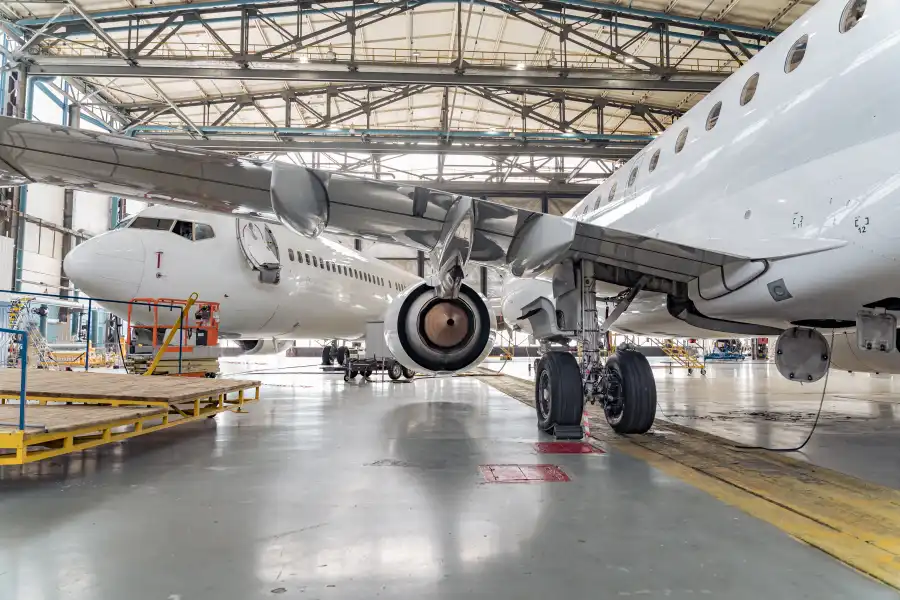
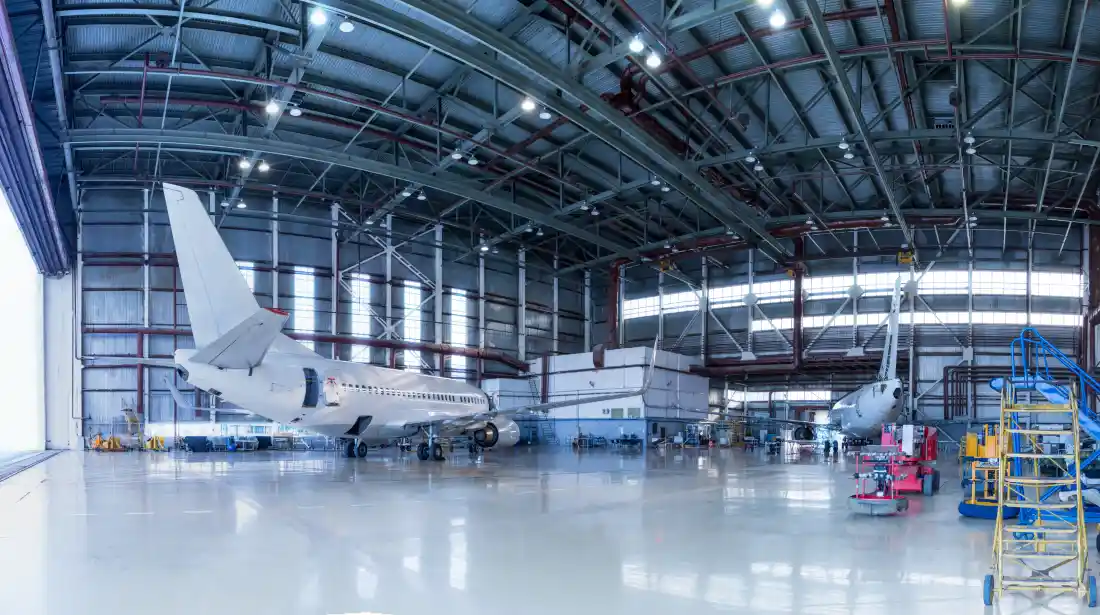
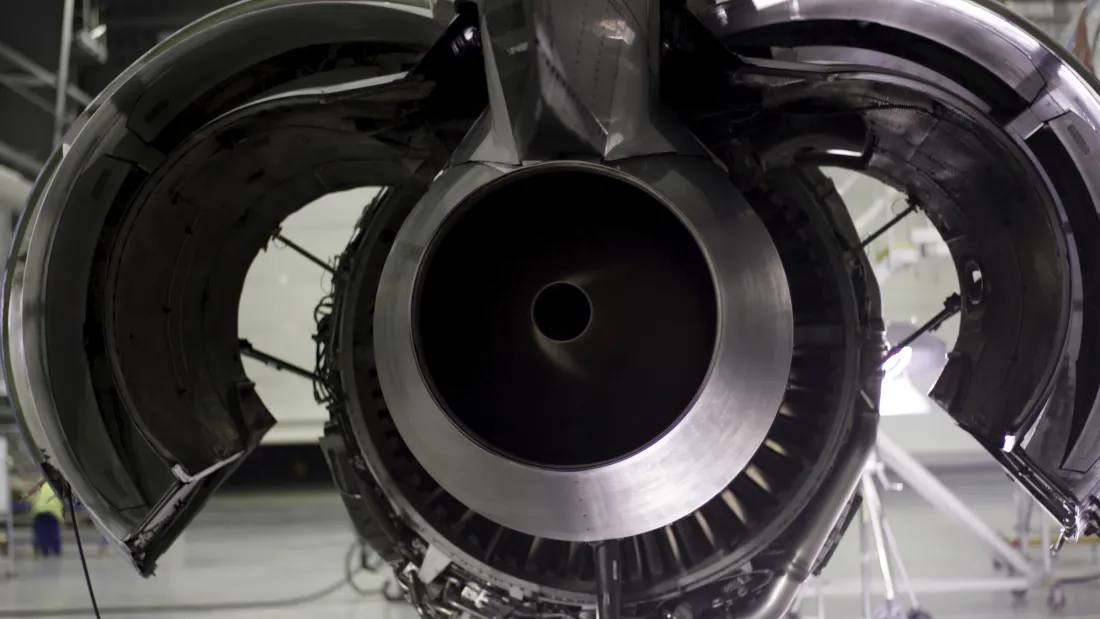
The fourth check is practical training: how many hours you spend with tools, components, engines and real aircraft, and where that happens. Employers hire AMEs for what they can do on an aircraft, so an institute that teaches only from slides is not preparing you for the job.
Under the EASA basic training rule, theory is capped at roughly half to three-fifths of a B-category course, which leaves a substantial share of a 2,400-hour B1 or B2 course for practical work and assessment. When you visit, look for:
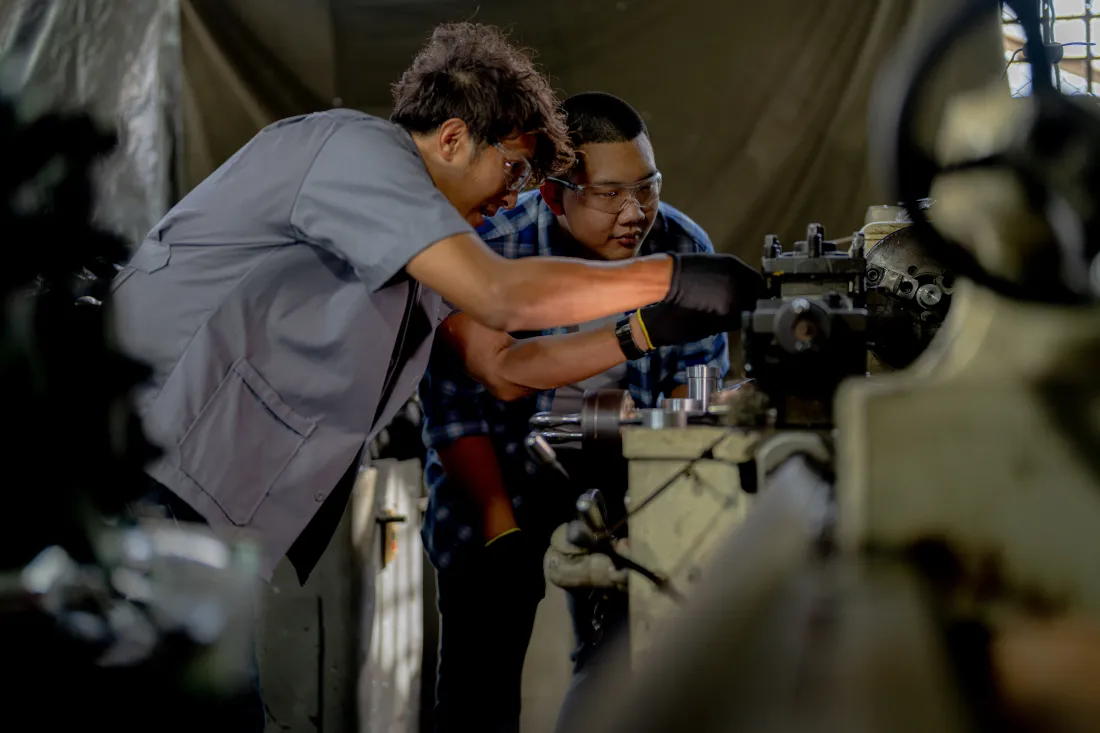
- Workshops you can see: sheet metal, riveting, wiring and connector work, hydraulics, and instrument benches.
- Real components: engines, landing gear, avionics units or a training airframe, not only models.
- Safety culture: tool control, protective equipment and supervised work.
- A practical assessment: how your hands-on skills are tested, not just whether you attended.
Check 5: Who Are Its On-the-Job Training Partners?
The fifth check is OJT: which airlines, MROs (maintenance, repair and overhaul organisations) or maintenance departments will host you, and how placements are allocated. OJT on live aircraft is where classroom knowledge becomes licence-ready experience, and it is the part of the course most likely to be vague in an advert.
| Question to ask | Good answer | Weak answer |
|---|---|---|
| Who are your OJT partners? | Named airlines or MROs, with a written agreement | "We have many contacts in the industry" |
| Is a placement guaranteed? | Clear rules on eligibility and timing | "Don't worry, it will be arranged" |
| What does OJT cost? | A stated fee or range, in writing | No figure until after you enrol |
| Where is OJT logged? | A logbook or task record signed by supervisors | No formal record |
For reference, ATH publishes its OJT cost as starting from PKR 8,000, depending on the partner and the scope of training, on its fee structure page.
Check 6: Who Will Actually Teach You?
The sixth check is the teaching team: whether your instructors hold aircraft maintenance licences or equivalent qualifications and have worked on real aircraft. The best AME instructors can explain a regulation and then show you the task card it applies to.
- Ask for instructor profiles: licence categories held, years in airline or MRO work, and subjects taught.
- Ask about the ratio: how many students share one instructor in workshop sessions.
- Sit in on a class if allowed: it is the quickest way to judge teaching quality.
- Check continuity: ask whether the same instructors teach the full module, or whether staff change often.
Check 7: Is the Full Cost Clear and in Writing?
The seventh check is the full cost of completion, not just the first-semester fee. A trustworthy institute gives you one written schedule showing admission, semester fees, exam fees, OJT, and any extras such as tools, uniforms or registration charges.
As a worked example, ATH's published fees (as of 9 November 2026, from its fee structure page) are:
| Fee type | Amount | Details |
|---|---|---|
| Admission fee | PKR 150,000 | Non-refundable, one-time |
| Semester fee | PKR 140,000 | Per semester, 6 semesters of 4 months each |
| Core tuition total | PKR 990,000 | Admission fee plus all six semester fees |
| EASA exam fee | €139 per exam | 16 exams in total (€2,224 overall), payable one month before each exam |
| On-the-job training (OJT) | From PKR 8,000 | Depends on partner and scope |
Use the same table format to compare every institute on your shortlist. Keep rupee and euro costs separate, since exam fees are paid exam by exam and move with the exchange rate. For a deeper breakdown, read AME course fees in Pakistan 2026.
Check 8: What Happens to Graduates, and Is Any Degree Recognised?
The eighth check is outcomes: what recent graduates are doing, and whether any degree attached to the course is properly recognised. Ask for evidence you can verify, because unsupported placement percentages are one of the most common claims in education advertising.
It also helps to understand that an aviation licence and an academic degree are two different things. The licence (PCAA or EASA) lets you certify aircraft work; a degree is recognised through the Higher Education Commission (HEC) for academic purposes. Be careful with documents: HEC's degree attestation requirements state that fake degrees and documents are confiscated and referred to the Federal Investigation Agency.
- Ask: "Can I speak to two or three recent graduates?"
- Ask: "Which employers have hired your graduates in the last two years?"
- Ask: "If a degree is included, which university awards it and how is it recognised?"
What Questions Should You Ask on a Campus Visit?
On a campus visit, ask questions that force a specific, checkable answer. Take this list with you, write down each answer, and ask for documents where possible.
- What is your approval number, and who holds it?
- Which licence and categories does this course lead to?
- Who conducts the module exams, where are they held, and what does each cost?
- How many hours of practical training are included, and where?
- Which airlines or MROs provide OJT, and is it in writing?
- What licences and experience do the instructors hold?
- What is the total cost of completion, including exams and OJT?
- What are the refund rules if I leave early?
- Can I see the workshops and the equipment I will train on?
- What did last year's graduates go on to do?
How Do You Compare Three Institutes Side by Side?
The simplest way to compare AME institutes is a scorecard: rate each one from 1 to 5 on the eight checks, using only what they proved in writing. Shortlist three institutes, fill in the table, and let the evidence decide.
| Check | Institute A | Institute B | Institute C |
|---|---|---|---|
| 1. Approval shown in writing | __ / 5 | __ / 5 | __ / 5 |
| 2. Licence route and categories | __ / 5 | __ / 5 | __ / 5 |
| 3. Exam arrangements | __ / 5 | __ / 5 | __ / 5 |
| 4. Practical training and facilities | __ / 5 | __ / 5 | __ / 5 |
| 5. Named OJT partners | __ / 5 | __ / 5 | __ / 5 |
| 6. Instructor quality | __ / 5 | __ / 5 | __ / 5 |
| 7. Full cost in writing | __ / 5 | __ / 5 | __ / 5 |
| 8. Verifiable outcomes | __ / 5 | __ / 5 | __ / 5 |
| Total | __ / 40 | __ / 40 | __ / 40 |
Give checks 1 and 2 extra weight. An institute that scores well on facilities but cannot prove its approval should not win the comparison.
Which Red Flags Should Make You Walk Away?
Walk away from any AME institute that cannot back its main claims with documents. These warning signs come up again and again when students compare institutes in Pakistan:
- No approval number, or an approval that belongs to an unnamed "foreign partner".
- "Guaranteed job" promises with no named employers or graduate contacts.
- Fees quoted verbally only, or exam and OJT costs "to be confirmed later".
- Pressure to pay today to "secure a seat", with no written refund policy.
- No workshops on show, or practical training described only as "simulation".
- Vague licence wording such as "internationally recognised diploma" without naming the authority.
ATH Perspective: How Aviation Training Hub Answers the Checklist
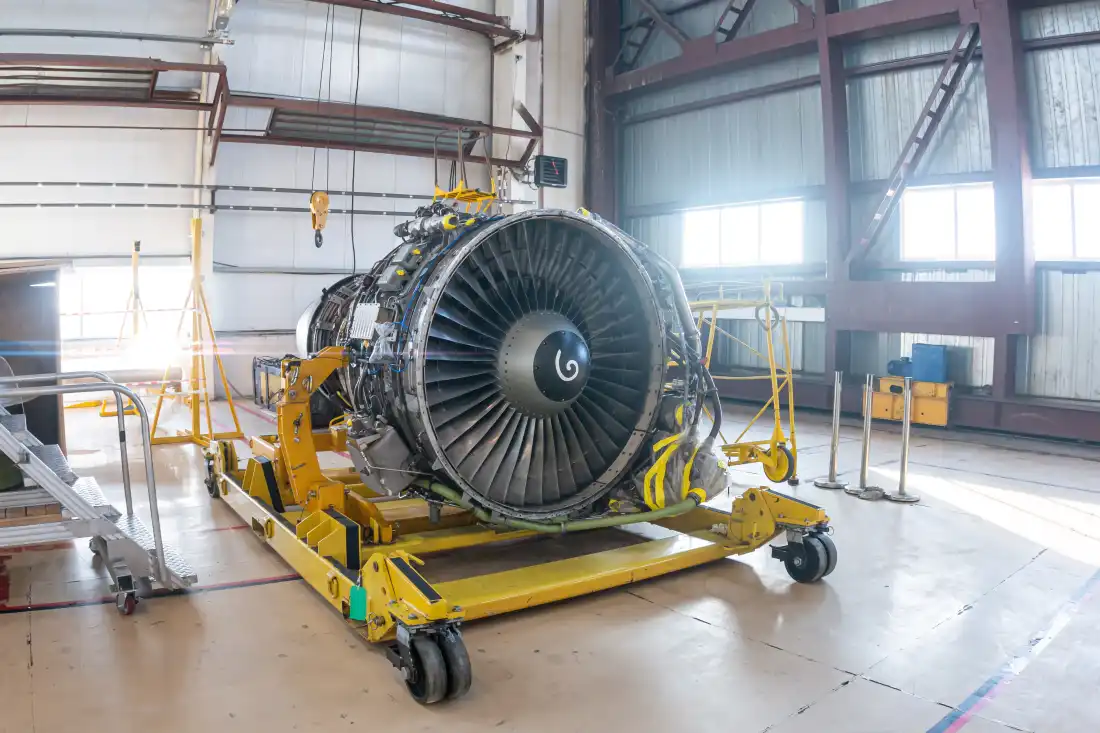
This section describes Aviation Training Hub's own programme, not a third-party finding. ATH's view is that every institute, including ATH, should be able to answer this checklist openly and in writing. Here is how ATH's Aircraft Maintenance Engineering programme answers each point, based on its published programme and fee pages.
| Check | How ATH answers it |
|---|---|
| Licence route | A two-year, full-time programme built around EASA Part-66 B1 and B2 modules |
| Exams | 16 EASA module exams sat progressively, at €139 each, with sittings listed on ATH's exams page |
| Practical training | Assignment and project-based assessment built on practical tasks that reflect real maintenance work |
| OJT | Through ATH's partner network, from PKR 8,000 depending on partner and scope |
| Cost | PKR 990,000 core tuition (PKR 150,000 admission plus six semesters of PKR 140,000), published in full |
| Intakes and entry | January, April, July, September and November intakes; Matric or FSc with at least 50% in Mathematics and Physics |
| Progression | A route to the BSc (Hons) Aircraft Engineering Management top-up for eligible graduates |
Where a point needs a document, such as the details of an exam partner's approval, ask ATH's admissions team for it during a campus visit. If you want the full picture of duration, fees and eligibility in one place, see Aircraft Maintenance Engineering course duration, fees and eligibility at ATH.
Common Mistakes When Choosing an AME Institute
- Choosing on location alone. A nearby campus is convenient, but approval and practical training matter more over two years.
- Comparing first-semester fees only. The total cost of completion, including euro exam fees, is the real number.
- Confusing a degree with a licence. A BS degree and an AML are different; know which one you are buying, or whether you get both.
- Skipping the licensing basics. Read how the AME licence in Pakistan works under PCAA before you compare courses.
- Not visiting. Ten minutes in the workshop tells you more than any social media post.
Conclusion
Knowing how to choose an AME institute comes down to evidence. Check the PCAA ANO-147 or EASA Part-147 approval, the exact licence categories, the exam arrangements, real hangar access, named OJT partners, qualified instructors, a full written fee schedule and verifiable graduate outcomes. Score three institutes against those eight points, weight approval and licence route most heavily, and choose the one that proves the most. With global demand for 728,000 new maintenance technicians forecast by Boeing over the next 20 years, the right institute can turn two years of training into a long career.
If you would like to see how ATH measures up against this checklist, visit a campus and ask us every question on the list.
Frequently Asked Questions
Common questions about how to choose an AME institute in Pakistan
The regulatory approval. Ask for a current PCAA ANO-147 or EASA Part-147 approval number and certificate, and check whether the approval belongs to the institute itself or to a partner organisation.
Ask the institute for its approval number and certificate, check the organisation name, scope and expiry date, and confirm it with the PCAA through its official website, pcaa.gov.pk.
They serve different licences. An EASA Part-147 partner supports an EASA Part-66 route, while a PCAA ANO-147 approval supports a PCAA licence. Ask which licence your course leads to and which body controls your exams.
Under EASA Part-147, a full basic course for B1.1 or B2 is 2,400 hours and B1.2 is 2,000 hours, with theory making up 50 to 60 percent of a B-category course.
Ask about module exam fees (often charged in euros), OJT costs, resit fees, tools, registration charges and the refund policy. At ATH, exams are €139 each and OJT starts from PKR 8,000.
Not automatically. A degree is an academic qualification recognised through HEC, while a licence is issued by an aviation authority after the required training, exams and experience. Ask whether a course includes both.
Be careful. Ask for named employers, recent graduate contacts and written OJT agreements. A guarantee with no evidence behind it is a red flag.
Compare at least three institutes using the same 8-point scorecard, give approval and licence route the most weight, and visit each campus before paying any fee.