Practical aircraft maintenance engineering training is the hands-on half of becoming a licensed Aircraft Maintenance Engineer (AME): supervised workshop tasks, electrical and avionics bench work, inspections on real aircraft systems and structured on-the-job training (OJT), all assessed against the EASA Part-66 standard that Pakistani regulators build on. Theory teaches you why an aircraft system works. Practical training proves you can inspect it, fix it and sign for it safely. That second half is what employers test first, and demand for it is rising: Boeing's 2026 Pilot and Technician Outlook forecasts 728,000 new maintenance technicians will be needed worldwide over the 20 years from 2026 to 2045.
This guide is written for Pakistani students and parents comparing AME programmes. It explains what practical training actually involves, from the first file and rivet in a workshop to type training on a specific aircraft, how it is assessed, what the regulations say about it, and how Aviation Training Hub (ATH) structures the hands-on side of its two-year Aircraft Maintenance Engineering programme in Pakistan. Where a rule or number is quoted, the source is linked so you can check it yourself.
What Is Practical Aircraft Maintenance Engineering Training?
Practical aircraft maintenance engineering training is the skills-based element of an AME course in which students perform real maintenance tasks with real tools under an instructor's supervision, then are assessed on whether they performed them correctly, safely and in line with the maintenance manual. It sits alongside the theory (knowledge) element of each module and is a required part of an approved basic training course, not an optional extra.
In the EASA framework that Pakistani AME training follows, the knowledge side is examined through module exams, while the practical side is assessed task by task. EASA's own Part-147 FAQ makes the point directly: for an applicant's training to be fully credited, "all the practical assessments are performed and passed successfully" and there must be "a right proportion of theoretical and practical training for each subject."
- Theory element: classroom learning of principles, regulations and system design, tested through multiple-choice and essay module exams.
- Practical element: supervised workshop and aircraft tasks, recorded in a training logbook and assessed by a qualified assessor.
- On-the-job training (OJT): time spent inside a working maintenance organisation, building real experience under licensed engineers.
- Type training: aircraft-specific theory and practical training taken after the basic licence, covered later in this guide.
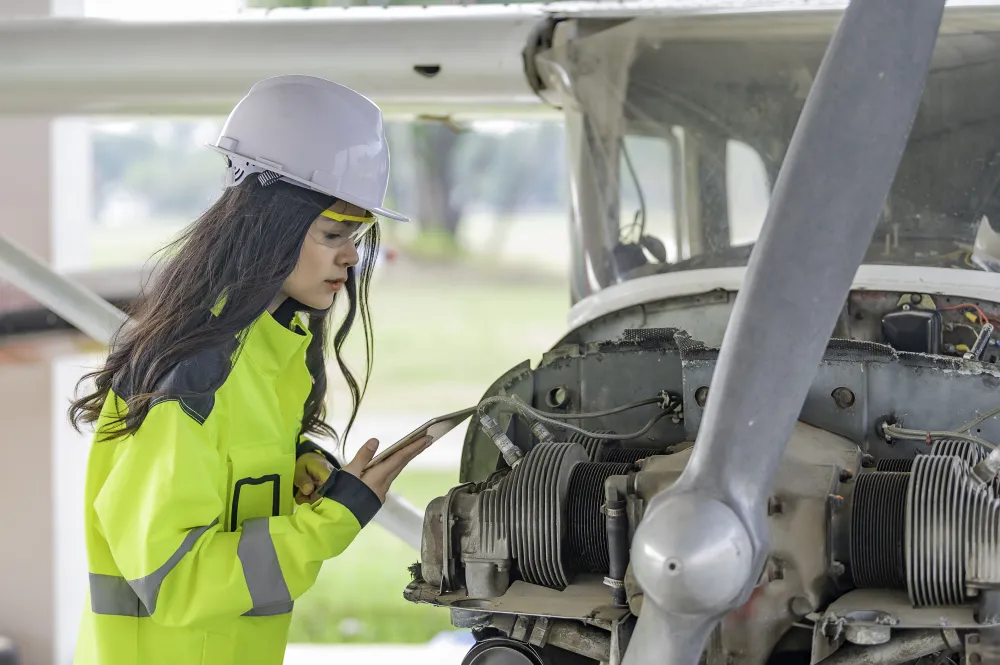
Why Does Hands-On Training Matter So Much in AME?
Hands-on training matters because an AME's signature on a Certificate of Release to Service (CRS) legally confirms an aircraft is fit to fly, and no employer or regulator will trust that signature to someone who has only read about the task. Practical skill is the difference between knowing the torque value for a fastener and being able to apply it, lock-wire it and record it correctly at 3am on a busy apron.
There are three practical reasons Pakistani students should weigh it heavily when choosing an institute:
- It shortens the road to a licence. Completing a full approved basic training course, including its practical assessments, is what earns the reduced practical experience requirement before a licence is issued. EASA's Part-147 FAQ notes that applicants who lose that credit fall back on the longer experience periods set out in Part-66 (66.A.30), which run to as much as five years.
- It is what interviews test. Airline and MRO hiring panels in Pakistan commonly include bench or tool tests alongside written papers, a pattern we cover in our guide to AME internships and first jobs in Pakistan.
- It builds safety habits early. Tool control, foreign object debris (FOD) awareness and correct documentation are habits, not facts. They are formed through repetition in a workshop, long before a student touches a revenue aircraft.
What Does Practical AME Training Look Like, Stage by Stage?
Practical AME training usually moves through four stages: basic workshop skills, systems and bench work, live maintenance exposure through OJT, and finally aircraft type training after the basic licence. Each stage builds on the previous one, and the table below shows what a student typically does at each.
| Stage | Where it happens | Typical tasks | Linked Part-66 modules |
|---|---|---|---|
| 1. Basic workshop skills | Training workshop | Filing, drilling, riveting, sheet metal repair, measuring with vernier calipers and micrometers, torque and locking techniques | M6 Materials and Hardware, M7 Maintenance Practices |
| 2. Electrical and avionics bench work | Electrical and electronics lab | Wiring looms, crimping and soldering, continuity and insulation tests, reading wiring diagrams, using multimeters | M3, M4, M5, M7 |
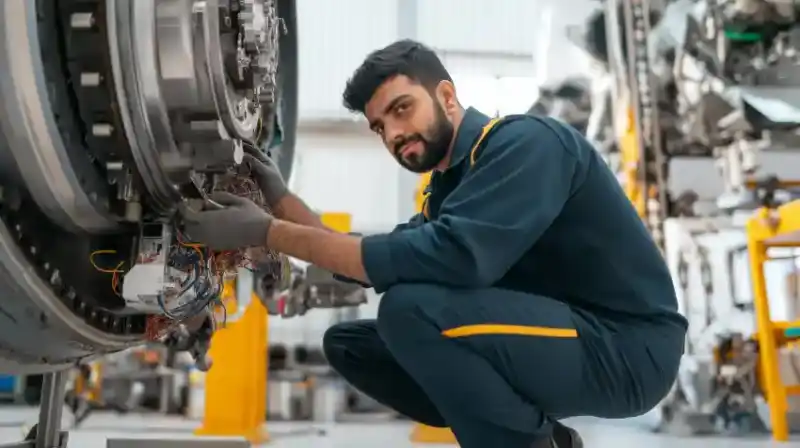
| 3. Systems and live maintenance (OJT) | Partner maintenance organisation or hangar | Supervised inspections, component removal and installation, servicing, task cards and logbook entries | M7, M11, M13, M14, M15 |
| 4. Aircraft type training | Part-147 organisation, often on or around a real aircraft | Type-specific system checks, troubleshooting and the practical tasks list for one aircraft model | Type rating (after basic licence) |
Stage 1: Basic Workshop and Hand-Skills Training
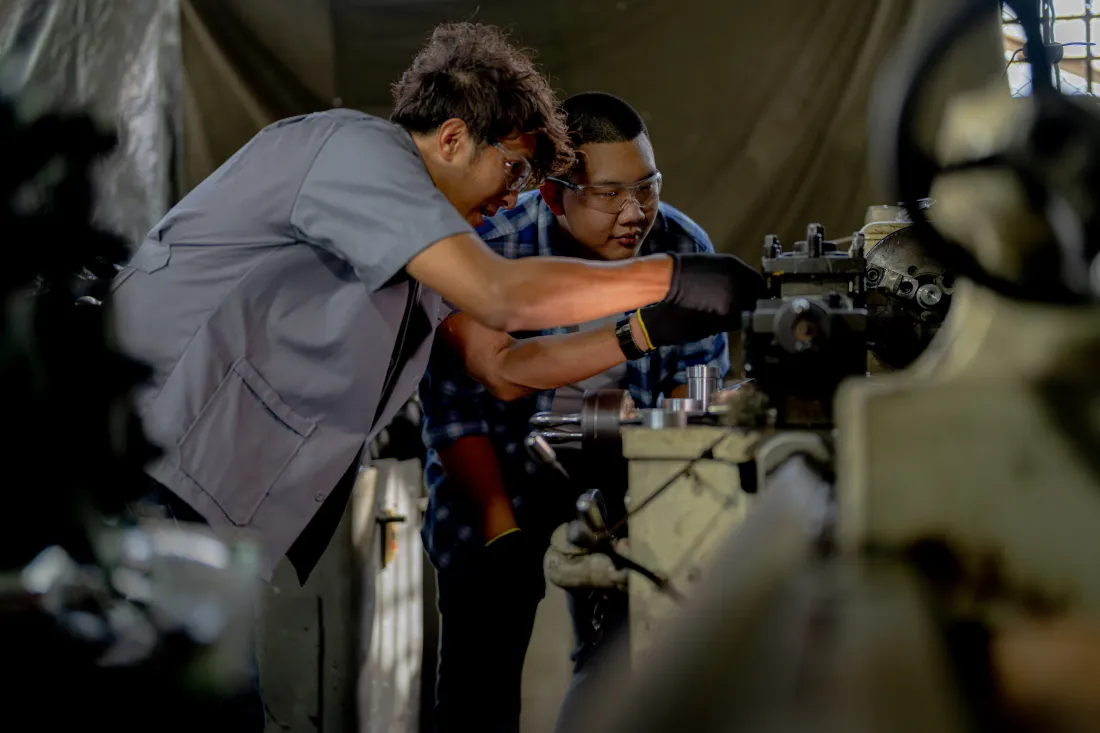
Basic workshop training is where every AME student starts, learning to use hand tools, measuring instruments and fasteners to aviation standards before working on anything that flies. Typical exercises include filing a metal block to a set tolerance, drilling and countersinking, installing and removing solid rivets, making a small sheet metal patch repair, and applying the correct torque and locking (lock wire, split pins and self-locking nuts).
- Precision measurement: steel rules, vernier calipers, micrometers and feeler gauges.
- Fastening and locking: torque wrenches, lock wiring and safety devices.
- Structural repair basics: riveting, sheet metal forming and corrosion identification.
- Workshop discipline: tool control boards, FOD checks and clean, documented work areas.
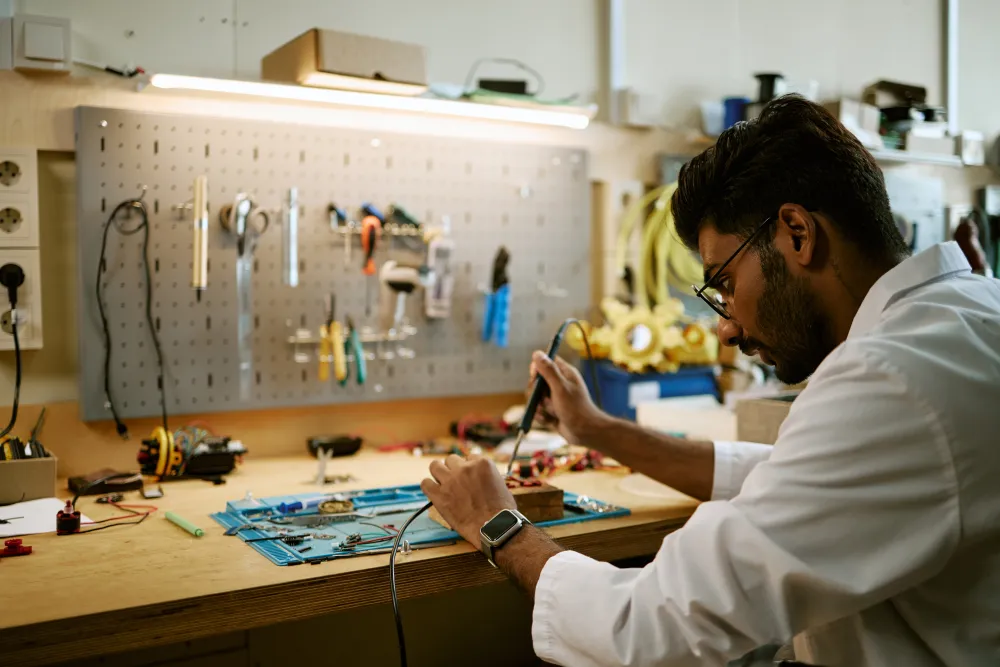
Stage 2: Electrical, Electronics and Avionics Bench Work
Electrical and avionics bench work teaches students to build, test and fault-find circuits and wiring before they meet them inside an aircraft. Modern aircraft are wired with many kilometres of cable, so a B1 or B2 engineer who cannot read a wiring diagram, crimp a contact correctly or prove a circuit with a meter will struggle from day one.
- Wiring practices: stripping, crimping, splicing, connector pin insertion and harness routing.
- Testing: continuity, resistance and insulation checks with multimeters and testers.
- Soldering and electronic components: the hands-on side of Electrical Fundamentals (M3), Electronic Fundamentals (M4) and Digital Techniques (M5).
- Fault finding: tracing a fault from symptom to cause using diagrams and logical isolation.
Students deciding between mechanical and avionics specialisation will find this stage revealing. Our comparison of B1 vs B2 licence categories explains how this bench work maps to each career path.
Stage 3: Systems Training and On-the-Job Training (OJT)
On-the-job training is supervised work inside a real maintenance environment, where students apply workshop skills to aircraft systems and learn how a working hangar runs, from task cards and shift handovers to sign-offs. It is the closest a student gets to the job before qualifying.
During OJT, a student normally shadows licensed engineers and performs tasks such as panel removal and refitting, wheel and brake changes, servicing fluids, visual inspections and filling in maintenance records. Every task is logged, and the logbook becomes evidence of experience when the student later applies for a licence.
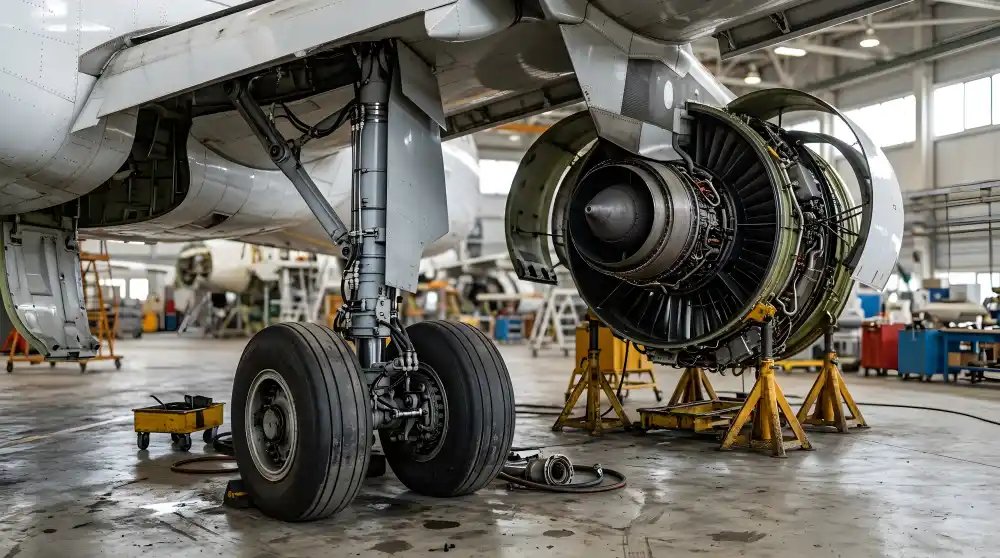
Stage 4: Aircraft Type Training After the Basic Licence
Aircraft type training is aircraft-specific training (for example, on an Airbus A320 or ATR 72) that an engineer completes after the basic licence so that the type can be endorsed on that licence. It has its own theory and practical elements, and the practical element has clear rules.
- Who can deliver it: according to EASA's Part-147 FAQ, only an approved Part-147 organisation can provide aircraft type training, including the practical element, although it may physically take place in a Part-145 maintenance organisation under the Part-147 organisation's control.
- How tasks are chosen: the same FAQ explains that practical tasks must be "representative of the aircraft and systems both in complexity and diversity," with half or more of the tasks selected from each relevant line of the task list.
- How long it lasts: for aeroplanes with a maximum take-off mass of 30,000 kg or more, EASA guidance recommends the practical element last not less than two weeks, unless a shorter duration is justified to the authority.
Type training is usually employer-sponsored or taken once a graduate knows which fleet they will work on. Our guide to aircraft type ratings for AMEs covers when you need one and how to plan for it.
How Is Practical AME Training Assessed?
Practical AME training is assessed task by task by a qualified assessor, who checks that the student performed each task correctly, safely and in accordance with approved data, and records the result. Unlike module exams, there is no single paper to pass; competence is demonstrated repeatedly over the course.
EASA's Part-66 FAQ describes a practical assessment as a way of "measuring the competence of the student by evaluating three major factors associated to the learning objectives: knowledge, skills and attitude."
| What assessors look at | What a pass looks like |
|---|---|
| Knowledge | The student can explain why each step is done and refer to the correct manual or task card. |
| Skills | The task is completed accurately, within tolerances, with the right tools and correct torque or locking. |
| Attitude | Safety precautions, tool control, cleanliness and honest documentation are followed without prompting. |
| Records | The logbook or task sheet is completed and signed correctly, since an unrecorded task legally did not happen. |
Practical assessment runs alongside the knowledge exams. For tips on the written side, see our PCAA AME exam preparation guide.
What Do PCAA and EASA Rules Say About Practical Training?
Pakistan's licensing system for AMEs is administered by the Pakistan Civil Aviation Authority (PCAA), and AME training in Pakistan is closely aligned with the EASA Part-66 and Part-147 framework. In both systems, practical training is a defined, required part of approved training rather than something left to the student.
| Rule area | What it means for a student | Source |
|---|---|---|
| Licence categories (A, B1, B2, C) | Your practical training should match the category you are working toward, since B1 and B2 privileges differ. | EASA FAQ: Part-66 licence categories |
| Full basic course credit | All practical assessments must be passed, with the right theory-to-practical balance, to gain full experience credit. | EASA Part-147 FAQ |
| Experience before licence | Without an approved full course, the experience required under 66.A.30 is longer, up to five years. | EASA Part-147 FAQ |
| Type training practical element | Must be delivered by or under a Part-147 organisation; at least two weeks recommended for large aeroplanes. | EASA Part-147 FAQ |
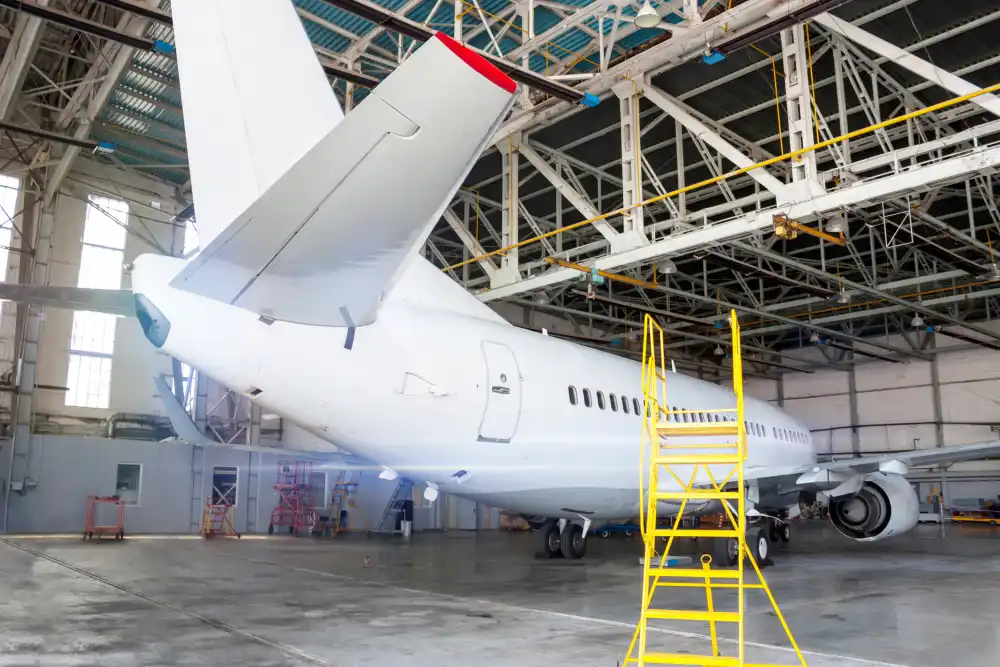
Classroom vs Hangar: How Theory and Practical Training Fit Together
Classroom theory and hangar practice are two halves of the same module, and good programmes schedule them so a student practises a skill soon after learning the principle behind it. Learning hydraulics theory in one semester and touching a hydraulic component two years later is a warning sign.
| Topic | In the classroom | In the workshop or hangar |
|---|---|---|
| Materials and hardware | Alloy types, corrosion, fastener standards | Identifying corrosion, installing rivets and bolts, applying locking |
| Electrical systems | Ohm's law, AC and DC theory, circuit protection | Wiring repairs, continuity and insulation testing, connector work |
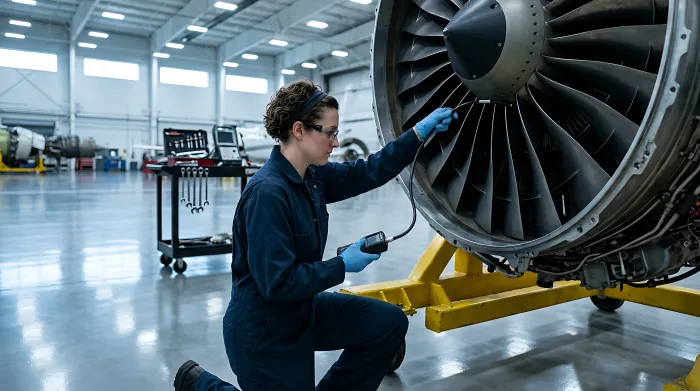
| Gas turbine engines | Engine cycles, components, performance | Borescope and visual inspection principles, component identification |
| Maintenance practices | Safety, documentation, human factors | Task cards, tool control, logbook entries, ground handling |
Our explainer on Part-66 modules and what you study in each category lists every module so you can see which have the heaviest practical load.
How Can You Judge an Institute's Practical Training Before Enrolling?
You can judge an institute's practical training by asking specific, checkable questions and by visiting the campus to see the workshops in use. A glossy brochure tells you little; a workshop with worn tools, active student projects and clear tool-control boards tells you a lot.
- Ask to see the workshops and labs during a normal teaching day, not only on an open day.
- Ask how practical tasks are recorded and whether you keep a personal training logbook.
- Ask who assesses practical tasks and what their aviation maintenance background is.
- Ask where OJT takes place, with which partner organisations, and what it costs.
- Ask how practical sessions are timed against theory for each module.
- Ask about the ratio of students to instructors during practical sessions.
- Ask what happens if you fail a practical assessment, and how retakes work.
- Ask how graduates moved into jobs or further OJT, and whether that can be verified.
ATH Perspective: How Aviation Training Hub Structures Practical Training
This section describes Aviation Training Hub's (ATH) own programme structure and teaching approach. It is not a third-party finding. ATH runs its Aircraft Maintenance Engineering programme over two years and six semesters of four months each, from campuses in Islamabad and Karachi, with intakes in January, April, July, September and November. The coursework integrates EASA Part-66 B1 and B2 modules.
- Foundations first (Year 1): Mathematics (M1), Physics (M2), Electrical Fundamentals (M3), Electronic Fundamentals (M4), Digital Techniques (M5), Materials and Hardware (M6), Basic Aerodynamics (M8), Human Factors (M9) and Propellers (M17).
- Applied modules (Year 2): Maintenance Practices (M7), Aviation Legislation (M10), Aeroplane Aerodynamics (M11), Aircraft Aerodynamics, Structures and Systems (M13), Propulsion (M14) and Gas Turbines (M15).
- Assessment style: ATH deliberately uses assignment- and project-based assessment rather than exams alone, with practical tasks that mirror real maintenance scenarios so applied judgement develops alongside theory.
- On-the-job training: OJT is arranged through partner organisations, with costs starting from PKR 8,000 depending on the partner and scope, as listed on ATH's published fee structure.
- Progression: graduates can top up to a BSc (Hons) Aircraft Engineering Management degree for management-track roles.
For the full breakdown of duration, fees and eligibility, read our pillar guide to Aircraft Maintenance Engineering course duration, fees and eligibility at ATH. The best way to judge the hands-on side, though, is to see it in person.
Common Mistakes Students Make With Practical Training
The most common mistake is treating practical sessions as less important than exams, when in practice they decide both licence credit and employability. Avoid these five:
- Not keeping your logbook current. Fill it in the same day. Reconstructing tasks months later is unreliable and can be rejected.
- Rushing for speed over accuracy. Assessors mark correctness and safety first; speed comes with repetition.
- Ignoring human factors. Fatigue, distraction and complacency cause real incidents, which is why Human Factors (M9) is a full module.
- Skipping manuals. Working from memory instead of approved data is a habit employers screen for and reject.
- Choosing an institute on price alone. A cheaper course with little workshop time can cost more in delayed licensing.
Conclusion: Is Practical Training the Deciding Factor?
For most Pakistani students, practical aircraft maintenance engineering training should be one of the deciding factors when choosing an AME programme, because it affects how quickly you can be licensed, how well you perform in interviews and how safely you work for the rest of your career. With Boeing forecasting 728,000 new maintenance technicians needed worldwide by 2045, the graduates who stand out will be the ones who can show what they can do, not only what they know.
If you are comparing institutes, visit, ask the eight questions above and watch a practical session before you decide. You are welcome to do exactly that at ATH.
Frequently Asked Questions
Common questions about practical aircraft maintenance engineering training
It is the hands-on element of an AME course: supervised workshop tasks, electrical and avionics bench work and on-the-job training, each assessed for correctness, safety and proper documentation.
Yes. Under the EASA framework, all practical assessments must be passed for a basic training course to count in full. Without full course credit, applicants face longer experience requirements of up to five years before licensing.
Expect hand tools, torque wrenches, vernier calipers and micrometers in the workshop, plus multimeters, crimping tools and insulation testers on the electrical bench.
A qualified assessor checks each task for knowledge, skills and attitude, the three factors EASA lists, and the result is recorded in your training records.
Practical training usually happens in the institute's workshops and labs. OJT happens inside a working maintenance organisation, where you perform supervised tasks on real aircraft and log them.
It depends on the aircraft. For aeroplanes of 30,000 kg MTOM or more, EASA guidance recommends at least two weeks of practical training unless a shorter period is justified.
ATH lists OJT starting from PKR 8,000, depending on the partner organisation and scope, separate from tuition.
Yes. You can book a campus visit at the Islamabad or Karachi campus to see the facilities and ask about practical sessions and OJT before you apply.