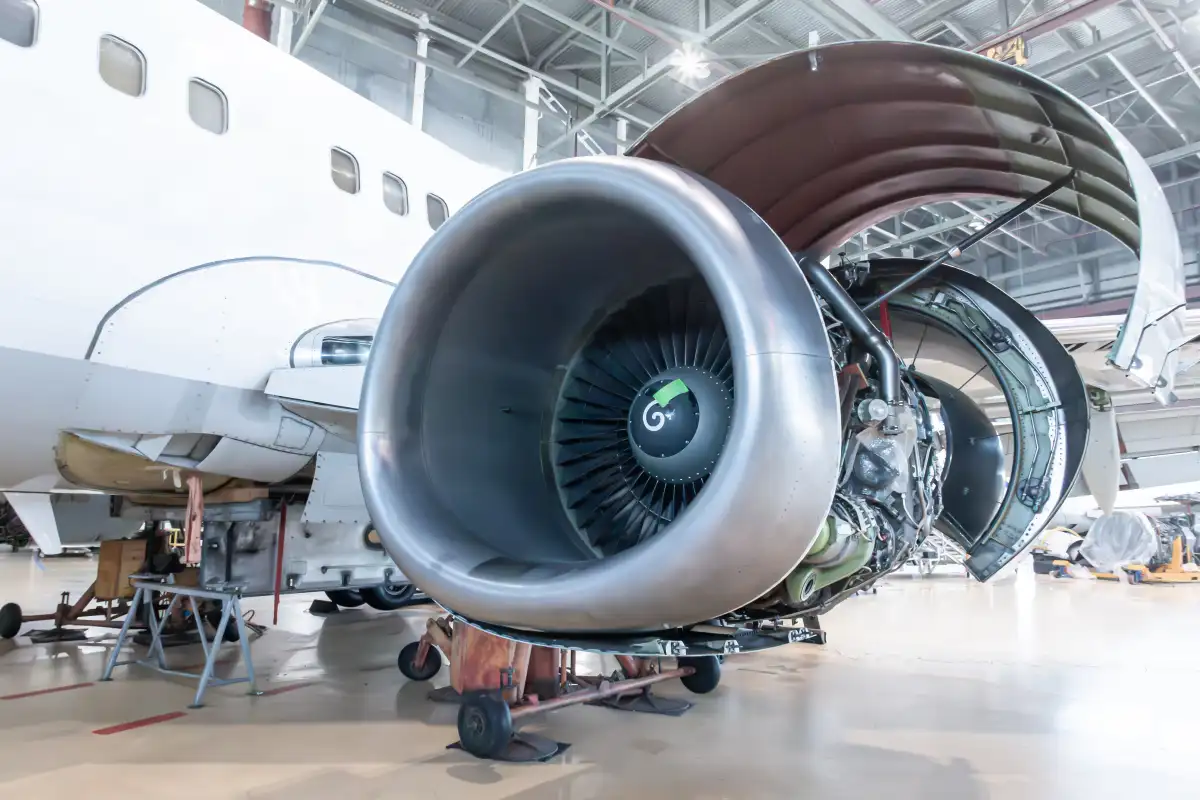
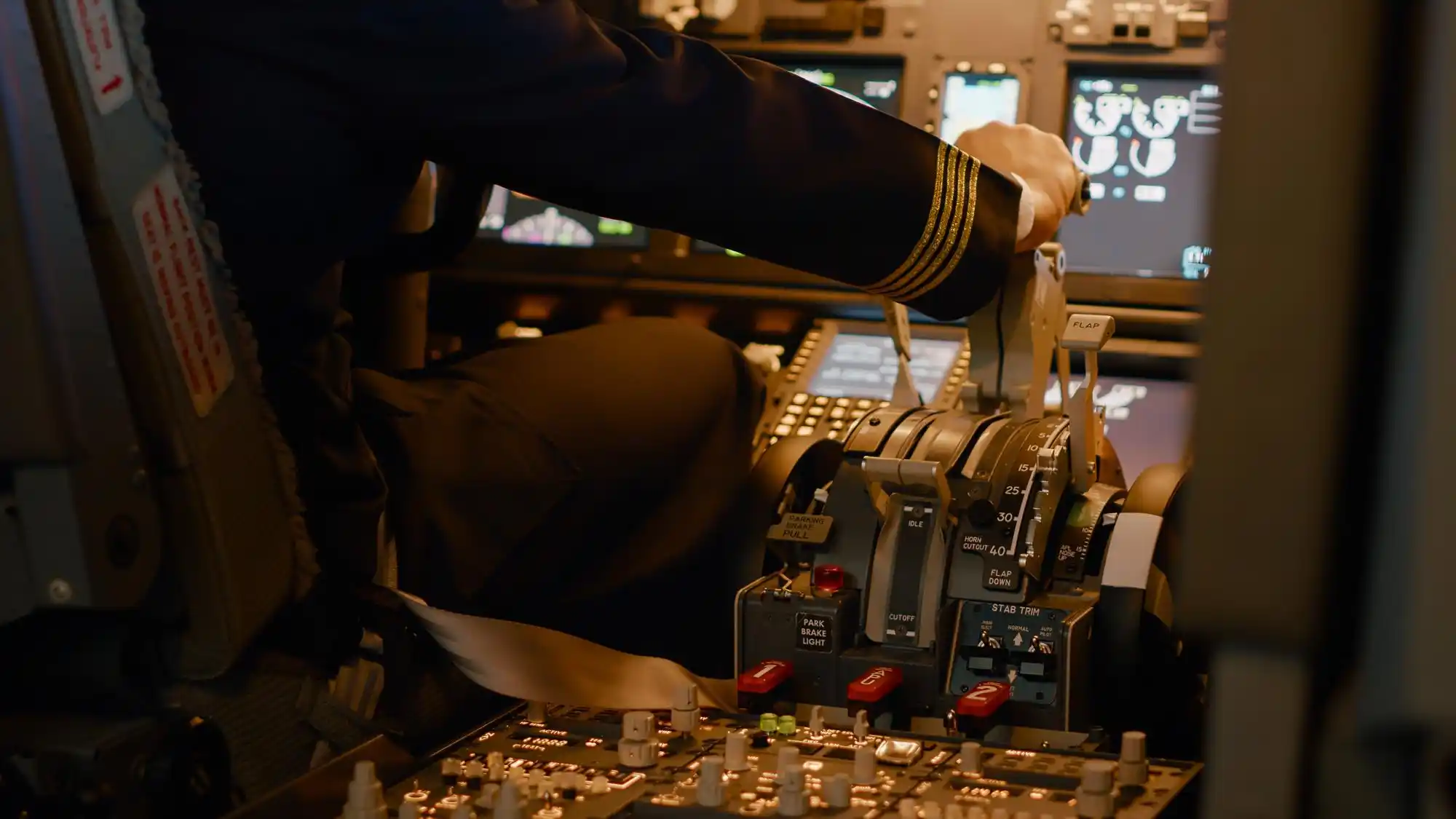
AME (Aircraft Maintenance Engineering) is a license-based training path, regulated by PCAA and EASA, that qualifies you to inspect, repair, and legally certify aircraft as airworthy in 2 to 4 years. Aeronautical Engineering is a 4-year, PEC-accredited university degree focused on designing, analyzing, and researching aircraft and aerospace systems rather than maintaining them. The two lead to genuinely different jobs, timelines, and costs, and confusing them is the single most common mistake Pakistani students make when planning an aviation career.
This guide breaks down exactly how AME and Aeronautical Engineering differ in Pakistan: what each path actually studies, which regulator licenses or accredits it, how long each one takes, what it costs, what it pays, and where it leads once you graduate. Where it helps, this guide draws on Aviation Training Hub's (ATH) own AME program as a worked, real example of how the AME side of this comparison plays out in practice.
What Is an Aircraft Maintenance Engineer (AME)?
An Aircraft Maintenance Engineer (AME) is a licensed professional who inspects, repairs, and certifies aircraft as airworthy before they fly, holding legal signing authority that most engineering degrees do not carry on their own. In Pakistan, this license is issued by the Pakistan Civil Aviation Authority (PCAA), and many institutes also teach toward an EASA Part-66 license built on the same category structure, which is recognized across the European Union and by many international operators.
- Scheduled and unscheduled inspections of airframes, engines, and systems between flights and during heavier maintenance checks.
- Diagnosing and rectifying defects across mechanical, hydraulic, electrical, and avionics systems.
- Issuing a Certificate of Release to Service (CRS), the legal document confirming an aircraft is fit to fly. No aircraft legally departs without a licensed AME's sign-off.
- Maintaining compliance records against the manufacturer's maintenance schedule and the regulator's airworthiness directives.
AME is a vocational, license-based pathway, not a research or design discipline. Entry typically requires a Matric or FSc qualification with at least 50% marks in Mathematics and Physics, and the training is built around hands-on practice, progressive module exams, and mandatory on-the-job training (OJT) rather than a purely academic curriculum.
What Is an Aeronautical Engineer?
An Aeronautical Engineer is a degree-qualified professional who designs, analyzes, tests, and improves aircraft, engines, and aerospace systems, working before an aircraft is ever built rather than maintaining it after delivery. The degree is a 4-year Bachelor of Engineering or Bachelor of Science, and in Pakistan it needs to be accredited by the Pakistan Engineering Council (PEC) and recognized by the Higher Education Commission (HEC) for the graduate to later register as a Registered Engineer and, with experience, a Professional Engineer.
- Designing and modeling airframes, wings, engines, and control systems using aerodynamics, structural analysis, and materials science.
- Running simulations and tests on stress loads, fuel efficiency, propulsion performance, and structural fatigue before a design is finalized.
- Researching and developing new aerospace technologies, from lighter composite materials to more efficient propulsion systems.
- Working in manufacturing and R&D roles rather than day-to-day aircraft turnaround, typically for a defense contractor, manufacturer, space agency, or research institution.
Aeronautical Engineering (sometimes taught in Pakistan as Aerospace Engineering, a near-identical curriculum) is a theory-heavy, mathematics-intensive academic degree. Entry requires FSc Pre-Engineering (or an equivalent, math-heavy qualification) and, at most Pakistani universities, a passing score on ECAT or the university's own engineering entry test.

Aeronautical vs Aerospace vs Avionics Engineering: Are They the Same?
Aeronautical and Aerospace Engineering are effectively the same discipline in Pakistan, while Avionics Engineering is a narrower specialization within it, and none of the three is the same as AME. Students frequently mix these terms up while comparing prospectuses, so it is worth being precise before you apply anywhere.
- Aeronautical Engineering traditionally refers to atmospheric flight (aircraft that operate within Earth's atmosphere). Most Pakistani universities now use "Aerospace Engineering" as the broader, more current program title, but the core curriculum, PEC accreditation category, and career outcomes are functionally the same.
- Aerospace Engineering is the umbrella term covering both aeronautical (atmospheric) and astronautical (space) flight, which is why newer Pakistani degree titles favor it over the older "aeronautical" label.
- Avionics Engineering is a narrower specialization focused specifically on aircraft electronics, navigation, and communication systems, sometimes offered as its own degree (as at Superior University) or as a specialization track within a broader aerospace program.
- AME sits outside this academic family entirely. It is a license, not a degree, and its B1/B2 category split (mechanical vs avionics-focused maintenance) is a licensing distinction, not an academic specialization.
For the purposes of this guide, "Aeronautical Engineering" and "Aerospace Engineering" can be treated as interchangeable, since the comparison against AME holds true for both under either name.
AME vs Aeronautical Engineering: Key Comparison Table
The fastest way to see how these two paths differ is side by side. AME is a license you earn to work on aircraft that already exist; Aeronautical Engineering is a degree you earn to help design the aircraft that come next.
| Feature | AME | Aeronautical Engineering |
|---|---|---|
| Credential type | License (PCAA / EASA Part-66) | Degree (BE / BS, PEC-accredited, HEC-recognized) |
| Duration | 2 to 4 years, depending on program | 4 years (8 semesters) |
| Regulatory body | PCAA, EASA | PEC (accreditation and registration), HEC (degree recognition) |
| Entry eligibility | Matric or FSc with 50% in Math and Physics | FSc Pre-Engineering (or equivalent) plus ECAT or university entry test |
| Core focus | Inspecting, repairing, and certifying aircraft as airworthy | Designing, analyzing, and researching aircraft and aerospace systems |
| Practical exposure | High, mandatory OJT before licensing | Moderate, labs and final-year projects; internships vary by university |
| Authority to release aircraft to service | Yes, a licensed AME signs the CRS | No, not authorized to certify an aircraft airworthy |
| Typical employers | Airlines, MROs, private carriers, ground handling companies | Pakistan Aeronautical Complex, SUPARCO, NESCOM, manufacturers, R&D labs, academia |
What You Will Actually Study: Curriculum Differences
The clearest way to tell these two paths apart is to look at a week of coursework in each. One is built around torque wrenches, wiring diagrams, and defect logs. The other is built around differential equations, wind-tunnel data, and CAD models.
The AME Curriculum: Part-66 Modules
The AME curriculum is structured around 16 EASA Part-66 modules, split across two years of foundational and specialized training and mapped to Part-66 B1 (mechanical) and B2 (avionics) category requirements.
- Year 1 (foundational): Mathematics, Physics, Electrical Fundamentals, Electronic Fundamentals, Digital Techniques, Materials & Hardware, Basic Aerodynamics, Human Factors, and Propellers.
- Year 2 (specialized): Maintenance Practices, Aviation Legislation, Aeroplane Aerodynamics, Aircraft Structures and Systems, Gas Turbines, and Propulsion.
- Throughout both years: progressive EASA/PCAA module exams sat one at a time as each module finishes, plus concurrent on-the-job training with a partner MRO, airline, or maintenance organization.
Assessment leans heavily on practical, assignment-based tasks that mirror real maintenance scenarios, since the qualification exists to certify that a graduate can safely work on a live aircraft, not just pass a written paper.
The Aeronautical Engineering Curriculum
The Aeronautical Engineering curriculum is built around advanced mathematics and physics theory applied to flight, spread across 8 semesters of a PEC-accredited degree.
- Foundational years (1 and 2): Calculus and differential equations, engineering mechanics, thermodynamics, materials science, computer programming, and introductory aerodynamics.
- Core years (3 and 4): Fluid dynamics and computational fluid dynamics (CFD), aircraft structures, propulsion and gas turbine theory, flight mechanics and stability, avionics and control systems, and aerospace materials.
- Final year: A capstone design project, typically an original aircraft or subsystem design, plus electives in specializations such as spacecraft design, UAV systems, or aerodynamics research.
Assessment is exam and project-based, and the degree deliberately builds the theoretical depth needed for research, simulation, and original design work rather than hands-on maintenance procedure.
A Day in the Life: AME vs Aeronautical Engineer
An AME's day runs on a hangar clock; an aeronautical engineer's day runs on a project deadline. Seeing the two side by side makes the practical difference between them far clearer than a job title ever does.
- A licensed AME's typical day: starts with a shift handover and defect log review, moves into scheduled inspections or troubleshooting a reported fault, involves physically accessing panels, engines, or landing gear, and ends with signing or reviewing a Certificate of Release to Service before the aircraft is cleared to fly again. Deadlines are measured in hours, since an aircraft on the ground earns nothing for its operator.
- An aeronautical engineer's typical day: starts at a workstation reviewing simulation results or design specifications, moves into modeling a structural change, running a stress or CFD analysis, or reviewing test data against safety margins, and ends with documentation, a design review meeting, or updated CAD files. Deadlines are measured in weeks or months, tied to a design or certification milestone rather than a single aircraft's turnaround.
Neither day is busier than the other, they are simply structured around different units of time: the AME's world resets every shift, the engineer's world builds toward a project milestone.

Skills You Need to Succeed in Each Path
Succeeding as an AME depends on precision under time pressure; succeeding as an aeronautical engineer depends on sustained analytical depth. Both demand discipline, but of different kinds.
- For AME: decision-making under pressure, technical reading comprehension for manuals and airworthiness directives, hands-on mechanical aptitude, the ability to work independently as a final safety check, sharp attention to detail, and comfort adapting to new aircraft systems as technology evolves.
- For Aeronautical Engineering: strong mathematics and physics fundamentals (especially calculus and differential equations), spatial and structural reasoning, comfort with simulation and CAD software, patience for long, iterative design and testing cycles, and clear technical writing for design documentation and reports.
Entry Requirements: Which Path Fits Your FSc Result?
Both paths accept students straight out of intermediate education, but they weight your grades differently. AME is genuinely open to a Matric certificate, not just FSc, while Aeronautical Engineering effectively requires the Pre-Engineering stream and a competitive entry test score.
- AME eligibility: Matric certificate, or FSc (Pre-Engineering or Pre-Medical), with a minimum of 50% marks in Mathematics and Physics. A-Level or American High School Diploma holders typically need an IBCC equivalence certificate first. No entry test is required at most institutes, admission runs on document verification, an interview, and sometimes a short aptitude screening.
- Aeronautical Engineering eligibility: FSc Pre-Engineering (or an A-Level equivalent with Physics, Chemistry, and Mathematics) is the practical baseline, since the degree assumes strong calculus and physics from day one. Most PEC-accredited universities also require a passing, often competitive, score on ECAT or their own admission test, and merit lists are grade and test-score driven.
This is the first real fork in the road. A student who is strong in Math and Physics but did not take the full Pre-Engineering track, or who wants to start working sooner, generally has an easier and faster entry into AME than into a PEC-accredited engineering degree.
How Long Each Path Actually Takes
AME can be completed in as little as 2 years, while a full engineering degree always takes 4. The gap matters more than it first looks, because it changes when you start earning, not just how long you study.
| Program | Duration | Structure |
|---|---|---|
| 2-Year AME License Program | 2 years (6 semesters) | Modular Part-66 coursework compressed into six 4-month semesters, with concurrent OJT throughout. |
| 4-Year BSc AMET Degree | 4 years (8 semesters) | Same Part-66 content spread further, with an extended practical component and a full, HEC-recognized bachelor's degree attached. |
| 4-Year Aeronautical / Aerospace Engineering Degree | 4 years (8 semesters) | PEC-accredited BE/BS, theory-heavy coursework plus labs, internships, and a final-year design project. |
Students who complete the 2-year AME license route at an institute with a university partnership can often top up into a full bachelor's degree afterward rather than starting a 4-year program from scratch, a route covered in more detail further down.
PCAA and EASA vs PEC and HEC: Who Regulates Each Career?
AME is regulated by an aviation safety authority that licenses the individual person to sign off on aircraft; Aeronautical Engineering is regulated by a professional engineering body that accredits the degree program and separately registers the graduate as an engineer. These are two different regulatory systems built for two different kinds of responsibility.
- PCAA (Pakistan Civil Aviation Authority): issues the Aircraft Maintenance License (AML) that authorizes a named individual to certify aircraft as airworthy on Pakistan-registered aircraft.
- EASA (European Union Aviation Safety Agency): issues the Part-66 license framework that many Pakistani AME institutes teach toward alongside PCAA requirements, giving graduates a second, internationally recognized door. Per EASA's own Part-66 guidance, these categories (A, B1, B2, C) define exactly what a license holder is authorized to certify.
- PEC (Pakistan Engineering Council): accredits the university degree program itself and, according to the Pakistan Engineering Council's official accreditation framework, registers graduates first as Registered Engineers (RE) and later, with sufficient experience, as Professional Engineers (PE). A degree from a non-PEC-accredited program can create real problems later when applying for engineer registration or jobs that require it.
- HEC (Higher Education Commission): recognizes the university and the degree itself as a legitimate academic qualification in Pakistan, a separate check from PEC's professional accreditation.
A practical takeaway: always confirm PCAA/EASA Part-147 approval before enrolling in an AME program, and always confirm PEC accreditation and HEC recognition before enrolling in an Aeronautical Engineering degree, since a credential from an unapproved provider in either field will not carry the professional recognition the qualification is supposed to guarantee.

Which Institutes in Pakistan Offer Each Path?
Aeronautical/Aerospace Engineering is taught at a small number of PEC-accredited universities, while AME training is offered by a wider, more distributed set of PCAA/EASA-approved institutes. Knowing which category a provider falls into before you apply saves you from discovering a regulatory gap after you have already paid a semester fee.
- NUST College of Aeronautical Engineering (CAE), Risalpur: a public, PAF-affiliated institution offering a BE in Aerospace Engineering under the NUST umbrella, one of the longest-established aerospace engineering programs in the country.
- Air University, Islamabad: runs a dedicated Mechanical and Aerospace Engineering department offering an accredited aerospace engineering degree.
- Institute of Space Technology (IST), Islamabad: a specialized public institution focused on space and aerospace disciplines, closely linked to Pakistan's national space program.
- Several private universities also offer aerospace or avionics engineering degrees; always confirm current PEC accreditation status directly with PEC rather than relying on a university's own marketing page, since accreditation status can change between intakes.
For AME, always verify two things directly with the institute before enrolling, not from a prospectus: current PCAA and/or EASA Part-147 approval, and whether the institute runs in-house EASA module examinations so you are not required to travel abroad to sit each of the 16 exams. ATH's own AME program is one such PCAA/EASA-aligned option, running from campuses in Islamabad and Karachi.

Cost Comparison: What Each Path Costs in Pakistan
AME training in Pakistan costs roughly a third of an equivalent 4-year engineering degree in tuition alone, mainly because the program is shorter and structured around modular exam fees rather than a full academic degree track. A representative 2-year AME program totals close to PKR 990,000 in core tuition (admission fee plus six semester fees), plus per-module EASA exam fees that are paid separately.
| Cost Component | AME (2-Year Program) | Aeronautical Engineering (4-Year Degree) |
|---|---|---|
| Core tuition | ~PKR 990,000 (admission + 6 semester fees) | ~PKR 1,392,400 or more in tuition alone (8 semesters at roughly PKR 174,050 per semester, based on published fee data for a PAF-affiliated aerospace engineering program), before admission fees, hostel, and books |
| Exam / registration fees | ~€139 per EASA module, 16 modules (~€2,224 total), payable individually | PEC registration fees payable separately after graduation, on top of tuition |
| OJT / practical costs | Starting from PKR 8,000, depending on partner | Typically included in tuition; internships are usually unpaid or low-paid |
| Program length before earning | 2 to 4 years | 4 to 4.5 years (degree plus PEC registration before most engineering roles) |
Private universities generally charge more per semester for engineering programs than a public, PAF-affiliated institution does, so a private-sector Aeronautical Engineering degree can run well above the figure in the table above. Either way, the core financial trade-off is consistent: AME costs less and pays off sooner, while an engineering degree costs more upfront and defers the first paycheck by roughly two extra years.
Neither figure above is the full picture. Both paths carry costs beyond core tuition that families should budget for separately: hostel or commuting costs for four years versus two, textbooks and lab equipment for engineering students, tool kits and uniforms for AME students, and, for EASA-track AME students, the fact that exam fees are billed in euros and paid module by module rather than as one predictable annual figure. Building a two-year buffer into the family budget, rather than assuming the headline tuition number is the final number, avoids a mid-program funding gap in either path.
Salary Comparison: What AMEs and Aeronautical Engineers Earn in Pakistan
Aeronautical engineers earn a higher headline salary than AMEs in Pakistan, but the comparison needs context, since the two professions differ in job volume, location concentration, and time-to-first-paycheck. Entry-level Aircraft Maintenance Engineers in Karachi earn roughly PKR 1.2 million a year, rising to around PKR 1.85 million at the senior level, according to ERI SalaryExpert's 2026 compensation data for Karachi. Aeronautical engineers in Pakistan see a wider range, from roughly PKR 2.64 million at entry level to around PKR 4.71 million at senior level, per ERI's 2026 national compensation data.
| Experience Level | AME Annual Salary (PKR, Karachi) | Aeronautical Engineer Annual Salary (PKR, national) |
|---|---|---|
| Entry level (1 to 3 years) | Rs 1,199,492 | Rs 2,637,796 |
| Median / average | Rs 1,618,061 | Rs 3,850,797 |
| Senior level (8+ years) | Rs 1,849,676 | Rs 4,705,674 |
How Pay Typically Progresses at Each Career Phase
Pay grows differently in each field because seniority means different things in a licensed trade versus a design profession. In AME, growth is tied to licensing category and signing authority; in Aeronautical Engineering, growth is tied to project scope and technical leadership.
- Entry phase (years 1 to 3): a new AME works under supervision toward independent B1 or B2 category sign-off, while a new aeronautical engineer works as a junior design or analysis engineer on defined, closely reviewed tasks.
- Mid-career phase (years 3 to 8): an AME typically holds full B1/B2 signing authority and may add a second category, while an aeronautical engineer typically leads sub-system design work and begins mentoring junior engineers.
- Senior phase (8+ years): an AME can progress toward Category C certifying staff or a Base Maintenance Manager role, while an aeronautical engineer typically moves into a principal engineer, program lead, or R&D management role.
Career Scope: Where Each Path Actually Leads
AME leads into aircraft turnaround and maintenance operations; Aeronautical Engineering leads into design, manufacturing, and research. Both are real, respected careers in Pakistan's aviation sector, just aimed at different parts of an aircraft's life cycle.
- Licensed Aircraft Engineer: works for an airline or MRO, certifying line and base maintenance checks.
- MRO Technician / Certifying Staff: works within a Maintenance, Repair, and Overhaul organization on contracted maintenance for multiple carriers.
- Quality Assurance / Compliance Inspector: audits maintenance records and airworthiness compliance for an airline or regulator.
- Base Maintenance Manager / Chief Engineer: a senior track for experienced B1/B2-licensed engineers who move into leadership, often after a management-focused top-up degree.
- Design or Structural Engineer: works on airframe, engine, or component design at a manufacturer like Pakistan Aeronautical Complex (PAC) in Kamra, which designs, builds, and overhauls aircraft including the JF-17 fighter and the Mushshak trainer.
- R&D Engineer: works on aerospace research, propulsion, or systems development at organizations such as SUPARCO or NESCOM.
- Flight Test / Analysis Engineer: supports simulation, stress testing, and performance analysis before a design is certified.
- Academia or Further Study: pursues an MS or PhD in aerospace engineering, often required for the most research-focused roles.
Globally, demand for both tracks is rising. Boeing's 2026 Pilot and Technician Outlook projects 728,000 new maintenance technicians will be needed worldwide through 2045, while Boeing's 2026 Commercial Market Outlook projects nearly 44,000 new aircraft will be needed over the same period as the global fleet grows past 50,000 airplanes, a build-out that also drives long-term demand for design and manufacturing engineers. In the United States specifically, the Bureau of Labor Statistics projects aerospace engineering employment to grow 6% from 2024 to 2034, faster than the average occupation, a directional signal for where global aerospace hiring is heading even though it is US-specific data, not a Pakistan figure.
Locally, Pakistan's own demand signal is strong on the maintenance side in particular. In January 2026, a private consortium led by Arif Habib Corporation took 75% management control of Pakistan International Airlines in a $645 million deal, and industry trade data projects PIA's fleet more than doubling, from 18 operational aircraft to 38 by 2029. More than 25 new aircraft are also expected to enter Pakistani fleets in 2026 alone, the highest single-year influx in the country's aviation history, each one requiring a certifying AME behind it.

6 Diagnostic Questions to Choose Between AME and Aeronautical Engineering
Answer these six questions honestly and the right path usually becomes obvious, since they map directly onto the real differences between the two careers rather than the salary headline alone.
- Do you want to work with your hands on real aircraft, or would you rather calculate and design them? AME is procedural and hands-on; Aeronautical Engineering is analytical and design-focused.
- Do you want to start earning within 2 years, or can you invest 4 years before your first paycheck? This single factor changes the real financial comparison more than the salary tables do.
- Does being legally responsible for certifying an aircraft as airworthy appeal to you, or does research and simulation excite you more? Only a licensed AME can sign a Certificate of Release to Service.
- Are you strongest in practical, procedural learning, or in advanced mathematics and physics theory? A weak foundation in calculus makes the first two years of an engineering degree genuinely difficult.
- Do you want to work at an airline or MRO close to home, or are you aiming at a smaller pool of design, R&D, or defense-manufacturing employers? AME roles are more numerous and geographically distributed across Pakistan's carriers and MROs.
- Do you eventually want a leadership or management track? If so, an AME license followed by a management-focused bachelor's top-up (covered next) can get you there without a 4-year engineering degree from scratch.
Common Mistakes Students Make Choosing Between These Two Paths
- Assuming AME is "lesser" than a degree. It is a different track, not a lower one. A licensed AME carries direct legal signing authority that most engineering graduates do not hold without additional certification.
- Enrolling in an AME program without confirming PCAA/EASA Part-147 approval. An unapproved institute can leave you with a license that is not recognized where you eventually want to work.
- Choosing an engineering university without confirming PEC accreditation. A degree from a non-accredited program can create real problems later when applying for Professional Engineer registration.
- Underestimating how math-intensive Aeronautical Engineering is. Students coming from a Pre-Medical background without strong calculus preparation often struggle in the first two years.
- Ignoring practical exposure when picking either path. OJT hours for AME and lab or internship access for engineering both matter more to employers than a transcript alone.
- Deciding on salary headlines without factoring in time and cost. A higher senior-level salary four years and roughly PKR 1.4 million in tuition away is a different decision than it first appears once time-to-earn is priced in.
- Not asking what graduates from a specific institute are actually doing now. A program's marketing describes intent; its recent graduates' job titles describe outcomes. Ask any institute or university for genuine, verifiable placement information before enrolling, in either field.
Can You Do Both? The AME-to-Degree Bridge Pathway
Yes. Students who complete a 2-year AME license at an institute with a UK university partnership can often top up directly into a full bachelor's degree afterward, rather than starting a 4-year Aeronautical Engineering program from zero. This is a genuinely useful third option that neither pure path advertises well.
At ATH specifically, graduates of the AME program can progress into a BSc (Hons) Aircraft Engineering Management top-up, which is recognized as equivalent to a UK BSc (Hons) from the University of South Wales. This route suits students who want the fast, affordable, hands-on AME start, and later want a management or leadership credential on top of it, without repeating foundational coursework or committing to a full design-focused Aeronautical Engineering degree they may not need for a leadership track.
How Aviation Training Hub Approaches This Choice With Students
The following section reflects Aviation Training Hub's (ATH) own program and admissions approach, not a third-party finding. ATH runs its Aircraft Maintenance Engineering program specifically, not a design-focused Aeronautical Engineering degree, and is upfront about that distinction with every prospective student during counselling, since the two paths suit different goals and steering a student toward the wrong one wastes their time and money.
ATH's program runs across two years and six semesters of four months each, with rolling intakes in January, April, July, September, and November rather than a single annual cycle, from two campuses in Islamabad and Karachi. Entry requires a Matric or FSc qualification (Pre-Engineering or Pre-Medical accepted) with a minimum of 50% in Mathematics and Physics, the same threshold covered in the eligibility section above. Assessment is deliberately assignment- and project-based rather than exam-only, since the program exists to build applied, on-the-job judgment alongside the theoretical knowledge the Part-66 modules require.
| Fee Type | Amount | Details |
|---|---|---|
| Admission Fee | PKR 150,000 | Non-refundable, one-time |
| Semester Fee | PKR 140,000 | Per semester, 6 semesters of 4 months each |
| EASA Exam Fee | €139 per exam | 16 exams total (~€2,224 overall), payable one month before each module exam |
| On-the-Job Training (OJT) | From PKR 8,000 | Depends on partner organization and scope |
For students who ask about the design and research side of aviation during counselling, ATH is transparent that this specific comparison, AME versus a PEC-accredited Aeronautical Engineering degree, is exactly the decision this guide is built to help with, and points them to ATH's full fee structure page to compare against a university's own published fees before deciding.

Conclusion
AME and Aeronautical Engineering both lead to real, respected careers in Pakistani aviation, but they are not interchangeable choices. AME is a 2 to 4 year, PCAA/EASA-licensed, hands-on path into aircraft maintenance that costs roughly PKR 990,000 in core tuition and starts paying a salary sooner. Aeronautical Engineering is a 4-year, PEC-accredited, PKR 1.4 million-plus degree in aircraft design and research that pays more at the senior level but defers your first paycheck by roughly two extra years. Neither is objectively better, the right one depends on whether you want to certify aircraft as airworthy or design the aircraft that come next.
If you are weighing this decision, look closely at an institute's or university's regulatory approval (PCAA/EASA Part-147 for AME, PEC accreditation and HEC recognition for an engineering degree), its access to real practical training, and what its graduates actually do once they finish, before enrolling anywhere.
Frequently Asked Questions
Common questions about choosing between AME and Aeronautical Engineering in Pakistan
No. AME is a license-based vocational program regulated by PCAA and EASA that authorizes you to maintain and certify aircraft. Aeronautical Engineering is a PEC-accredited academic degree focused on design and research. They are parallel, not equivalent, qualifications.
Not directly into the same design-engineer role without further study, since Aeronautical Engineering requires a separate, PEC-accredited 4-year degree. However, an AME graduate can top up into a related bachelor's degree, such as a BSc (Hons) in Aircraft Engineering Management, without repeating foundational coursework.
Aeronautical engineers earn a higher headline salary, roughly Rs 2.64 million to Rs 4.71 million a year by experience level, versus roughly Rs 1.2 million to Rs 1.85 million for AMEs in Karachi. But AMEs start earning 2 years sooner and spend about a third of the tuition to get there.
They are demanding in different ways. Aeronautical Engineering is mathematically and theoretically intensive (calculus, fluid dynamics, structural analysis). AME is practically and procedurally demanding, requiring precision under real safety consequences and 16 progressive module exams.
Either is accepted for AME. You need a Matric certificate or FSc (Pre-Engineering or Pre-Medical) with at least 50% marks in Mathematics and Physics. Aeronautical Engineering, by contrast, effectively requires the Pre-Engineering stream and a competitive entry test score.
Yes, if your institute also teaches toward EASA Part-66 alongside PCAA requirements. An EASA license is recognized across the European Union and by many international operators, giving graduates a second job market beyond Pakistan.
PCAA licenses individual Aircraft Maintenance Engineers to certify aircraft as airworthy. PEC accredits engineering degree programs and separately registers graduates as Registered or Professional Engineers. They regulate two entirely different professions.
A 2-year AME program costs roughly PKR 990,000 in core tuition. A 4-year Aeronautical Engineering degree at a PAF-affiliated public institution runs roughly PKR 1,392,400 or more in tuition alone, with private universities often costing significantly more per semester.
Yes, both fields are open to women and enrollment is growing in each. Institutes evaluate admission on the same academic criteria, Matric/FSc marks for AME and FSc Pre-Engineering plus entry-test score for Aeronautical Engineering, regardless of gender.