
Yes, aircraft maintenance engineering is worth it in Pakistan for most Matric or FSc graduates who enjoy hands-on mechanical work, because it combines low training cost, EASA-recognized certification, and a domestic industry that is currently short of licensed engineers. A two-year AME program costs roughly PKR 990,000 in core tuition and typically pays for itself within ten months of an entry-level salary, while Boeing's July 2026 Pilot and Technician Outlook projects 728,000 new maintenance technicians will be needed globally through 2045, with South Asia alone needing 48,000 of them.
That said, "worth it" depends on what you are weighing it against and how you personally handle irregular hours, physical work, and continuous exam pressure. This guide breaks down the real career scope, salary numbers, training costs, and trade-offs of becoming an Aircraft Maintenance Engineer (AME) in Pakistan in 2026, so you can make the call with actual data instead of a sales pitch. If you want the exact step-by-step licensing path rather than the decision-making side, Aviation Training Hub's (ATH) full AME program guide covers that in detail.
What Is an Aircraft Maintenance Engineer?
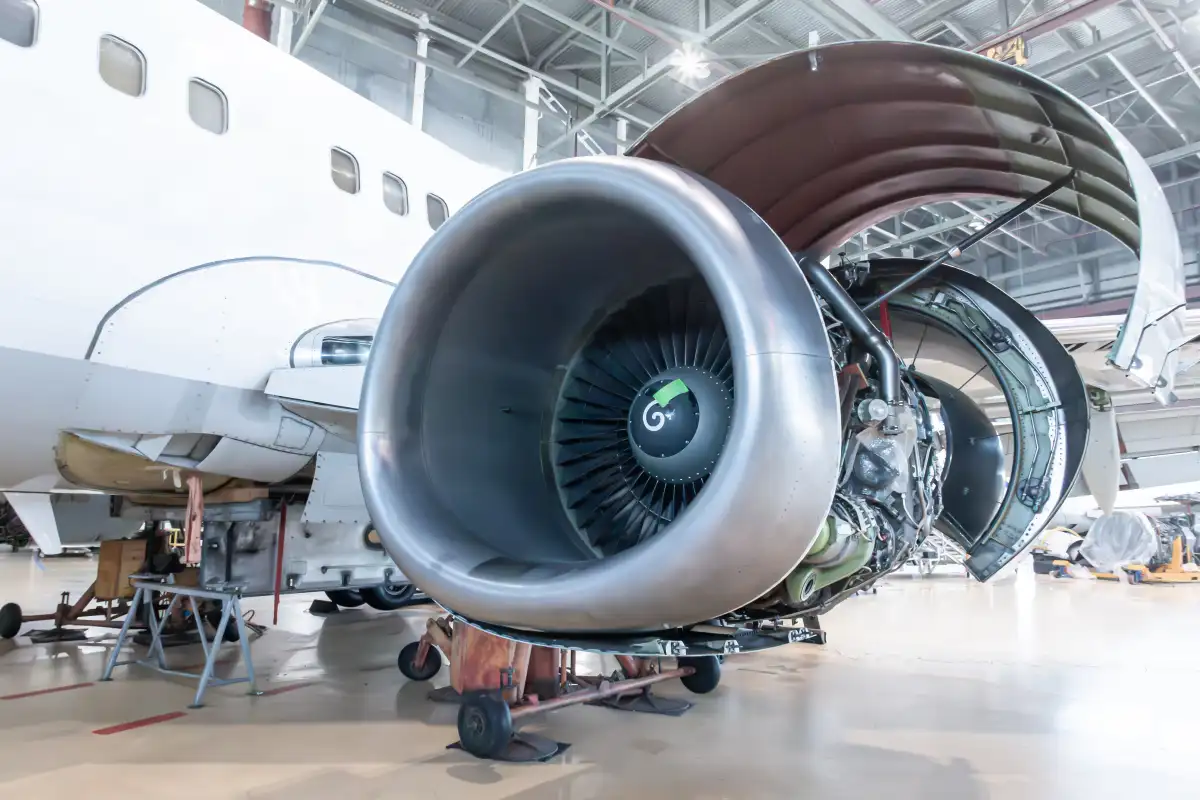
An Aircraft Maintenance Engineer (AME) is a licensed professional who inspects, repairs, and certifies aircraft as airworthy, and no commercial aircraft legally departs without an AME's sign-off. The license is what separates the role from a general mechanic: an AME carries direct legal responsibility every time they issue a Certificate of Release to Service (CRS).
In Pakistan, AMEs typically hold a PCAA Aircraft Maintenance License (AML), an EASA Part-66 license, or both, in Category B1 (airframes, engines, mechanical/electrical systems) or Category B2 (avionics, electrical, instrument systems). Per EASA's official Part-66 guidance, these categories form the reference structure that most national aviation authorities, including PCAA, build their licensing systems around.
Day to day, the job centers on four recurring responsibilities:
- Inspecting aircraft between flights and during scheduled heavier maintenance checks, covering airframes, engines, and onboard systems.
- Diagnosing and repairing defects across mechanical, hydraulic, electrical, and avionics systems as they're found.
- Issuing the Certificate of Release to Service (CRS), the legal sign-off confirming an aircraft is fit to fly.
- Maintaining compliance documentation against the manufacturer's maintenance schedule and the regulator's airworthiness directives.

Is Aircraft Maintenance Engineering Worth It? The Short Answer
Aircraft maintenance engineering is worth it if you want a licensed, internationally portable trade you can enter straight after Matric or FSc, without the four-year cost and delay of a traditional engineering degree. It is not worth it if you are looking for a desk job, dislike irregular shift patterns, or want to avoid ongoing exam fees while you're still studying.
| It's Worth It If You... | It's Probably Not for You If You... |
|---|---|
| Enjoy hands-on mechanical or electronics work over desk-based tasks | Prefer a fixed 9-to-5 schedule over shift-based hangar work |
| Want a license recognized in Pakistan and, via EASA Part-66, internationally | Are uncomfortable with the weight of legal sign-off responsibility |
| Have 50% or higher in Matric/FSc Math and Physics and want to start working within 2 to 4 years | Would rather spend 4+ years in a university degree before entering the workforce |
| Want a career field the local industry is currently short-staffed in | Can't commit to progressive EASA module exams and OJT hours over 2 to 4 years |
The rest of this guide backs each of these points with real numbers: what the career pays, what it costs, how the job market looks in 2026, and where it can realistically take you.
Career Scope for AMEs in Pakistan: Who's Hiring in 2026
Career scope for AMEs in Pakistan is expanding directly alongside the country's fleet growth, and 2026 is shaping up to be the busiest year for new aircraft inductions in the country's aviation history. Every new airframe added to a Pakistani or international fleet needs a certifying signature behind it, and licensed AMEs are the only people legally allowed to provide it.
- Pakistan International Airlines (PIA): Following its January 2026 privatization, a private consortium took 75% control of PIA in a deal reportedly worth over PKR 135 billion. The airline's fleet is projected to more than double from 18 operational aircraft to 38 by 2029, with more than 30 new aircraft planned over the following two and a half years and its route network expanding from roughly 30 cities to over 40.
- Private and low-cost carriers: AirSial, Fly Jinnah, and Airblue are all adding aircraft in 2026, with newer entrants like Air Punjab and Air Karachi expected to add several more aircraft later in the year, contributing to an estimated 25-plus new aircraft joining Pakistani fleets in 2026 alone, the highest single-year influx on record.
- Maintenance, Repair, and Overhaul (MRO) organizations: Independent MROs and airline-affiliated maintenance divisions employ AMEs for base and line maintenance contracts, often across multiple carriers rather than one employer.
- Government and regulatory aviation bodies: PCAA and related government aviation infrastructure employ engineers in oversight, airworthiness, and compliance roles, not just hands-on maintenance.
- International and Gulf operators: An EASA Part-66 license, earned alongside the PCAA license at institutes that teach both, opens a second job market: Gulf carriers and MROs recruit licensed AMEs from Pakistan specifically because the qualification is portable.
Globally, the pattern reinforces the local one. Boeing's July 2026 Pilot and Technician Outlook forecasts that South Asia will need 48,000 new maintenance technicians through 2045, out of 728,000 needed worldwide, with the region flagged as one of the fastest-growing for aviation staffing demand. That is a wider talent gap than the region currently has licensed engineers to fill, which is exactly the kind of supply-demand imbalance that favors new graduates entering the field now rather than waiting.

How Much Do Aircraft Maintenance Engineers Earn in Pakistan?
Entry-level Aircraft Maintenance Engineers in Karachi earn roughly PKR 1.2 million a year, rising to around PKR 1.85 million at the senior level, according to SalaryExpert's 2026 compensation data for Karachi. Pay varies by city, employer type, and whether the engineer holds a full B1/B2 license or is still completing modules.
| Experience Level | Estimated Annual Salary (PKR) |
|---|---|
| Entry level (1-3 years) | Rs 1,199,492 |
| Median (all experience levels) | Rs 1,618,061 |
| Senior level (8+ years) | Rs 1,849,676 |
These figures reflect Karachi specifically; Lahore and Islamabad salaries tend to run somewhat lower, while engineers who move into MRO or airline roles in the Gulf typically see a further increase once they hold a recognized EASA license. Compared to many graduate-entry roles in Pakistan that require a full bachelor's degree before offering a similar starting salary, an AME can reach entry-level pay two to three years earlier.
What Does AME Training Cost in Pakistan, and Is the ROI Worth It?
AME training in Pakistan costs a fraction of an equivalent program abroad, and core tuition for a two-year program typically pays for itself in under a year of entry-level salary. A representative 2-year program totals close to PKR 990,000 in core tuition (admission fee plus six semester fees), plus per-module EASA exam fees and OJT costs that scale with the training partner.
| Fee Type | Amount | Details |
|---|---|---|
| Admission Fee | PKR 150,000 | Non-refundable, one-time |
| Semester Fee | PKR 140,000 | Per semester, 6 semesters of 4 months each |
| EASA Exam Fee | €139 per exam | 16 exams total (~€2,224 overall), payable one month before each module exam |
| On-the-Job Training (OJT) | From PKR 8,000 | Depends on partner organization and scope |
Running the numbers: PKR 990,000 in core tuition against a Karachi entry-level salary of roughly PKR 1,199,492 a year works out to about ten months of pay to recover the core investment, before even factoring in that most students earn a modest stipend or wage during OJT. That is a meaningfully faster payback than a four-year degree that costs more and delays entry into paid work by two additional years.
The gap widens further against training abroad. A comparable 2-year UK approved basic maintenance training course costs £18,500.40 (roughly PKR 6.7 million) according to Air Service Training's published fees page, before living costs and UK visa maintenance funds (from £1,136 a month) are added. Training in Pakistan first, then working toward international placement afterward with an EASA license already in hand, remains one of the clearest financial arguments for the local route.

PCAA vs. EASA Licensing: Which One Actually Widens Your Career Scope?
An EASA Part-66 license widens your career scope beyond Pakistan, while a PCAA license alone keeps you certified to work only on Pakistan-registered aircraft domestically. Institutes that teach both give students access to two separate job markets from a single training investment, which is why checking for dual PCAA/EASA teaching before enrolling matters more than most other selection criteria.
| Category | Privileges | Career Scope Impact |
|---|---|---|
| Category A | Limited certification for minor scheduled line maintenance | Entry point only; limited independent career ceiling |
| Category B1 | Airframes, engines, mechanical/electrical systems; may cover simple avionics line units | Broadest domestic and MRO hiring demand |
| Category B2 | Avionics, electrical, and instrument systems | Strong demand as aircraft avionics complexity grows |
| Category C | Base maintenance certifying staff; issues CRS after major checks | Requires 3+ years as certifying staff first; senior-track only |
Per EASA's official Part-66 guidance, this category structure is the common reference point that PCAA and most national authorities build their own licensing systems around, which is exactly why a Pakistan-trained, EASA-aligned AME can realistically pursue Gulf or international MRO roles later in their career.
Pros of Choosing Aircraft Maintenance Engineering as a Career
The strongest arguments for AME as a career in Pakistan center on cost, licensing portability, and current market demand rather than any single standout benefit.
- Low upfront cost relative to earning potential. Roughly PKR 990,000 in core tuition against an entry salary near PKR 1.2 million a year is a fast payback period by any Pakistani higher-education comparison.
- Internationally portable licensing. An EASA Part-66 license, earned alongside PCAA certification, is recognized well beyond Pakistan's borders.
- Demand-driven job security. With 2026 bringing the largest single-year aircraft influx in Pakistan's history and Boeing projecting a 48,000-technician shortfall across South Asia through 2045, new licensed engineers are entering a market with more open roles than qualified applicants.
- Faster entry into paid work. A 2-year AME program gets a Matric or FSc graduate into a licensed, paid career roughly two years earlier than a traditional 4-year engineering degree.
- Hands-on, tangible work. For people who find desk-based work unsatisfying, AME work involves visible, physical problem-solving with real consequences.
Cons and Challenges to Weigh Before You Commit
The honest downsides of an AME career in Pakistan are mostly about lifestyle fit and sustained commitment rather than the career's long-term prospects.
- High responsibility from day one. Certifying staff sign off on aircraft safety, and that legal weight does not ease up with seniority, it grows.
- Irregular working hours. Maintenance windows follow flight schedules, not office hours, and shift work, night checks, and weekend coverage are normal.
- Physical demands. The role requires standing, bending, and working in confined aircraft spaces for extended periods.
- Ongoing exam and continuous-learning pressure. Sixteen progressive EASA module exams, each with its own fee and preparation load, is a longer sustained testing commitment than most university degrees ask for.
- Continuous technology adaptation. Aircraft systems evolve constantly, so learning does not stop once the license is issued; recurrent training is part of the job for life.

Skills You Need to Succeed as an AME
Succeeding as an AME depends less on raw academic scores and more on a specific set of working habits, since the job involves signing off on decisions with real safety consequences.
- Decision-making under pressure: resolving technical issues quickly without compromising safety standards.
- Technical reading comprehension: manuals, wiring diagrams, and airworthiness directives must be interpreted precisely.
- Mechanical and systems expertise: a working understanding of how airframes, engines, hydraulics, and avionics interact.
- Attention to detail: small, easily missed defects are exactly the ones that matter most in aviation maintenance.
- Ability to work independently: certifying staff are often the last check before an aircraft flies.
Who Should (and Shouldn't) Choose This Career Path
Aircraft maintenance engineering suits a Matric or FSc graduate who wants a hands-on, licensed trade with a fast route to paid work and is comfortable with shift-based schedules and sustained exam pressure over two to four years.
| Good Fit | Weak Fit |
|---|---|
| Enjoys mechanical, electrical, or avionics troubleshooting | Strongly prefers analytical, desk-based, or purely theoretical work |
| Wants to start earning within 2 to 4 years of Matric/FSc | Wants or needs a broader 4-year university degree experience first |
| Values international license portability over local-only credentials | Has no interest in ever working outside Pakistan |
| Can commit to progressive module exams alongside coursework | Struggles with long, staged testing timelines and prefers one final exam |
How Aviation Training Hub Prepares Students for This Career Scope
The following section reflects Aviation Training Hub's (ATH) own program approach, not a third-party finding. ATH structures its Aircraft Maintenance Engineering program specifically around the career-scope factors above: dual PCAA and EASA Part-147 teaching so graduates hold both domestic and internationally portable qualifications, genuine on-the-job training placements with partner MROs and airlines rather than simulation-only practice, and assignment- and project-based assessment that mirrors real maintenance scenarios instead of testing memorization alone.
Rolling intakes run in January, April, July, September, and November across ATH's Islamabad and Karachi campuses, rather than a single annual admission cycle, so students are not forced to wait months to start once they decide the career is worth pursuing. Graduates who want to move toward management-track roles later can progress into a BSc (Hons) Aircraft Engineering Management top-up without repeating foundational coursework, which extends the career scope from hands-on certifying staff into leadership positions over time.
Common Mistakes When Evaluating This Career
- Comparing raw salary numbers without factoring in training cost and time. A higher-paying first job elsewhere can still be the worse financial decision once four extra years of tuition and lost earning time are counted in.
- Assuming career scope is identical across every city. Karachi's aviation hub status means more employer density than Lahore or Islamabad; factor location into the decision, not just the national averages.
- Skipping the PCAA/EASA approval check. Enrolling before confirming an institute's regulatory status can mean a license that limits career scope rather than expanding it.
- Underestimating how much OJT determines hireability. Genuine on-the-job hours with a real MRO or airline partner matter more to employers than exam scores alone.
- Ignoring the EASA route entirely. Students who only pursue PCAA certification close off the Gulf and international career scope that makes this path more valuable long-term.

Conclusion: So, Is It Worth It?
For a Matric or FSc graduate with an aptitude for hands-on mechanical or electronics work, aircraft maintenance engineering in Pakistan is worth it on the numbers alone: roughly PKR 990,000 in core training cost against an entry salary near PKR 1.2 million a year, a licensing structure that opens both domestic and international doors, and a 2026 job market that Boeing's own forecasts and PIA's fleet expansion both say is short-staffed. It is not the right fit for everyone, shift work, physical demands, and a long run of progressive exams are real trade-offs, not footnotes. But for the specific combination of low cost, fast payback, and genuine 2026 hiring demand, few other career paths open to a Matric or FSc graduate in Pakistan compare.
If you're weighing this path, look closely at an institute's PCAA/EASA approval status, its access to real aircraft for OJT, and how its fee structure compares to what's outlined above before enrolling anywhere.
Frequently Asked Questions
Common questions about whether aircraft maintenance engineering is worth it in Pakistan
Yes. Boeing's July 2026 Pilot and Technician Outlook forecasts 728,000 new maintenance technicians needed globally through 2045, with South Asia needing 48,000, while PIA's fleet is projected to grow from 18 to 38 aircraft by 2029 after its January 2026 privatization. Both point to sustained local and regional demand.
Entry-level AMEs in Karachi earn around Rs 1.2 million a year against core training costs of roughly PKR 990,000, meaning the training investment typically pays for itself within about ten months of entry-level salary.
Yes, significantly. A comparable 2-year UK approved course costs £18,500.40 (about PKR 6.7 million), versus roughly PKR 990,000 in core tuition for the same Part-66-aligned qualification in Pakistan, before living and visa costs are added.
A PCAA license alone does limit certification work to Pakistan-registered aircraft. Pairing it with an EASA Part-66 license, which many institutes teach alongside PCAA requirements, opens international and Gulf career scope on the same category framework.
Category B1 covers airframes, engines, and mechanical/electrical systems, and generally sees the broadest hiring demand. Category B2 covers avionics, electrical, and instrument systems, with demand growing as aircraft avionics complexity increases. Many students train toward both.
Yes. The role involves standing, bending, and working in confined aircraft spaces for extended periods, along with shift-based hours tied to flight schedules rather than a fixed office day.
Most students complete a licensed AME program in two to four years depending on the program type, roughly two years faster than a traditional four-year engineering degree before entering paid work.
Verify PCAA and/or EASA Part-147 approval directly, confirm in-house EASA module exams, check for genuine OJT access through real MRO or airline partners, and compare the fee structure against what's outlined in this guide.