There is no official ranking of the best AME institutes in Pakistan, so the best institute for you is the one that can prove three things: a current regulatory approval (PCAA ANO-147, or an EASA Part-147 exam partner), the exact licence categories you want (such as B1.1 or B2), and real practical training on aircraft or in a hangar. This guide compares eight well-known aircraft maintenance engineering (AME) training providers on those verifiable criteria, using what each one states on its own official website as of 9 November 2026.
The comparison is written for students and parents in Pakistan who are weighing a two-year licence course against a four-year BS degree, or one city against another. It is published by Aviation Training Hub (ATH), which is one of the providers compared, so we have kept every entry to facts the institute publishes about itself and flagged what you should verify directly. Institutes are listed alphabetically, not ranked. Last updated: 9 November 2026.
What Makes an AME Institute the "Best" in Pakistan?
The best AME institute in Pakistan is the one whose training and exams actually count towards the licence you want, and that gives you enough supervised hands-on work to be employable. Rankings based on adverts, social media followers or campus size do not tell you that.
An Aircraft Maintenance Licence (AML) lets an engineer certify maintenance work. In Pakistan, the Pakistan Civil Aviation Authority (PCAA) issues licences and approves training organisations under ANO-147. The European equivalent is EASA Part-66 for licences and Part-147 for training organisations; EASA's own Part-66 FAQ lists the licence categories, from A (minor line maintenance) to B1 (structure, power plant, mechanical and electrical systems), B2 (avionics) and C (base maintenance).
| Criterion | Why it matters | What to look for |
|---|---|---|
| Regulatory approval | Decides whether your training and exams count towards a licence | A PCAA ANO-147 approval or a named EASA Part-147 exam partner, with an approval number |
| Licence categories offered | Decides which aircraft systems you can certify | B1.1, B1.2, B2 or Category A, stated in writing |
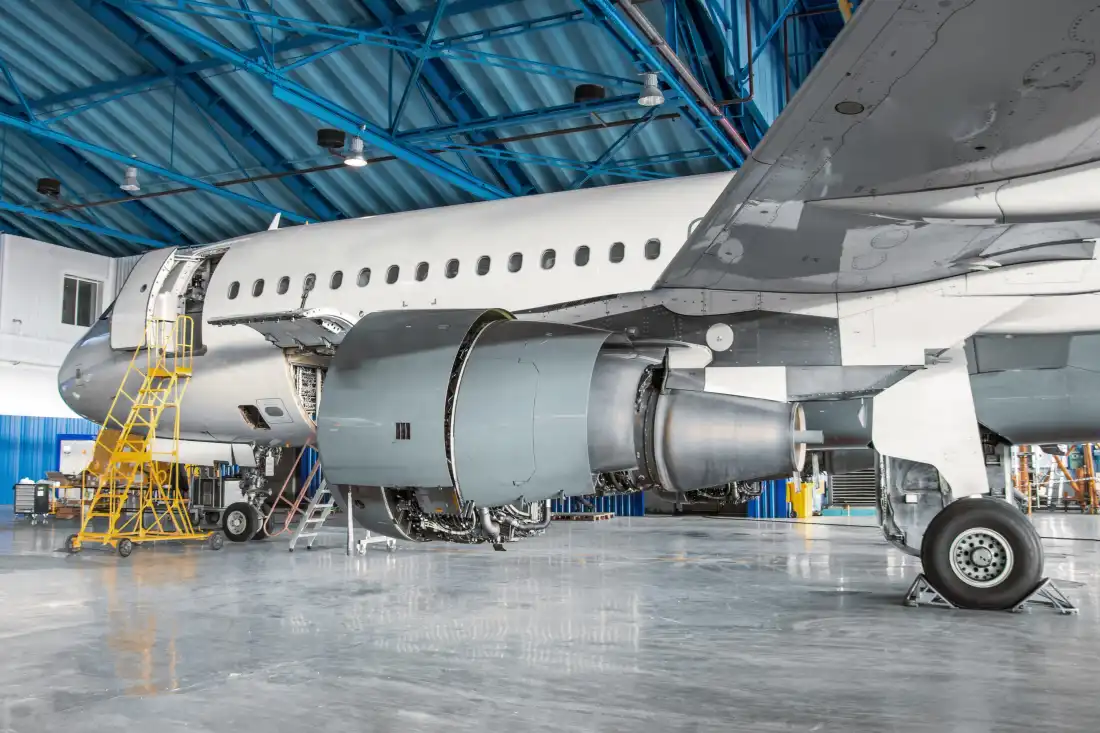
| Practical training and hangar access | Employers hire for hands-on ability | Workshops, real components, live-aircraft OJT with named partners |
| Programme type and length | Two-year licence courses and four-year degrees suit different goals | Clear duration, semester structure and entry criteria |
| Fee transparency | Total cost includes exams and OJT, not only tuition | A published, dated fee schedule |
How Do the Main AME Institutes in Pakistan Compare?
The main AME providers in Pakistan split into three groups: airline and foundation-backed training centres, private licence-focused institutes that often use a European Part-147 exam partner, and universities offering four-year BS degrees with licence modules built in. The table summarises what each provider states about itself.
| Institute | City | Main AME offering | Approval or exam route it states | Practical training it states |
|---|---|---|---|---|
| Aviation Maintenance Training College (AMTC) | Not stated on its homepage | Modular exams for B1.1, B1.3 and B2 | "PCAA approved" under ANO-147, established 2015 | Online learning system with question bank and video lectures |
| Aviation Training Hub (ATH) | Islamabad, Karachi (and Peshawar at Sarhad University) | Two-year licence programme built on EASA Part-66 B1 and B2 modules | 16 EASA module exams; lists Ikaros Aviation Training Center, an EASA Part-147 organisation, among its partners | Assignment and project-based assessment; OJT through partner network |
| Center of Aviation (CoA) | Islamabad (campus at IST) | EASA Part-66 B1 modular training | Exams by AERO-Bildung, Germany, listed with EASA approval DE.147.0002; says it aims to become PCAA 147 approved | Not stated |
| IAME | Lahore | Category A, B1, B1.2 and B2 courses | Collaboration with ATT Germany for EASA modules | States that 70% of training is on live aircraft |
| PIA Training Centre (PTC) | Karachi | B1.1 Basic and B2 Basic | Describes itself as a PCAA approved ANO-147 training institute | Workshop training at PTC and OJT in PIA Engineering |
| SAPS Aviation College (Shaheen Foundation) | Karachi, with centres in Lahore, Islamabad and Peshawar | EASA Part-66 B1.1 | EASA exams through Airtech Bildung, Germany | Practical training and OJT with Serene Air and Star Air |
| Superior University | Lahore | BS Aircraft Maintenance and Management (4 years) | HEC-recognised university; B1/B2 listed as a specialisation | Labs and simulations |
| University of Management and Technology (UMT) | Lahore | BS Aircraft Maintenance Engineering Technology (4 years) | Integrates EASA Part-66 modules for B1.2 and B3, examined through an EASA-approved Part-147 organisation | Hands-on training at maintenance facilities at Walton Aerodrome, Lahore |
Every entry above is the institute's own description, checked on its official website on 9 November 2026. Approvals can change, so confirm each one directly before you apply. For degree programmes, you can check a university's status on the HEC list of recognised universities.
What Does Each AME Institute Offer?
Each provider below is summarised in the same format: what it offers, what it states about approvals and training, and what you should verify before enrolling.
Aviation Maintenance Training College (AMTC)
- Offers: modular exam preparation and sittings for Basic B1.1, B1.3 and B2, plus short courses.
- States: it is a "regular PCAA approved" organisation under ANO-147, established in 2015, with an online learning system holding 13,122 practice questions and 1,018 video lectures.
- Verify: its PCAA approval number, campus location, and where practical training and OJT take place, since its website does not describe hangar access.
Aviation Training Hub (ATH)
- Offers: a two-year, full-time Aircraft Maintenance Engineering programme of six four-month semesters, built around EASA Part-66 B1 and B2 modules.
- States: 16 EASA module exams at €139 each, core tuition of PKR 990,000, five intakes a year, and a route to a BSc (Hons) top-up for eligible graduates.
- Verify: the approval details of the exam partner for your intake, and your OJT placement arrangements. Full details are in the ATH perspective section below.
Center of Aviation (CoA)
- Offers: EASA Part-66 B1 modular training from a campus at the Institute of Space Technology, Islamabad.
- States: exams are conducted by AERO-Bildung, Germany, under EASA Part-147 approval DE.147.0002, and it aims to become a PCAA-approved 147 organisation.
- Verify: course duration, practical facilities and OJT partners, which are not described on its website.
IAME, Lahore
- Offers: Category A, B1, B1.2 and B2 training.
- States: a collaboration with ATT Germany for EASA modules, and that 70% of training takes place on live aircraft.
- Verify: the exact course length (its course pages describe the duration in more than one way), the exam partner's approval number and the fee schedule.
PIA Training Centre (PTC), Karachi
- Offers: B1.1 Basic and B2 Basic training, run by Pakistan International Airlines since 1960.
- States: it is a PCAA approved ANO-147 training institute, with workshop training at PTC and OJT in PIA Engineering. Its basic training page describes three-year courses under the Apprenticeship Ordinance 1962, and private trainees can join on a self-finance basis.
- Verify: current intake dates, the self-finance fee and the entry criteria, since admissions are announced per intake.

SAPS Aviation College (Shaheen Foundation), Karachi
- Offers: EASA Part-66 B1.1 training, established in February 1999, with satellite centres in Lahore, Islamabad and Peshawar.
- States: two years of theory over six semesters with EASA exams through Airtech Bildung, Germany; entry with Matric (Science), FSc Pre-Engineering, O/A Levels or DAE, minimum age 18, open to both male and female students; practical training and OJT with Serene Air and Star Air.
- Verify: fees, which are not published on its website, and the exam partner's current approval.
Superior University, Lahore
- Offers: a four-year, eight-semester BS Aircraft Maintenance and Management of 129 credit hours, with B1/B2 engineering listed as a specialisation.
- States: an HEC-compliant curriculum, labs and simulations. Superior University appears on HEC's list of recognised universities.
- Verify: whether the degree includes licence module exams and with which authority, since its programme page does not name a 147 approval.
University of Management and Technology (UMT), Lahore
- Offers: a four-year BS Aircraft Maintenance Engineering Technology through its Institute of Aviation Studies.
- States: it integrates EASA Part-66 modules for B1.2 and B3, examined through an EASA-approved Part-147 organisation, with hands-on training at maintenance facilities at Walton Aerodrome, Lahore.
- Verify: which Part-147 organisation runs the exams, and how B1.2 and B3 (light and piston aircraft categories) fit your career plans.
Two-Year Licence Course or Four-Year BS Degree: Which Route Is Better?
A two-year licence course is better if your main goal is to sit licence module exams and start hands-on maintenance work sooner; a four-year BS degree is better if you also want an HEC-recognised bachelor's degree for management or academic routes. Many students choose based on time, cost and whether they want a degree at all.
| Factor | Two-year licence course | Four-year BS degree |
|---|---|---|
| Main outcome | Licence module exams towards an AML (for example B1 or B2) | Bachelor's degree, sometimes with licence modules built in |
| Typical length | About 2 years of coursework, plus exams and OJT | 4 years (8 semesters) |
| Recognition | Through the aviation authority behind the exams (PCAA or EASA route) | Through HEC for the degree; licence recognition depends on the exam route |
| Examples in this guide | ATH, SAPS, AMTC, Center of Aviation, IAME, PTC | Superior University, UMT |
| Best for | Students who want to reach the hangar sooner | Students who want a degree alongside technical training |
Whichever route you pick, the minimum hours do not shrink. Under Appendix I to Part-147 of Regulation (EU) No 1321/2014, a full basic course for B1.1 or B2 is 2,400 hours, with theory making up 50 to 60 percent. For more on timelines, read how long it takes to get an AME licence.
How Much Do AME Institutes in Pakistan Charge?
Most AME institutes in Pakistan do not publish their full licence-course fees online, so you usually have to request a written fee schedule. Of the providers in this guide, ATH publishes a complete fee table; the others ask applicants to contact admissions or announce fees per intake.
| Fee item (ATH, as of 9 November 2026) | Amount | Details |
|---|---|---|
| Admission fee | PKR 150,000 | Non-refundable, one-time |
| Semester fee | PKR 140,000 | Per semester, 6 semesters of 4 months each |
| Core tuition total | PKR 990,000 | Admission fee plus six semester fees |
| EASA exam fee | €139 per exam | 16 exams (€2,224 overall), payable one month before each exam |
| On-the-job training (OJT) | From PKR 8,000 | Depends on partner and scope |
Source: ATH fee structure. When you collect fees from other institutes, ask for the same five lines so you can compare like with like, and keep euro exam fees separate from rupee tuition. Our full guide to AME course fees in Pakistan explains the hidden costs families often miss.
How Can You Verify an Institute's Claims Before Applying?
You can verify an AME institute's claims by asking for documents and checking them with the issuing body. Use these steps for every institute on your shortlist, including ATH.
- Ask for the approval number (PCAA ANO-147 or EASA Part-147) and a copy of the certificate, and note whose name is on it.
- Confirm with the authority. Contact the PCAA through its official website (pcaa.gov.pk) for national approvals. For approvals held outside Europe, EASA's Part-147 FAQ explains that EASA oversees Part-147 organisations located outside its member states.
- Check degree status with HEC if a BS degree is part of the offer.
- Ask for named OJT partners in writing, and how placements are allocated.
- Request a full fee schedule covering admission, semesters, exams, OJT and resits.
- Visit the workshops and ask to see the equipment you will train on.
Which AME Institute Is Best for Your Situation?
The best AME institute depends on your city, your budget, whether you want a degree, and which licence category you are aiming for. Use these scenarios as a starting point, then verify the details directly.
- You want a two-year licence route in Islamabad or Karachi with published fees: compare ATH, SAPS and Center of Aviation.
- You want airline-run training in Karachi: look at PIA Training Centre and check its intake announcements.
- You want a four-year degree in Lahore: compare Superior University and UMT, and check how licence modules are examined.
- You already study and only need module exams: modular exam providers such as AMTC may suit you.
- You are aiming for avionics (B2): shortlist only providers that state B2 in writing, such as ATH, AMTC, IAME and PTC.
Why Does Choosing a Strong Institute Matter for Your Career?
A strong institute matters because employers look for recognised licence modules and real hands-on hours, and global demand for those skills is large. Boeing's Pilot and Technician Outlook 2026 to 2045 projects a need for 728,000 new maintenance technicians worldwide over the next 20 years.
- Licence portability: EASA Part-66 modules are widely understood by international operators and MROs.
- Practical depth: OJT on live aircraft is what turns module passes into employable experience.
- Progression: some routes add a degree top-up for supervisory and management roles later.
For salary context once licensed, see our guide to aircraft maintenance engineer salary in Pakistan 2026.
ATH Perspective: How Aviation Training Hub Fits This Comparison
This section describes Aviation Training Hub's own programme, not a third-party finding. ATH is a licence-focused provider: its Aircraft Maintenance Engineering programme runs for two years across six semesters of four months, with intakes in January, April, July, September and November. Entry requires Matric with at least 50% in Mathematics and Physics, or FSc (Pre-Medical or Pre-Engineering) at the same threshold.
| Criterion | ATH |
|---|---|
| Licence route | EASA Part-66 B1 and B2 modules, with 16 module exams sat progressively |
| Exam partner | Lists Ikaros Aviation Training Center, an EASA Part-147 approved organisation, among its aviation partners |
| Campuses | Islamabad and Karachi, plus Peshawar at Sarhad University of Science and Information Technology |
| Assessment | Assignment and project-based, built around practical tasks that reflect real maintenance work |
| Fees | Fully published: PKR 990,000 core tuition, €139 per exam, OJT from PKR 8,000 |
| Progression | BSc (Hons) Aircraft Engineering Management top-up for eligible graduates |
ATH's view is that families should be able to compare institutes on published facts, which is why ATH puts its full fee table and programme structure online. To see duration, fees and eligibility in one place, read Aircraft Maintenance Engineering course duration, fees and eligibility at ATH, or visit the ATH AME programme page.
Common Mistakes When Comparing AME Institutes
- Trusting "best institute" labels. Several providers describe themselves as the best; only documents settle it.
- Mixing up the approval holder. When a European partner holds the Part-147 approval, ask what the partner controls and what the local institute delivers.
- Ignoring the category. B1.1, B1.2, B2 and B3 lead to different work; pick the institute that offers the category you want.
- Comparing tuition only. Euro exam fees, OJT and resits change the total.
- Forgetting the licensing basics. Read how the AME licence works under PCAA before choosing.
Conclusion
The best AME institutes in Pakistan are the ones that can show a current PCAA ANO-147 approval or a named EASA Part-147 exam partner, offer the licence category you want, and give you real hands-on and OJT time. PTC, SAPS, AMTC, Center of Aviation, IAME, Superior University, UMT and ATH each take a different route, from airline-run apprenticeships to four-year degrees and two-year licence programmes. Compare them on approvals, categories, practical training and total cost, verify every claim directly, and you will find the institute that fits your goals.
If ATH is on your shortlist, our admissions team can walk you through the programme, the exam schedule and the fee plan.
Frequently Asked Questions
Common questions about the best AME institutes in Pakistan
There is no official ranking. The best institute for you is the one that can prove a current PCAA ANO-147 approval or a named EASA Part-147 exam partner, offers your licence category, and provides real hands-on and OJT training.
Several providers state an EASA route, including ATH, SAPS Aviation College, Center of Aviation, IAME and UMT. Most work with a European Part-147 partner for exams, so ask which partner and approval number apply.
PIA Training Centre in Karachi describes itself as a PCAA approved ANO-147 training institute offering B1.1 Basic and B2 Basic courses. Confirm current intake details and fees directly with PTC.
Choose a two-year licence course to reach module exams and hangar work sooner, or a four-year BS degree if you also want an HEC-recognised bachelor's degree. Check how licence modules are examined in either case.
Most institutes in this guide do not publish full fees online. At ATH, core tuition is PKR 990,000, EASA exams are €139 each (16 exams), and OJT starts from PKR 8,000, as of 9 November 2026.
In this guide: Lahore has Superior University, UMT and IAME; Karachi has PIA Training Centre, SAPS Aviation College and ATH; Islamabad has ATH and Center of Aviation. SAPS also lists centres in Lahore, Islamabad and Peshawar.
Ask for the approval number and certificate, check whose name is on it and its expiry date, then confirm with the PCAA for national approvals or with the relevant authority for EASA Part-147 approvals.
Yes, women can study AME in Pakistan. For example, SAPS Aviation College states its course is open to both male and female students, and ATH's entry criteria are the same for all applicants.