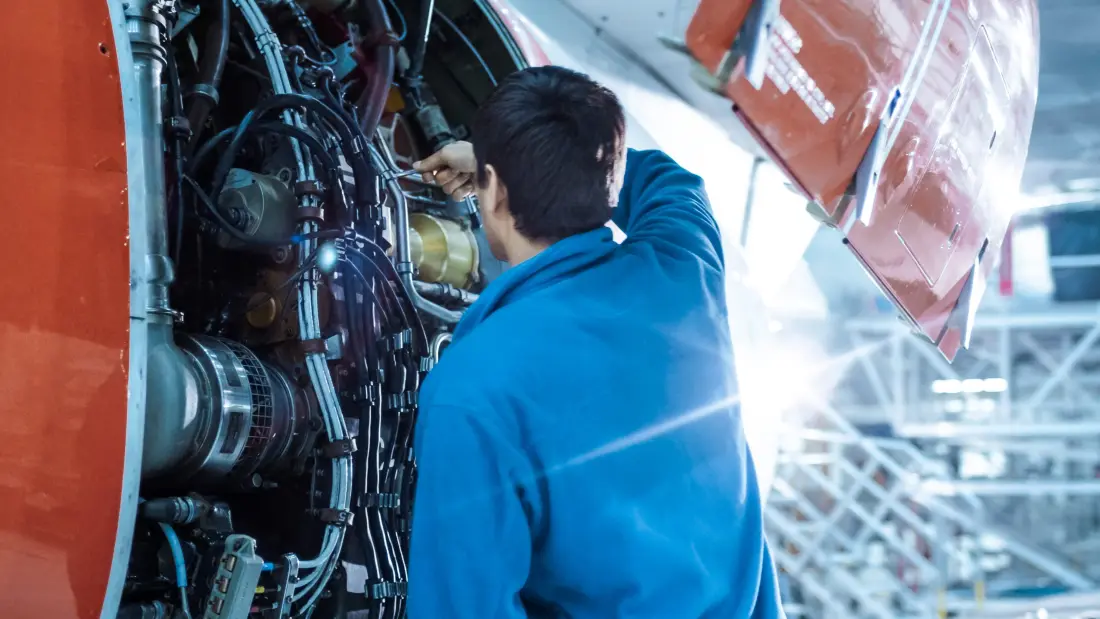
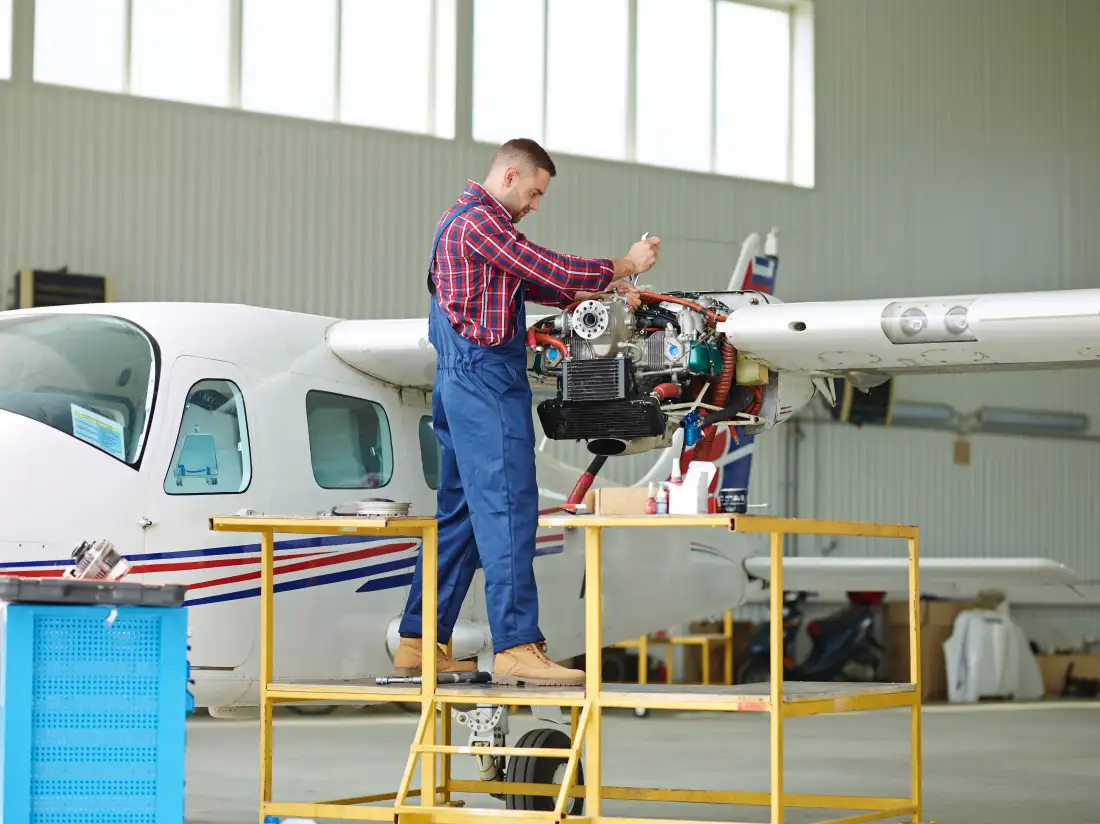
An aircraft maintenance engineer (AME) inspects aircraft, finds and fixes defects, follows approved manuals to the letter, records every task, and, once licensed and authorised, signs the document that declares an aircraft safe to fly. What an aircraft maintenance engineer actually does all day is mostly inspection, troubleshooting, and documentation, with far less improvisation than most people expect.
This guide breaks the job into ten real duties, walks through a typical shift, and explains where B1 and B2 engineers differ, what an AME can and cannot sign off, and what the work is like when the brochure stops talking. It also shows how Aviation Training Hub's (ATH) Aircraft Maintenance Engineering programme in Pakistan prepares students for that daily reality.
What Is an Aircraft Maintenance Engineer?
An aircraft maintenance engineer is a trained and, for certifying roles, licensed professional who keeps aircraft airworthy by inspecting, maintaining, repairing, and testing them under approved procedures. The word "airworthy" simply means the aircraft meets its approved technical standards and is fit to fly.
Two things separate an AME from a general mechanic. First, every action follows written, approved maintenance data, never personal preference. Second, a licensed AME with the right authorisation carries legal responsibility for the aircraft's release to service. That signature is what allows a flight to depart.
What Are the 10 Main Daily Responsibilities of an Aircraft Maintenance Engineer?
The ten core responsibilities of an AME are inspection, servicing, troubleshooting, system testing, following approved procedures, record keeping, safety and airworthiness support, teamwork, certification within licence privileges, and continuous learning. Not every engineer does all ten every shift, but every engineer is expected to be competent in all of them.
1. Inspecting aircraft and systems
AMEs carry out scheduled inspections tied to a maintenance programme, plus walk-around checks and pre-task assessments of the systems they are about to work on. It might be a visual check for dents, leaks, and worn tyres, or a checklist inspection of one system before a scheduled check. Most defects are caught here, before they become safety issues.
2. Maintaining and servicing the aircraft
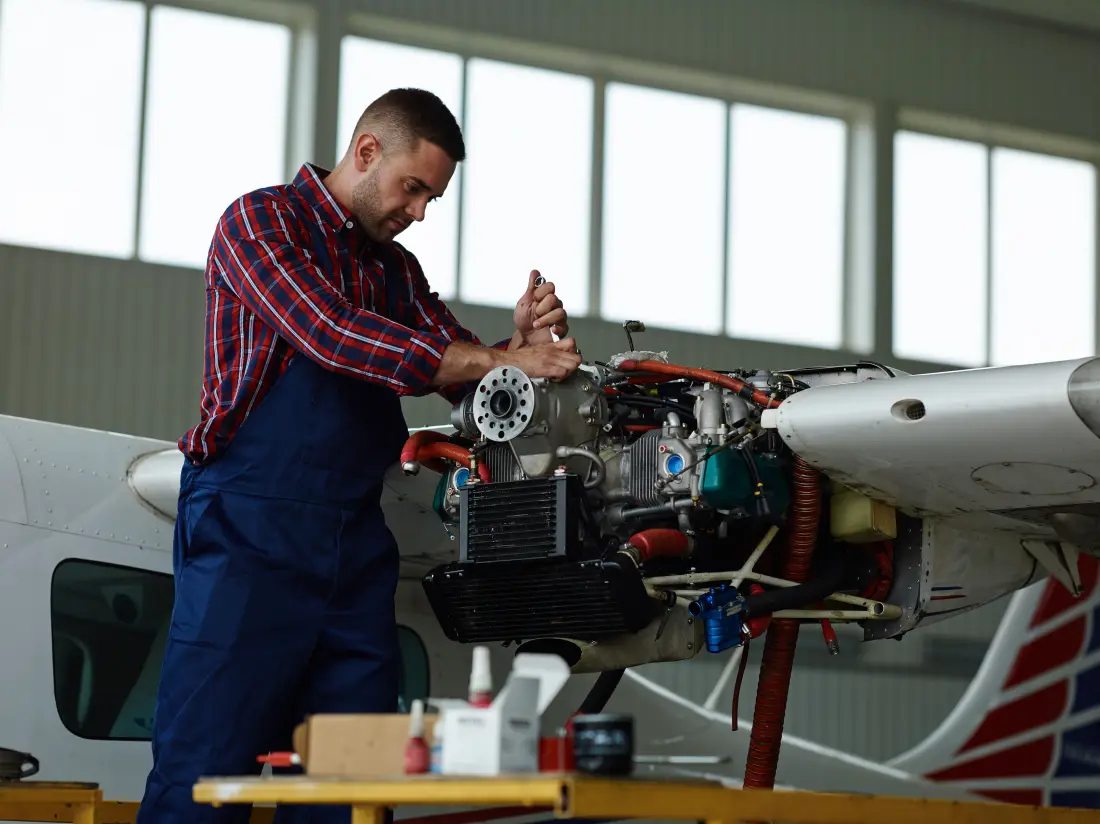
This is the hands-on part: replacing worn components, servicing systems, adjusting parts, and completing routine and corrective tasks. Swapping a landing gear component, for example, follows a specific approved procedure with defined tolerances and sign-off steps. The engineer does not decide what "seems right."
3. Troubleshooting technical problems
When a pilot reports a fault or a system shows an abnormal reading, the AME works out the root cause using the aircraft maintenance manual, technical data, and structured testing. If a cockpit indication shows a fault, the team follows the approved troubleshooting procedure to isolate the actual cause before any part is replaced. Guessing wastes hours and can hide the real fault.
4. Testing aircraft systems and components
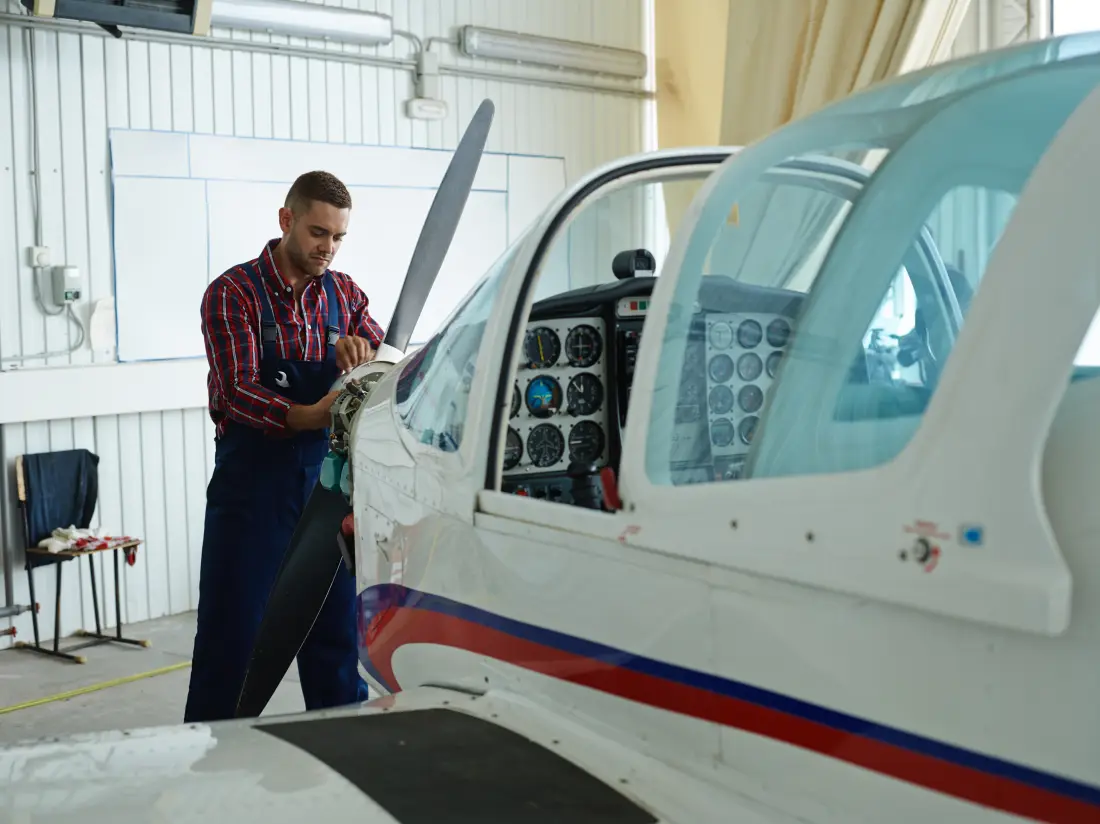
After a repair, the system has to be proven serviceable. Depending on category, that means operational and functional checks on engines, flight controls, hydraulics, pneumatics, communication and navigation equipment, instruments, or electrical systems. A repair that has not been tested is not finished.
5. Following maintenance manuals and approved procedures
Aircraft maintenance is never based on personal judgment alone. AMEs work from aircraft maintenance manuals, technical publications, and their organisation's procedures. This is what keeps outcomes consistent and traceable whoever performs the task and whichever airport it happens at.
6. Keeping accurate maintenance records
Every inspection, defect rectification, and component replacement goes into the technical log and maintenance records. If it is not documented, it generally cannot be treated as complete. Those records are the evidence regulators, auditors, and the next shift rely on, which is why engineers often spend a surprising share of a shift on paperwork.
7. Supporting safety and airworthiness
Every task feeds one purpose: keeping the aircraft airworthy. That means reporting technical issues, following safety precautions, and flagging repeat defects so the same failure does not keep returning. The safety record of modern aviation is the accumulated result of thousands of properly executed, properly documented tasks, not one dramatic fix.
8. Working with the wider maintenance team
AMEs coordinate with technicians, supervisors, quality and inspection staff, maintenance control, flight operations, and stores. On larger checks several specialisations work on the same aircraft at once. Clear communication prevents duplicated work, missed handovers, and gaps in required maintenance.
9. Certifying work within licence privileges
Certification is the most misunderstood duty, so it gets its own section below. In short, an AME signs the certificate of release to service only for work covered by their licence category, aircraft type endorsement, and their employer's authorisation.
10. Learning continuously
Aircraft systems, procedures, and regulations keep changing. AMEs stay current through technical publications, recurrent training, aircraft type training, and safety updates. Learning does not stop when the licence arrives; it starts to matter more.
What Does a Typical Shift Look Like for an Aircraft Maintenance Engineer?
A typical AME shift moves through five stages: handover, planning, hands-on work, documentation, and handover again. The exact mix depends on the employer, aircraft type, and whether the day is line maintenance or a scheduled hangar check.
| Stage | What the AME does |
|---|---|
| Start of shift | Reads handover notes from the previous shift, reviews assigned tasks and open defects, checks the relevant technical data. |
| Planning | Confirms tools, parts, and access are available, and agrees the sequence of work with the supervisor or team. |
| Hands-on maintenance | Inspects assigned aircraft or systems, carries out or supports tasks, troubleshoots reported defects, and follows approved procedures throughout. |
| Documentation | Records completed work in the technical log, reports findings, and lists any outstanding defects. |
| Before handover | Verifies tasks are complete or clearly flagged, finishes paperwork, and briefs the incoming team on outstanding work. |
Notice how much of that table is not spanner work. Reading, planning, recording, and communicating take real hours, and skipping any of them is how maintenance errors start.

Line Maintenance vs Base Maintenance: How Does the Daily Work Differ?
Line maintenance is short-notice work on aircraft that are in service, usually at the gate or on the ramp, while base maintenance is planned, heavier work done in a hangar. The two feel very different day to day, even though the standards behind them are the same. For a closer look at that split, read ATH's guide to line maintenance vs base maintenance in an AME's day.
| Area | Line maintenance | Base maintenance |
|---|---|---|
| Where | Ramp, gate, or airport stand | Hangar |
| Typical work | Pre-flight checks, quick defect rectification, minor scheduled tasks | Heavy scheduled checks, structural inspections, modifications, component changes |
| Time pressure | High, driven by tight turnaround windows | Planned, driven by the check schedule |
| Conditions | Exposure to weather, noise, and night shifts is common | Sheltered, but longer and more physically detailed tasks |
| Team size | Small, often one or two engineers per aircraft | Larger teams across several specialisations |
How Do B1 and B2 Aircraft Maintenance Engineer Duties Differ?
B1 engineers focus on mechanical systems, meaning airframe, engines, and related mechanical and electrical systems, while B2 engineers focus on avionics and electrical or electronic systems. The European Union Aviation Safety Agency (EASA) Part-66 licence categories are the common reference point, and the Pakistan Civil Aviation Authority's licensing follows the same category logic.
| Area | Category B1 (mechanical) | Category B2 (avionics) |
|---|---|---|
| Main systems | Airframe, engines, flight controls, hydraulics, pneumatics, mechanical components | Communication, navigation, instruments, electrical and electronic systems |
| Typical daily task | Engine and structural inspection, component replacement, hydraulic leak rectification | Fault-finding on displays and radios, wiring checks, avionics system tests |
| Certification scope | Release to service for mechanical and structural work, plus limited simple avionics tests | Release to service for avionics and electrical work, plus limited simple tests within mechanical systems |
| Suits people who like | Mechanical systems and hands-on fitting | Electronics, wiring, and diagnostics |
Exact privileges always depend on the licence held, the aircraft type endorsement, and the employer's authorisation. Treat this table as orientation, not as a substitute for the regulation.
What Can an Aircraft Maintenance Engineer Actually Sign Off?
An AME can sign a certificate of release to service (CRS) only for work covered by their licence category, the aircraft type on their authorisation, and the approval of the maintenance organisation employing them. Holding a licence alone does not automatically grant the right to certify every task on every aircraft.
Three conditions have to line up before an engineer certifies anything:
- The right licence category. B1 for mechanical scope, B2 for avionics scope, within the limits of each.
- The right aircraft type. Certifying privileges apply to the aircraft types endorsed on the licence or authorisation.
- A valid company authorisation. The maintenance organisation must have granted the engineer certifying privileges for the tasks concerned.
Recency matters too. Under EASA's framework, certifying staff must show at least six months of relevant maintenance experience in any two-year period to keep exercising their privileges, as summarised in this explainer on maintaining recency as B1/B2 certifying staff. The licence stays valid without it, but the right to sign does not. You can read the current rulebook in EASA's Easy Access Rules for Continuing Airworthiness, which include the Part-66 review.
Where Do Aircraft Maintenance Engineers Work?
AMEs work wherever aircraft are kept flying: airlines, maintenance, repair and overhaul (MRO) organisations, airports, and specialist maintenance providers. The employer type shapes the daily routine more than the job title does.
- Commercial airlines: line maintenance between flights and base maintenance on the airline's own fleet.
- MRO organisations: scheduled checks, component overhaul, and modifications for several operators.
- Airports and ramp environments: turnaround support and quick defect rectification.
- Component and technical support organisations: repair, testing, and technical services for specific systems.
- Government or defence-linked aviation units: in some cases, depending on the country and clearance requirements.
Placement depends on qualifications, licensing progress, and the employer's hiring needs. No route is guaranteed.
What Skills Does an Aircraft Maintenance Engineer Need?
An AME needs sound technical understanding plus a specific set of working habits: precision, discipline, communication, and a sense of responsibility. Marks in Physics and Mathematics get you into training, but habits are what keep you employed.
- Technical skills: understanding of the systems in your category, structured troubleshooting, and the ability to follow detailed procedures exactly.
- Attention to detail: small oversights have outsized consequences in aviation, so checking twice becomes a habit, not an exam skill.
- Discipline under pressure: following procedure when a turnaround clock is running.
- Clear communication: handovers, defect reports, and team coordination all depend on it.
- Technical English: manuals, directives, and records are written in English.
- A real sense of responsibility: once licensed, your signature carries legal weight.
What Are the Hardest Parts of Working as an Aircraft Maintenance Engineer?
The hardest parts of the job are shift work, time pressure, strict procedure, and the weight of certifying an aircraft as safe. None of these are reasons to avoid the career, but they are reasons to check it suits you before committing two or more years.
- Shift work. Maintenance often happens outside flight hours, so nights and early mornings are common, especially in line maintenance.
- Weather and noise. Ramp work means heat, cold, rain, and engine noise.
- Time pressure. A delayed aircraft costs an airline money, and engineers feel that pressure. The rule stays the same: no shortcuts.
- Strict procedure. There is little room for "good enough." If you like improvising, this is not your field.
- Responsibility. Certifying an aircraft is a serious duty and should not be underestimated.
How Is an AME Different From an Aircraft Technician or an Aeronautical Engineer?
An AME maintains and certifies existing aircraft, an aircraft technician performs maintenance tasks under supervision, and an aeronautical engineer designs aircraft and their systems. The three roles are often mixed up, but the daily work is completely different.
| Role | Main focus | Independent certification? |
|---|---|---|
| Aircraft Maintenance Engineer | Inspecting, maintaining, and, within privileges, certifying aircraft | Yes, within licence category and authorisation |
| Aircraft technician / support staff | Performing maintenance tasks under supervision or within a defined scope | No |
| Aeronautical / aerospace engineer | Designing aircraft, structures, and systems | Not applicable, works on design rather than in-service maintenance |
Is There Real Demand for Aircraft Maintenance Engineers?
Yes. Boeing's 2026 Pilot and Technician Outlook projects demand for 728,000 new maintenance technicians worldwide through 2045, including about 48,000 in South Asia, according to Boeing's July 2026 forecast announcement. Southeast Asia adds another 83,000, bringing the wider Asia Pacific total to 131,000.
Demand figures describe the market, not a job guarantee. Licensing, experience, and the employer's requirements still decide who gets hired. But every aircraft in the air needs certifying staff behind it, and that is why the daily responsibilities above are not going out of style.
How Does Aviation Training Hub Prepare Students for the Daily Work?
This section reflects Aviation Training Hub's own programme structure, not a third-party finding. Aviation Training Hub (ATH) teaches its Aircraft Maintenance Engineering programme over two years and six semesters of four months each, with intakes in January, April, July, September, and November, from campuses in Islamabad and Karachi. Entry requires Matric or FSc (Pre-Engineering or Pre-Medical) with at least 50% in Mathematics and Physics.
The programme's modules are aligned to Part-66 B1 and B2 categories, and assessment is assignment-based, so students practise applying procedures rather than only memorising them. Here is how the modules connect to the daily duties covered above.
| Daily duty | ATH modules that build it |
|---|---|
| Inspection and servicing | Maintenance Practices (M7), Materials and Hardware (M6) |
| Troubleshooting and system testing | Electrical Fundamentals (M3), Electronic Fundamentals (M4), Digital Techniques (M5) |
| Engine and propulsion work | Gas Turbines (M15), Propulsion (M14), Propellers (M17) |
| Following procedure and regulation | Aviation Legislation (M10), Human Factors (M9) |
| Understanding aircraft behaviour | Basic Aerodynamics (M8), Aeroplane Aerodynamics (M11), Aircraft Aerodynamics, Structures and Systems (M13) |
Students sit 16 EASA module exams at €139 each, paid one month before each exam, and complete on-the-job training with partner organisations, from PKR 8,000 depending on the partner. Graduates who want a management path can move into the BSc (Hons) Aircraft Engineering Management top-up without repeating foundation coursework.
How Can You Prepare for an AME Career Before You Start?
The best preparation is building the same habits the job rewards: precision, procedure, and technical curiosity. You can start before your first class.
- Strengthen Physics and Mathematics. They sit under nearly every technical module.
- Get comfortable with mechanics and basic electrical circuits. Take things apart, and put them back together correctly.
- Practise following written instructions exactly. Assembly guides and manuals are a good rehearsal.
- Improve technical English. Reading manuals quickly and accurately saves time on every task.
- Treat safety as a habit. Checklists, double checks, and clean workspaces are the culture you are joining.
- Look for practical exposure. Workshops, hangar visits, and student events all help you test your interest.
Conclusion
So what does an aircraft maintenance engineer actually do? They keep aircraft safe to fly, one inspected, tested, and properly documented task at a time. Mechanical B1 engineers and avionics B2 engineers split the systems between them, but both share the same duty: precise work, followed by an honest signature.
If that sounds like the kind of responsibility you want, check the training pathway, the entry requirements, and the regulatory approvals of any institute before you enrol, then talk to someone who can walk you through the options.
Frequently Asked Questions
Common questions about what an aircraft maintenance engineer does
A typical day includes reading handover notes, inspecting assigned aircraft or systems, troubleshooting reported defects, carrying out approved maintenance tasks, recording work in the technical log, and briefing the next shift. The mix changes with the employer and maintenance type.
Keeping the aircraft airworthy. That means finding defects early, fixing them under approved procedures, documenting everything, and, if licensed and authorised, certifying release to service.
No. Certification needs the right licence category, the correct aircraft type, and a valid authorisation from the maintenance organisation. Trainees, support staff, and licensed engineers working outside their scope cannot certify independently.
B1 covers mechanical work: airframe, engines, and mechanical and electrical systems. B2 covers avionics: communication, navigation, instruments, and electrical and electronic systems. Each has its own certification scope.
No. Repair is one part of the job. Inspection, troubleshooting, testing, documentation, teamwork, and certification take up just as much time, and often more.
Often, yes. Maintenance is scheduled around flight operations, so night and early-morning shifts are common, especially in line maintenance where aircraft need turning around quickly.
An AME holds a licence with certification privileges within a defined scope. A technician performs tasks under supervision and does not have independent sign-off authority.
In airlines, MRO organisations, airports and ramp operations, component and technical support organisations, and in some cases government or defence-linked aviation units.
At ATH, you need Matric or FSc (Pre-Engineering or Pre-Medical) with at least 50% in Mathematics and Physics. No engineering degree is required to start.
It can be, if you enjoy precise, hands-on, safety-critical work. Boeing forecasts demand for 728,000 new maintenance technicians globally through 2045, with about 48,000 in South Asia, but the job suits some personalities far more than others.