To become an aircraft maintenance engineer (AME), you need three groups of skills: technical knowledge of aircraft systems, disciplined working habits such as attention to detail and clear communication, and enough physical ability to work in hangars and on ramps. Almost all of them can be trained. What takes longer than a semester is the habit of doing every task by the book, even when nobody is watching.
Demand is the reason this question matters now. Boeing's 2026 Pilot and Technician Outlook projects a need for 728,000 new maintenance technicians worldwide through 2045, including about 48,000 in South Asia, according to Boeing's July 2026 forecast announcement. This guide explains exactly which skills employers and regulators expect, how each one is tested, which ones you can build before day one, and how Aviation Training Hub's (ATH) Aircraft Maintenance Engineering programme in Pakistan develops them.
What Are the Key Skills Every Aircraft Maintenance Engineer Needs?
The ten skills that matter most for an AME are mechanical aptitude, reading technical data, electrical and electronic knowledge, aircraft systems knowledge, mathematics and physics, attention to detail, troubleshooting, communication and teamwork, regulatory discipline, and physical ability. The table shows what each one looks like on the job and which ATH module builds it.
| Skill | Type | What it looks like on the job | Where ATH builds it |
|---|---|---|---|
| Mechanical aptitude | Technical | Using hand tools, fasteners, and torque settings correctly | Maintenance Practices (M7), Materials and Hardware (M6) |
| Reading technical data | Technical | Working from manuals, task cards, and wiring diagrams | Maintenance Practices (M7), Aviation Legislation (M10) |
| Electrical and electronic knowledge | Technical | Fault-finding on circuits, sensors, and avionics | M3, M4, and Digital Techniques (M5) |
| Aircraft systems knowledge | Technical | Understanding how engines, hydraulics, fuel, and landing gear interact | M13, Gas Turbines (M15), Propulsion (M14) |
| Mathematics and physics | Technical | Tolerances, unit conversions, and basic calculations | Mathematics (M1), Physics (M2) |
| Attention to detail | Working habit | Catching the small defect and recording it properly | Assignment-based assessment across modules |
| Troubleshooting | Thinking skill | Isolating the root cause before replacing parts | M3 to M5, M13 |
| Communication and teamwork | Soft skill | Clear handovers, defect reports, and coordination | Human Factors (M9) |
| Regulatory discipline | Professional | Working to approved data and signing only what you can stand behind | Aviation Legislation (M10), M9 |
| Physical ability | Physical | Ladders, confined spaces, and long periods on your feet | Practical workshop sessions |
What Technical Skills Does an Aircraft Maintenance Engineer Need?
The core technical skills are mechanical aptitude, the ability to read technical data, electrical and electronic fundamentals, systems knowledge, and the mathematics and physics that sit underneath all of them. Technical skill is the entry ticket. It is also the easiest group of skills to see, test, and improve.
Mechanical aptitude and correct tool use
Mechanical aptitude is the ability to understand how parts fit, move, wear, and fail, and to use tools correctly on them. The US Bureau of Labor Statistics lists mechanical skills, meaning the ability to understand and interpret manufacturer instructions, among the important qualities of aircraft technicians in its Occupational Outlook Handbook. In practice that means knowing why a fastener gets a specific torque, not just how to tighten it.
Reading technical data without guessing
Reading technical data means following maintenance manuals, task cards, and wiring diagrams exactly as written. An AME never works from memory alone, because aircraft data changes by type, serial number, and revision. If you enjoy following a written procedure step by step, you already have the right instinct. If you skim instructions and improvise, this is the first habit to change.
Electrical, electronic, and digital fundamentals
Electrical and electronic knowledge covers circuits, sensors, wiring, and digital systems, and it matters for every AME, not only avionics specialists. Modern aircraft route information through data buses and computers, so even a mechanical fault can first appear as a cockpit message. B2 engineers go deepest here, but B1 engineers still need a working grip of the basics.
Aircraft systems knowledge
Systems knowledge is understanding how propulsion, fuel, hydraulic, electrical, landing gear, and avionics systems work together. A hydraulic leak, for example, can trigger a warning, affect braking, and change what a pilot reports. Engineers who know the whole system find faults faster than engineers who only know the component in front of them.
Mathematics and physics
Mathematics and physics are the foundation of nearly every technical module, from electrical calculations to aerodynamics. That is why entry to the ATH programme requires at least 50% in Mathematics and Physics at Matric or FSc level. You do not need to be a maths prodigy. You do need to be comfortable with units, ratios, formulas, and reading a graph.
Which Soft Skills Do Aircraft Maintenance Engineers Actually Rely On?
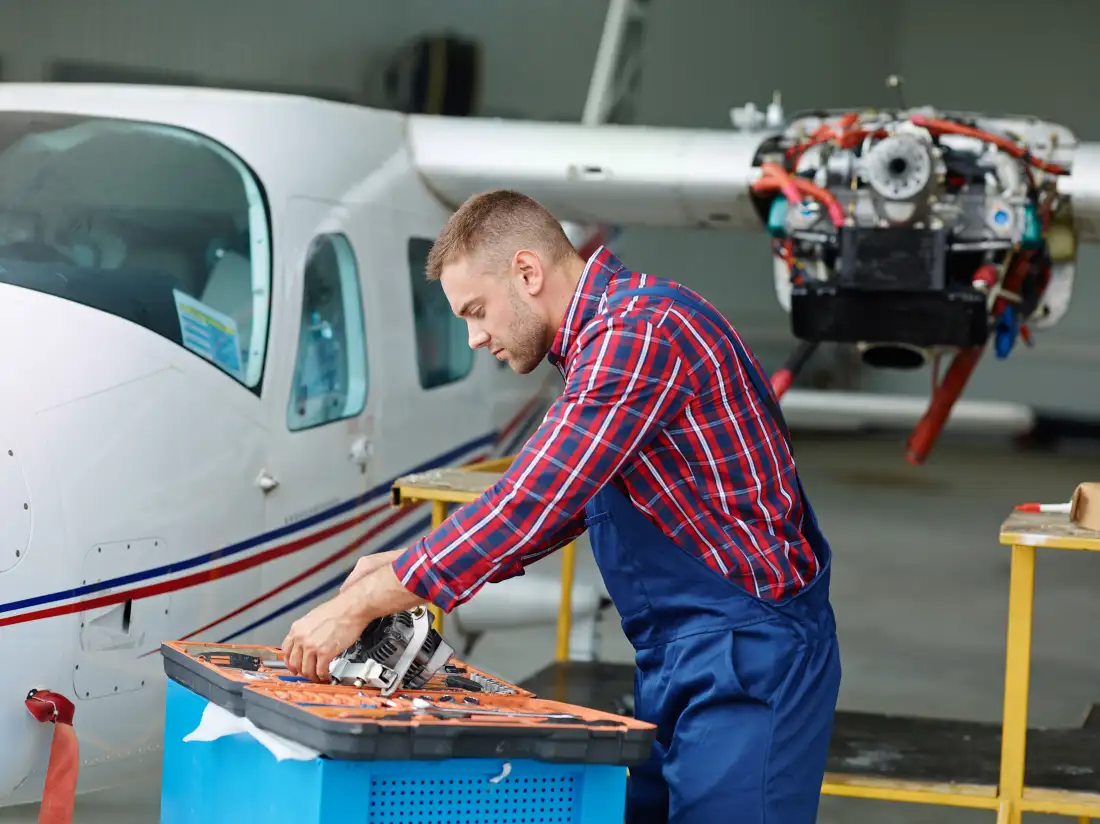
The soft skills that matter most are attention to detail, structured troubleshooting, clear communication, calm decision-making under time pressure, adaptability, and integrity. Brochures rarely stress them, yet they explain why two engineers with identical qualifications can perform very differently.
Attention to detail
Attention to detail is the habit of checking the small things that everyone else assumes are fine. The BLS describes it as adjusting aircraft parts to exact specifications using precision tools. A missed locking device or an unrecorded task is exactly the kind of small error that grows into a serious one, so checking twice is a working habit, not a personality trait.
Structured troubleshooting
Troubleshooting is finding the root cause of a fault using approved data and logical tests instead of swapping parts until the warning disappears. A sound sequence looks like this:
- Confirm the report. Understand exactly what the pilot or previous shift saw.
- Check the history. Look at the technical log for repeat defects on the same system.
- Follow the approved fault isolation procedure. Let the manual set the order of checks.
- Repair, then test. A repair is not finished until the system is proven serviceable.
- Record everything. The next engineer needs to know what you found and what you changed.
Communication and teamwork
Communication in maintenance means handing over work so completely that the next shift never has to guess what was done. Large checks put several specialists on one aircraft at the same time, and a vague handover is how a panel gets left open or a task gets signed twice. Clear speaking, clear writing, and a willingness to say "I am not sure" all count.
Decision-making and time management under pressure
Time management for an AME means working efficiently without cutting a single required step. The pressure is real, especially during an aircraft-on-ground (AOG) event, where a grounded aircraft costs an airline money by the hour. The skill is staying at the pace the procedure needs when the clock wants you to go faster. For a closer look at how that pressure differs by work type, read ATH's guide to line maintenance vs base maintenance.
Adaptability and continuous learning
Adaptability is the willingness to keep learning after you are licensed. New aircraft types, updated procedures, and new systems arrive throughout a career, so the licence marks the start of learning, not the end. Engineers who treat every new type course as routine paperwork fall behind those who treat it as a skill upgrade.
Integrity and professional responsibility
Integrity is the willingness to refuse a shortcut, report an error honestly, and decline to sign work you are not satisfied with. A certifying engineer's signature carries legal weight, so it is the one skill nobody can supervise into you. It is also the one that employers and regulators trust most.
Do You Need to Be Physically Fit to Become an Aircraft Maintenance Engineer?
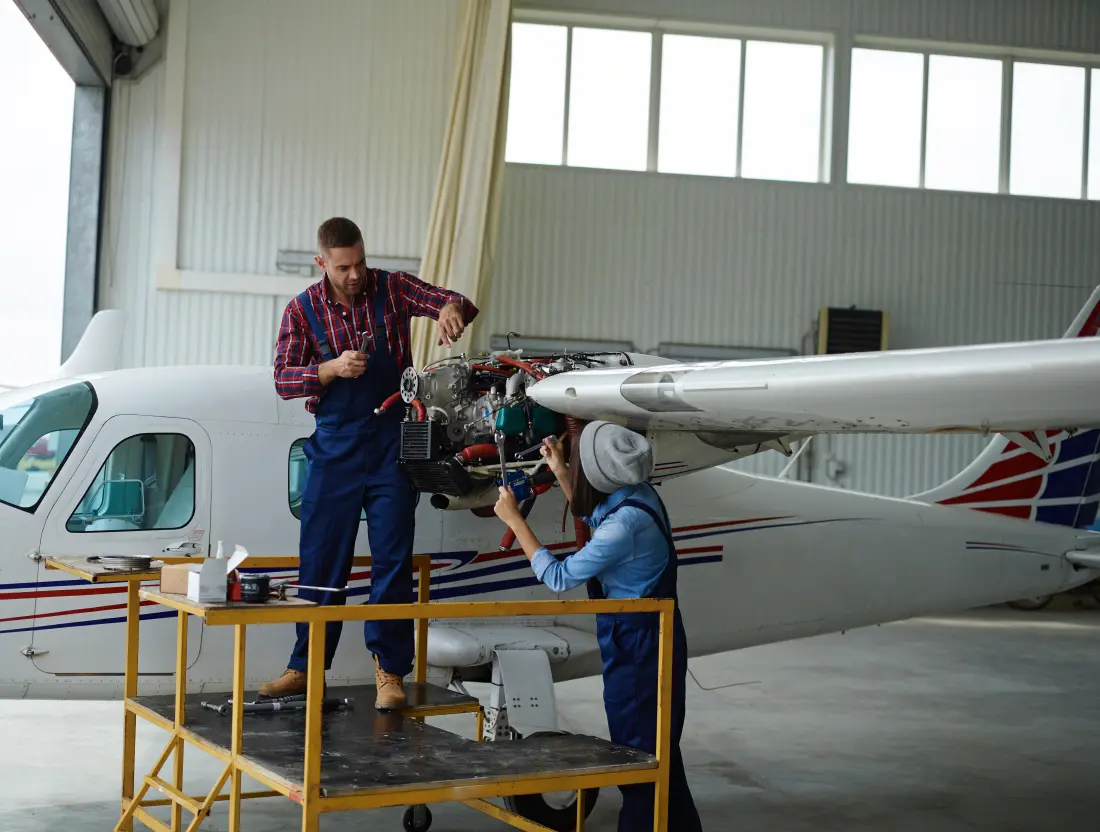
You need to be fit enough for practical work, not athletic. The BLS lists dexterity, physical strength, and observational skills among the qualities of aircraft technicians, and describes work in hangars, repair stations, and on airfields, often in loud conditions and with shifts that include nights, weekends, and holidays.
- Manual dexterity: handling small fasteners, connectors, and tools in tight spaces.
- Stamina and balance: climbing stands and ladders, and standing for long periods.
- Observation: noticing leaks, heat marks, unusual sounds, or worn parts that a quick glance would miss.
- Tolerance for conditions: heat, cold, noise, and irregular hours, especially on the ramp.
Medical and fitness requirements differ by employer and authority, so confirm the specifics with the organisation you plan to work for. Being physically able is a reason to go ahead, not a reason to worry about being a bodybuilder.
How Do Human Factors Skills Reduce Maintenance Errors?
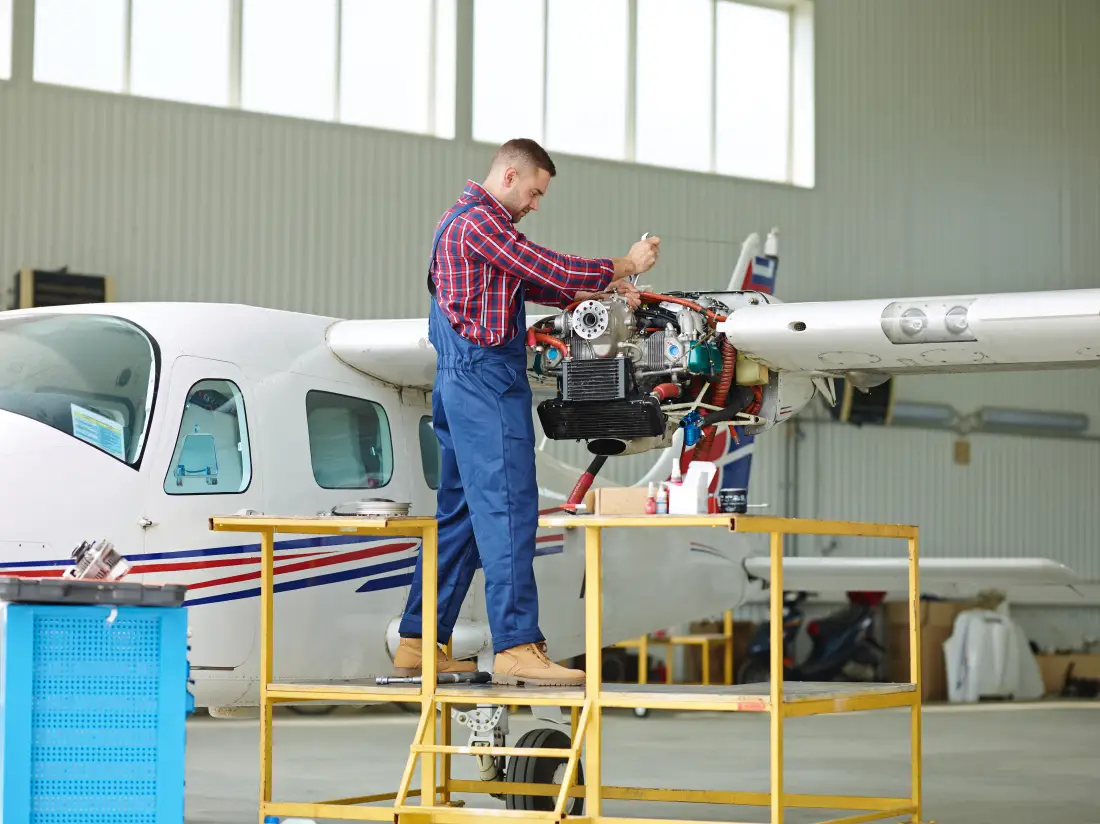
Human factors skills are the habits that stop capable people from making predictable mistakes. The Federal Aviation Administration lists twelve common causes of maintenance error, known as the "Dirty Dozen", on its Human Factors in Aviation Maintenance page.
Why does that matter? A peer-reviewed study in the journal Aerospace examined ICAO-classified accidents from 2008 to 2019 and found 35 of 1,277 accidents (2.8%) had a maintenance contribution. Those accidents were more severe: 20% were fatal, against 14.7% for all accidents in the dataset. The full analysis is in A Preliminary Investigation of Maintenance Contributions to Commercial Air Transport Accidents. The share is small, and the consequences are not.
The table pairs each of the FAA's twelve factors with the working habit that counters it. The examples are illustrative, not quotations from the FAA.
| Human factor (FAA) | What it can look like in a hangar | Skill or habit that counters it |
|---|---|---|
| Lack of communication | A handover that leaves out an open task | Written and verbal handovers, every time |
| Complacency | "I have done this a hundred times" | Working from the current manual on every task |
| Lack of knowledge | Guessing at a procedure | Asking, and checking approved data first |
| Distraction | Being interrupted halfway through a task | Marking the work stage and re-checking before closing up |
| Lack of teamwork | Two people assuming the other did it | Naming who owns each task |
| Fatigue | Night shifts and long checks | Recognising limits and reporting fitness concerns |
| Lack of resources | Missing tool, part, or data | Stopping and escalating instead of improvising |
| Pressure | A departure time counting down | Staying at the pace the procedure needs |
| Lack of assertiveness | Not challenging a doubtful instruction | Speaking up politely and clearly |
| Stress | Personal or workplace strain | Extra checks and asking for support |
| Lack of awareness | Not seeing how a task affects other systems | Thinking about the whole aircraft, not one component |
| Norms | "We always skip that step here" | Following the approved procedure, not the habit |

Which Skills Matter More for B1 and B2 Aircraft Maintenance Engineers?
B1 engineers lean on mechanical and structural skills, while B2 engineers lean on electrical, electronic, and diagnostic skills. Both share the same soft-skill core. The licence categories follow the framework in EASA's Part-66 guidance, and the Pakistan Civil Aviation Authority's categories follow the same logic.
| Skill | Category B1 (mechanical) | Category B2 (avionics) |
|---|---|---|
| Mechanical and structural skills | Core | Supporting |
| Engine and propulsion knowledge | Core | Supporting |
| Electrical and electronic fault-finding | Supporting | Core |
| Digital systems and data buses | Supporting | Core |
| Reading technical data | Core | Core |
| Communication, integrity, and human factors | Core | Core |
If you like fitting, adjusting, and physically fixing things, B1 tends to suit you. If you like tracing signals, reading wiring, and solving intermittent faults, B2 is worth a serious look. Many students train toward both.
How Are These Skills Tested in AME Training and Exams?
Skills are tested in three ways: module examinations for knowledge, assignments and practical tasks for application, and on-the-job training for working habits. No single test covers all ten skills, which is why the full pathway takes time.
The module examinations are strict. As summarised by the European Aviation Institute's Part-66 examination policy, which quotes Part-66 Appendix II, the pass mark is 75%, questions offer three answer options, and the time allowed averages 75 seconds per question. A learner can make at most three consecutive attempts at a module, with a gap of at least 90 days after a failed attempt. Fast, accurate reading under time pressure is itself a skill you will train.
- Exams test: knowledge, accuracy, and reading speed.
- Assignments test: applying procedures to realistic maintenance scenarios.
- On-the-job training tests: discipline, communication, and reliability around real aircraft.

Can You Learn These Skills or Do You Need Natural Talent?
Yes, you can learn nearly all of them, because AME skills are built by structured practice, not inherited. The honest exception is the group of habits that only you can supply.
- Taught in the classroom and workshop: systems knowledge, electrical fundamentals, tool use, regulations, and technical reading.
- Built through repetition: troubleshooting method, documentation, and handover quality.
- Yours to bring: patience, honesty, and the willingness to follow a procedure when it feels slow.
Curiosity about how machines work helps a great deal. A perfect academic record does not.
Why Are These Skills in High Demand Right Now?
These skills are in demand because every aircraft in service needs qualified people behind it. Boeing projects 728,000 new maintenance technicians needed globally through 2045, with 48,000 in South Asia alone, as noted above. In the United States, the BLS projects employment of aircraft and avionics technicians to grow 6% from 2025 to 2035, faster than the average for all occupations.
Demand figures describe the market, not a job guarantee. Licensing, experience, and employer requirements still decide who is hired, which is exactly why building the right skills early matters.
How Does Aviation Training Hub Build These Skills?
The following section reflects Aviation Training Hub's own programme structure, not a third-party finding. Aviation Training Hub (ATH) delivers its Aircraft Maintenance Engineering programme over two years and six semesters of four months each, with intakes in January, April, July, September, and November, from campuses in Islamabad and Karachi. Entry requires Matric or FSc (Pre-Engineering or Pre-Medical) with at least 50% in Mathematics and Physics. Programme modules are aligned to Part-66 B1 and B2 categories.
| Stage | What you practise | Skills it builds |
|---|---|---|
| Year 1 foundation | Mathematics, Physics, Electrical and Electronic Fundamentals, Digital Techniques, Materials and Hardware, Basic Aerodynamics, Human Factors, Propellers | Technical base, reading data, human factors awareness |
| Year 2 specialisation | Maintenance Practices, Aviation Legislation, Aeroplane Aerodynamics, Gas Turbines, Propulsion, systems modules | Systems knowledge, procedure discipline, regulatory awareness |
| EASA module exams | 16 exams sat progressively | Accuracy, exam-time reading, resilience |
| On-the-job training | Practical exposure with partner organisations | Teamwork, reliability, real-world communication |
Assessment at ATH is assignment-based rather than exam-only, so students practise applying procedures to realistic maintenance scenarios instead of only memorising them. That is deliberate: procedure discipline and troubleshooting are skills, and skills need practice.
| Fee Type | Amount | Details |
|---|---|---|
| Admission Fee | PKR 150,000 | Non-refundable, one-time |
| Semester Fee | PKR 140,000 | Per semester, 6 semesters of 4 months each |
| EASA Exam Fee | €139 per exam | 16 exams total (about €2,224 overall), payable one month before each exam |
| On-the-Job Training (OJT) | From PKR 8,000 | Depends on partner organisation and scope |
Core tuition (admission plus six semesters) comes to PKR 990,000. Graduates who want to build management skills on top of their technical ones can move into the BSc (Hons) Aircraft Engineering Management top-up without repeating foundation coursework.
Do You Have What It Takes? A Self-Check for Future AMEs
A quick honest self-check can tell you more than a brochure. Answer these eight questions and note where you hesitate.
- Do you follow written instructions exactly, even when you think you know a faster way?
- Do you double-check your own work without being asked?
- Are you comfortable with Physics and Mathematics, or willing to work hard to become so?
- Can you read technical English at a steady pace and stay accurate?
- Can you stay calm when a task is running late?
- Will you admit a mistake the moment you spot it?
- Are you fine with shift work, noise, and physical tasks?
- Do you enjoy working out how things fail, not just how they work?
Six or more clear yeses is a strong sign. Any hesitation is not a rejection. It is a list of what to practise first.
What Are the Most Common Mistakes Aspiring AMEs Make About Skills?
- Assuming marks are enough. Good grades get you in. Habits keep you working.
- Treating soft skills as optional. Communication and integrity show up in every human factors case.
- Ignoring technical English. Manuals and directives are written in English, so weak reading slows every task.
- Underestimating the exams. A 75% pass mark and roughly 75 seconds per question leave little room for guessing.
- Skipping electronics because you like mechanics. Modern aircraft mix both, and B1 engineers still need the basics.
- Waiting until day one to build habits. Six months of deliberate practice beforehand makes the first semester far easier.
How Can You Start Building These Skills Before You Enrol?
You can start building AME skills now with cheap, practical habits. None of them need an aircraft.
- Revise Physics and Mathematics. Focus on units, formulas, and basic electrical laws.
- Take things apart and rebuild them correctly. Bicycles, fans, and small electronics are all good practice.
- Follow instructions exactly. Assembly manuals are a low-stakes rehearsal for maintenance manuals.
- Read technical English daily. Even ten minutes of technical articles builds speed and accuracy.
- Keep a simple log. Note what you did, what you found, and what you changed, the way a technical log works.
- Visit a workshop or hangar if you can. A day around real aircraft tells you quickly whether the environment suits you.

Conclusion
So what skills do you need to become an aircraft maintenance engineer? Solid technical foundations in mechanics, electrics, systems, and maths, plus the working habits that keep aircraft safe: precision, structured troubleshooting, clear communication, and integrity. Add enough physical ability for hangar and ramp work, and you have the profile employers look for.
If that sounds like you, or like someone you can become, check the training pathway, entry requirements, and regulatory approvals of any institute before you enrol, then talk to someone who can walk you through the options.
Frequently Asked Questions
Common questions about the skills needed to become an aircraft maintenance engineer
You need technical skills (mechanical aptitude, electrical and electronic knowledge, systems knowledge, maths and physics), working habits (attention to detail, troubleshooting, communication, integrity), and enough physical ability for hangar and ramp work.
You need a working comfort with them, not brilliance. ATH requires at least 50% in Mathematics and Physics at Matric or FSc level, and both subjects are used throughout the technical modules.
Attention to detail, clear communication, calm decision-making under pressure, adaptability, and integrity. These decide how reliably an engineer applies technical knowledge on a real shift.
It is demanding but learnable. Part-66 style module exams use a 75% pass mark and average about 75 seconds per question, so steady study and accuracy matter more than natural talent.
Not to start. At ATH, entry needs Matric or FSc with 50% in Mathematics and Physics, and the programme runs for two years. A degree route, such as a top-up, is optional and mainly useful for management roles later.
B1 leans on mechanical, structural, and engine skills. B2 leans on electrical, electronic, and avionics fault-finding. Both need strong technical reading, communication, and integrity.
It can be. The BLS describes work in hangars and on airfields, often in loud conditions with night and weekend shifts, plus climbing and handling equipment. Fitness requirements vary by employer.
Very. Maintenance manuals, directives, and records are written in English, so accurate, quick reading saves time and prevents errors. Reading technical English daily before you enrol is a practical head start.
At ATH the programme takes two years across six semesters, with 16 EASA module exams and on-the-job training. Skills keep developing after licensing through experience and type training.