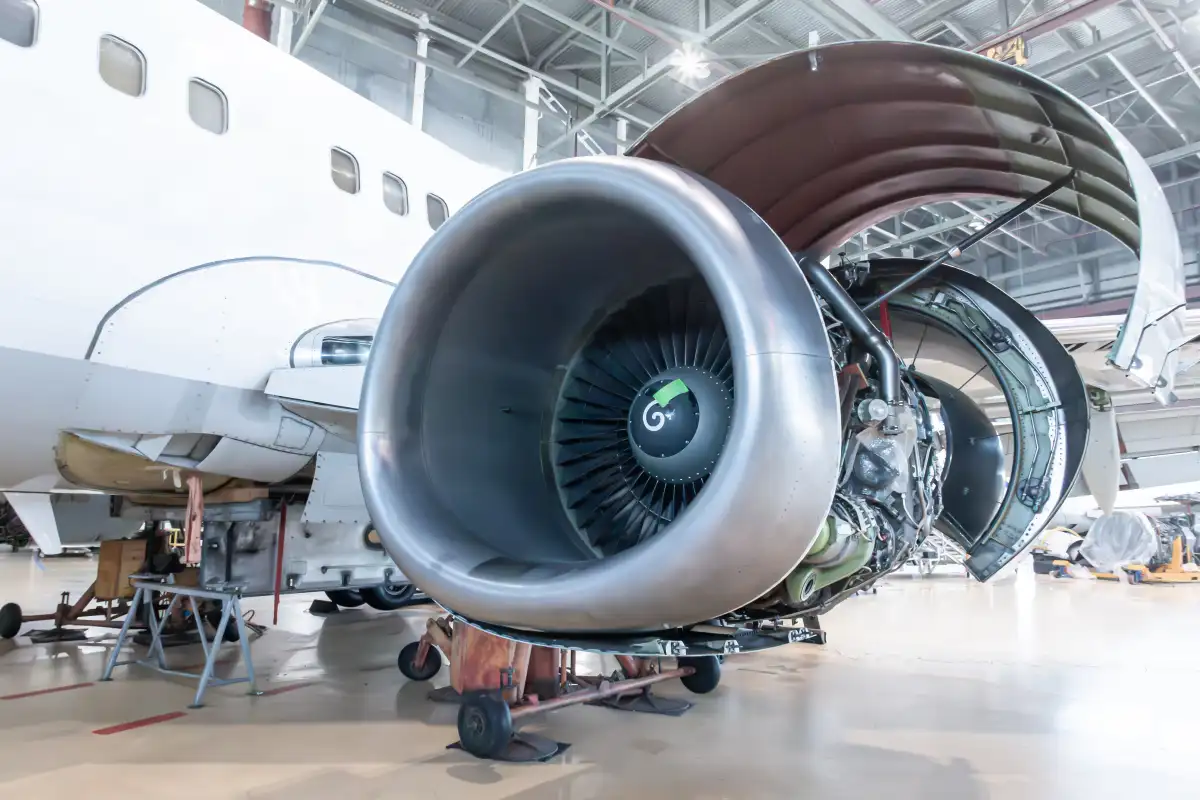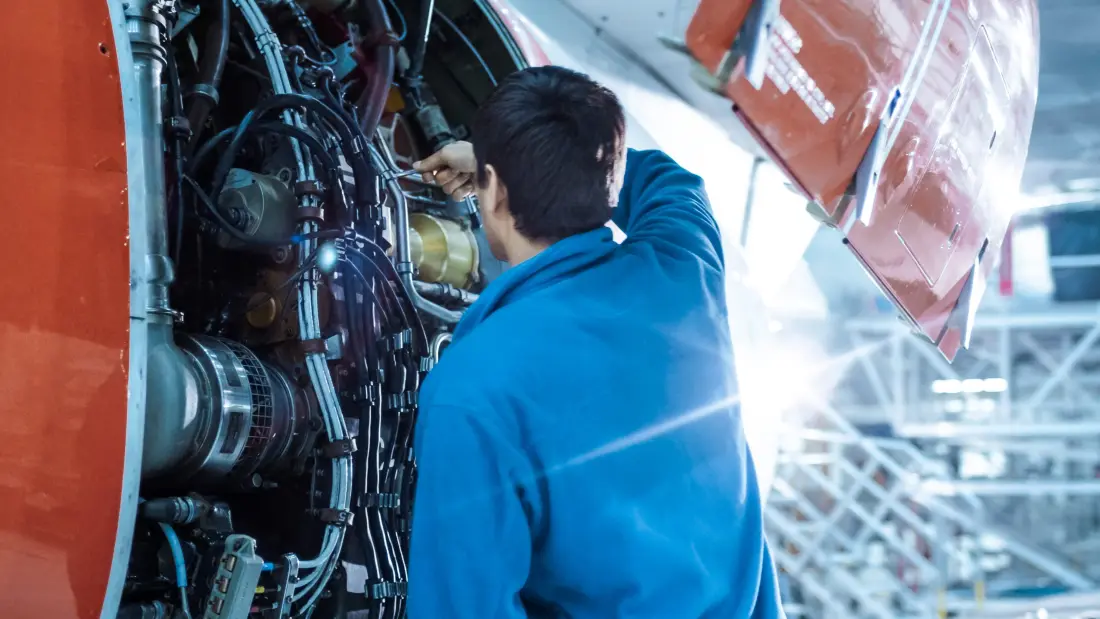

Aircraft maintenance engineering in Pakistan is worth choosing right now because the country's aviation sector needs licensed engineers faster than local institutes can graduate them, training costs a fraction of equivalent programs in the UK or Gulf, and a Pakistan-earned EASA Part-66 or PCAA license opens job markets at home and abroad at the same time. Boeing's 2025 Pilot and Technician Outlook projects that South Asia and Southeast Asia will see maintenance-technician staffing demand more than triple over the next 20 years, and Pakistan's own fleet expansion plans mean that gap is already showing up in hiring.
This guide breaks down what an Aircraft Maintenance Engineer (AME) actually does, why Pakistan specifically has become a credible base for this career, what the licensing pathway looks like under PCAA and EASA rules, how much AMEs earn, what training costs compared to studying abroad, and how to evaluate an institute before enrolling. If you are comparing programs, Aviation Training Hub (ATH) runs one of the EASA-integrated options referenced throughout this guide.
What Is an Aircraft Maintenance Engineer?
An Aircraft Maintenance Engineer (AME) is a licensed professional who inspects, repairs, and certifies aircraft as airworthy before every flight, no aircraft legally departs without an AME's sign-off. The role sits at the intersection of mechanical engineering, electronics, and aviation law, and it carries direct legal responsibility for passenger safety.
- Scheduled and unscheduled inspections of airframes, engines, and systems between flights and during heavier checks.
- Diagnosing and rectifying defects in mechanical, hydraulic, electrical, and avionics systems.
- Issuing a Certificate of Release to Service (CRS), the legal document confirming an aircraft is fit to fly.
- Maintaining compliance records against the manufacturer's maintenance schedule and the regulator's airworthiness directives.
The term is used interchangeably with "Aircraft Maintenance Technician" or "Licensed Aircraft Engineer" depending on the country, but per ICAO's Personnel Licensing framework, the licensing standard behind the title is functionally the same worldwide.

Why Opt for Aircraft Maintenance Engineering in Pakistan?
Aircraft maintenance engineering in Pakistan stands out because it combines low training cost, EASA-recognized certification, and a domestic industry that is actively short of licensed engineers, a combination few countries offer at this price point. The table below breaks down the six reasons this career path makes sense in 2026.
| Reason | Why It Matters |
|---|---|
| Dual licensing pathway | Institutes like ATH integrate PCAA-recognized training with EASA Part-66 B1/B2 modules, so one program supports both domestic and international employment. |
| Growing local demand | PIA's fleet is projected to grow from 18 to 38 aircraft by 2029, alongside new private carriers entering the market, per U.S. International Trade Administration data. |
| Lower training cost | A full two-year AME program in Pakistan runs close to PKR 990,000 in tuition, versus roughly £18,500 (about PKR 6.7 million) for an equivalent two-year approved course in the UK. |
| Global mobility | An EASA-based license is recognized across EU member states and respected by Gulf and Asian operators under ICAO's mutual-recognition framework. |
| Job security | Boeing forecasts 710,000 new maintenance technicians will be needed globally through 2044, with South Asia among the fastest-growing regions for that demand. |
| Multiple entry points | Matric or FSc graduates with 50% in Math and Physics can enter directly, without needing a prior engineering degree. |
How Much Do Aircraft Maintenance Engineers Earn in Pakistan?
Entry-level Aircraft Maintenance Engineers in Karachi earn roughly PKR 1.2 million a year, rising to around PKR 1.85 million at the senior level, according to SalaryExpert's July 2026 compensation data. Pay varies by city, employer type, and whether the engineer holds a full B1/B2 license or is still working through modules.
| Experience Level | Estimated Annual Salary (PKR) |
|---|---|
| Entry level (1–3 years) | Rs 1,200,800 |
| Median | Rs 1,619,825 |
| Senior level (8+ years) | Rs 1,851,692 |
These figures reflect Karachi specifically; salaries in Lahore and Islamabad tend to run somewhat lower, while engineers who move into MRO (Maintenance, Repair, and Overhaul) roles in the Gulf typically see a further increase once they hold a recognized EASA license.

Global and Regional Demand Is Accelerating
Global demand for aircraft maintenance technicians is rising because the commercial fleet is expanding faster than the supply of licensed engineers, particularly in South Asia. Boeing's 2025 Pilot and Technician Outlook forecasts a need for 710,000 new maintenance technicians worldwide over the next 20 years, alongside 660,000 pilots and 1,000,000 cabin crew. Two-thirds of that demand replaces attrition; the remaining third supports fleet growth, and the report specifically flags South Asia and Southeast Asia as the fastest-growing regions, with staffing demand expected to more than triple.
For a Pakistani AME graduate, that translates into two overlapping job markets: a domestic one that is actively short-staffed, and a regional one (Gulf, Southeast Asia, parts of Europe) that recognizes EASA-based qualifications and is short-staffed for the same structural reasons.
Pakistan's Aviation Industry Is Entering a Growth Cycle
Pakistan's aviation industry is growing because of PIA's 2026 privatization, fleet expansion plans, and new private carriers entering the market under the Open Skies Policy. In January 2026, the Government of Pakistan transferred 75% management control of Pakistan International Airlines to a private consortium led by Arif Habib Corporation, with no government "golden share" retained. Under the new ownership's business plan, PIA's fleet is projected to more than double, from 18 operational aircraft to 38 by 2029, while its route network expands from roughly 30 cities to more than 40.
- Fleet modernization: Aircraft upgrades, leasing, and MRO demand rise directly with fleet size, each new airframe needs a maintenance team behind it.
- New market entrants: Private carriers such as Air Karachi have entered the domestic market, adding to the pool of employers competing for licensed engineers.
- Open Skies competition: More international carriers operating into Pakistan increases demand for line maintenance capacity at Pakistani airports.
Every one of these threads points the same direction: more aircraft on the ground in Pakistan means more certifying signatures required, and not enough licensed AMEs to provide them yet.
PCAA and EASA Licensing: Understanding Your Certification Pathway
PCAA and EASA licenses both certify an engineer to release aircraft to service, but they differ in scope, recognition, and the categories they issue. Pakistan's Civil Aviation Authority (PCAA) licenses engineers to work on Pakistan-registered aircraft domestically, while an EASA Part-66 license, built on the same category structure, is recognized across the European Union and by many international operators. Institutes that teach EASA Part-66 modules alongside local requirements give students both doors at once.
| Category | Privileges | Typical Training |
|---|---|---|
| Category A | Limited certification for minor scheduled line maintenance and simple defect rectification. | 650–800 hours |
| Category B1 | Certifies release to service on airframes, engines, and mechanical/electrical systems; may replace simple avionics line units. | ~2,400 hours (full course) or modular |
| Category B2 | Certifies release to service on avionics, electrical, and instrument systems. | ~2,400 hours (full course) or modular |
| Category C | Base maintenance certifying staff; issues the CRS after major checks. Requires at least three years as certifying staff. | Post-B1/B2 experience requirement |
Per the European Union Aviation Safety Agency's official Part-66 guidance, these categories form the common reference point that most national authorities, including PCAA, build their own licensing structures around. That shared structure is what makes cross-border recognition possible in the first place, an outcome ICAO's Annex 1 personnel-licensing standard was specifically designed to support.
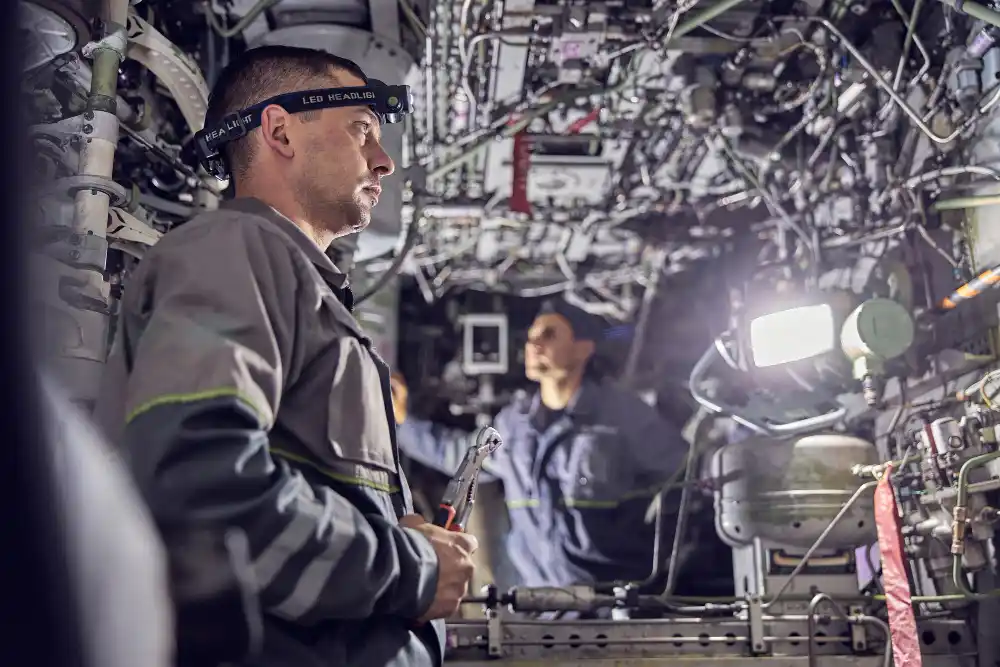
How Long Does It Take to Become an AME in Pakistan?
Becoming a licensed AME in Pakistan typically takes two to four years, depending on whether the program covers Part-66 modules only or a full type-rated B1/B2 pathway with extended on-the-job training. Here is what the process generally looks like:
- Entry: Matric or FSc (Pre-Engineering or Pre-Medical) with a minimum of 50% marks in Mathematics and Physics.
- Foundational modules: Mathematics, Physics, Electrical Fundamentals, and Materials & Hardware, the building blocks every later module depends on.
- Specialized modules: Aerodynamics, Gas Turbine Engines, Aviation Legislation, Digital Techniques, and Human Factors, mapped against Part-66 B1 and B2 requirements.
- EASA/PCAA module examinations: Sat progressively as each module is completed, rather than all at once at the end.
- On-the-job training (OJT): Practical hours on live aircraft with a partner MRO, airline, or maintenance organization, required before a license is issued.
Two-year programs generally compress the modular coursework into six semesters with concurrent OJT, while four-year (eight-semester) programs spread the same content further and typically extend the practical component to meet a broader set of B1.1/B2 requirements. Either route lands on the same underlying Part-66 category structure.
Skills You Need to Succeed as an Aircraft Maintenance Engineer
Succeeding as an AME depends less on raw academic scores and more on a specific set of working habits, since the job involves signing off on decisions that carry real safety consequences.
- Decision-making under pressure: Engineers frequently need to make quick, well-informed calls to resolve technical issues without compromising safety standards.
- Technical reading comprehension: Manuals, wiring diagrams, and airworthiness directives have to be interpreted precisely, misreading a torque value or a directive is not a minor error in this field.
- Mechanical and systems expertise: A working understanding of how airframes, engines, hydraulics, and avionics interact, not just isolated component knowledge.
- Ability to work independently: Certifying staff are often the last check before an aircraft flies; self-reliance under scrutiny is part of the job description.
- Attention to detail: Small, easily missed defects are exactly the ones that matter most in aviation maintenance.
- Adaptability to new technology: Aircraft systems evolve continuously, from integrated modular avionics to newer composite structures, so ongoing learning does not stop at licensing.
What Does AME Training Cost in Pakistan?
AME training in Pakistan costs a fraction of equivalent programs abroad, largely because tuition, EASA exam fees, and living costs are all denominated locally rather than in pounds, euros, or dollars. A representative two-year program in Pakistan totals close to PKR 990,000 in core tuition (admission fee plus six semester fees), plus per-module EASA exam fees and OJT costs that scale with the partner organization.
| Cost Component | Pakistan (2-Year Program) | UK Approved Basic Training (2-Year Program) |
|---|---|---|
| Core tuition | ~PKR 990,000 (admission + 6 semester fees) | £18,500.40 (~PKR 6.7 million) |
| Exam fees | ~139 per EASA module, payable individually | Included in course fee |
| OJT / practical costs | Starting from PKR 8,000, depending on partner | Included in course fee |
| Living costs | Local cost of living | UK cost of living, plus visa maintenance funds (from £1,136/month) |
Source for UK figures: Air Service Training's published fees and funding page. Actual costs vary by provider on both sides, but the gap is wide enough that it remains one of the clearest financial arguments for training in Pakistan first, even for students who eventually plan to work abroad.
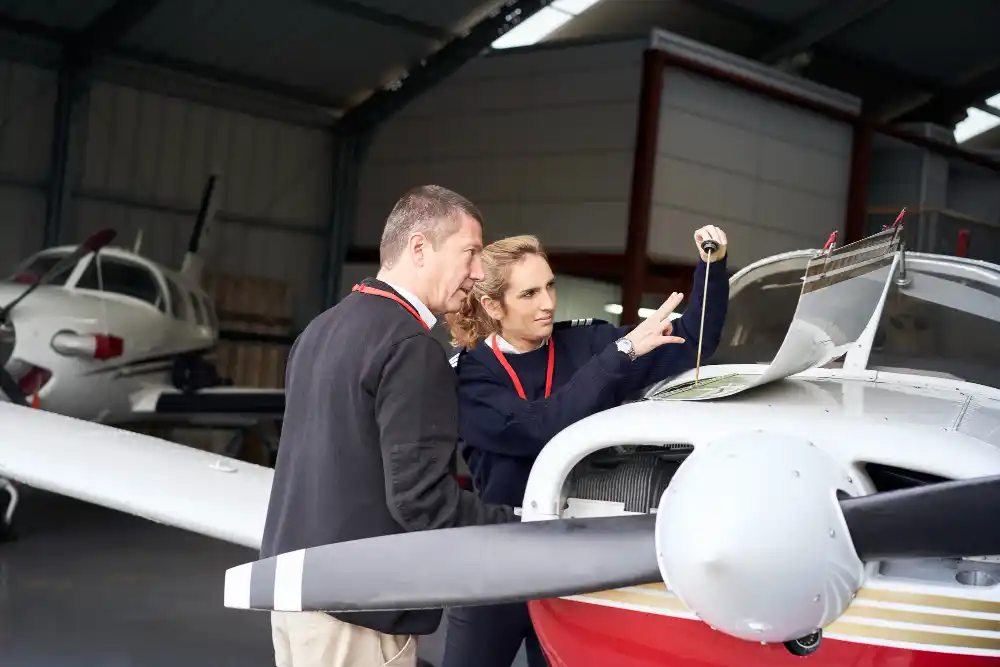
What to Look for When Choosing an AME Institute in Pakistan
Choosing the right AME institute in Pakistan comes down to verifying its regulatory approval, its access to real aircraft for practical training, and what happens to graduates after they finish. Use this checklist before enrolling anywhere:
- PCAA and/or EASA Part-147 approval status, confirmed directly, not just claimed in marketing material.
- In-house EASA module examinations, so students are not required to travel abroad to sit each exam.
- Genuine OJT access through partner MROs, airlines, or maintenance organizations, not simulated-only practical training.
- Instructor experience, ideally with a mix of academic and hands-on industry background.
- Assessment style that includes practical, assignment-based evaluation alongside written exams.
- A clear post-graduation pathway, whether that is direct employment, a top-up degree, or further specialization.
Aviation Training Hub's Approach to AME Training
The following section reflects ATH's own training methodology and program structure, not a third-party finding. ATH's Aircraft Maintenance Engineering program runs two years across six semesters of four months each, integrating Part-66 AML Category B1 and B2 modules directly into the coursework rather than treating them as an add-on. Entry requires a Matric or FSc qualification (Pre-Engineering or Pre-Medical background accepted) with a minimum of 50% in Mathematics and Physics.
Assessment at ATH is deliberately assignment- and project-based rather than exam-only, students work through practical tasks that mirror real maintenance scenarios, which is intended to build problem-solving and applied judgment alongside theoretical knowledge. Year one covers foundational modules (Mathematics, Physics, Electrical Fundamentals, Digital Techniques, Materials & Hardware, Basic Aerodynamics, Human Factors), and year two moves into specialized subjects (Maintenance Practices, Aviation Legislation, Aeroplane Aerodynamics, Gas Turbines, and Propulsion) mapped against Part-66 B1/B2 requirements. Graduates can also progress into a BSc (Hons) Aircraft Engineering Management top-up for those who want to move into leadership or management roles later in their career.
Common Mistakes to Avoid When Starting an AME Career
- Skipping the approval check. Enrolling before confirming an institute's PCAA or EASA Part-147 status can mean a license that is not recognized where you eventually want to work.
- Underestimating OJT. Practical hours on real aircraft are not optional extras, they are what regulators and employers actually look for.
- Rushing foundational modules. Mathematics, Physics, and Electrical Fundamentals underpin nearly every specialized module that follows; treating them as a formality tends to catch up with students later.
- Assuming one category covers every job. A B1 license and a B2 license open different doors, decide based on where the regional job market and your own aptitude point, not just which sounds more familiar.
- Ignoring documentation and English proficiency. Maintenance manuals, directives, and CRS paperwork are technical and precise; weak documentation skills slow down licensing and hiring alike.
Conclusion
Aircraft maintenance engineering in Pakistan makes sense in 2026 because every trend line points the same direction: PIA's fleet is doubling, new private carriers are entering the market, Boeing's global forecast shows technician demand tripling across South Asia, and training costs remain a fraction of what the same EASA-recognized qualification costs in the UK. For a Matric or FSc graduate with an aptitude for mechanical and technical work, it is one of the few career paths in Pakistan right now where the supply-demand gap is working in the graduate's favor rather than against it.
If you are weighing this path, look closely at an institute's regulatory approval, its access to real aircraft for OJT, and its EASA module structure before enrolling anywhere.
Frequently Asked Questions
Common questions about starting an aircraft maintenance engineering career in Pakistan
Yes. Boeing forecasts 710,000 new maintenance technicians will be needed globally through 2044, with South Asia among the fastest-growing regions, while PIA's fleet is projected to grow from 18 to 38 aircraft by 2029. Both trends point to sustained local and regional demand for licensed AMEs.
A PCAA license certifies an engineer to work on Pakistan-registered aircraft domestically. An EASA Part-66 license is built on the same category structure but is recognized across the European Union and by many international operators, giving graduates a second job market alongside the domestic one.
Generally two to four years, depending on the program. Two-year programs compress Part-66 modules into six semesters with concurrent on-the-job training; four-year (eight-semester) programs spread the same content further with an extended practical component.
In Karachi, entry-level AMEs earn around Rs 1.2 million a year, rising to roughly Rs 1.85 million at the senior level, according to July 2026 SalaryExpert data. Pay varies by city, employer, and license category held.
Most Pakistani institutes require a Matric or FSc qualification (Pre-Engineering or Pre-Medical accepted) with a minimum of 50% marks in Mathematics and Physics. No prior engineering degree is needed to start.
Yes. EASA Part-66 licenses are recognized across EU member states and respected by many Gulf and Asian operators, since the underlying category structure follows the framework set out in ICAO Annex 1 for international mutual recognition.
Category B1 covers airframes, engines, and mechanical/electrical systems. Category B2 covers avionics, electrical, and instrument systems. Many students train toward both to maximize employability across different aircraft types and employers.
A two-year AME program in Pakistan runs close to PKR 990,000 in core tuition, versus roughly £18,500 (about PKR 6.7 million) for an equivalent UK approved course, before living and visa costs are even factored in.