Aircraft Maintenance Engineers face fourteen recurring challenges, from strict PCAA/EASA licensing and limited on-the-job training access to physically demanding hangar work, irregular shifts, and the upfront cost of training. None of them are reasons to avoid the profession, they are reasons to prepare for it with a clear-eyed view of what the job actually demands.
This guide walks through each challenge in detail, backed by real Pakistan-specific and PCAA/EASA figures, and then shows exactly how Aviation Training Hub's (ATH) AME program solves it, so you see the problem and the fix side by side before your first day in a hangar. Where a number is quoted, whether a fee, a salary, or an industry forecast, it is sourced and checkable rather than estimated.
What Does an Aircraft Maintenance Engineer Do?
An Aircraft Maintenance Engineer (AME) is a licensed professional who inspects, repairs, and certifies aircraft as airworthy by signing a Certificate of Release to Service (CRS) before every flight. That signature is a legal declaration, not a formality, which is exactly why the role carries the pressure described throughout this guide. AMEs work across mechanical, electrical, and avionics systems depending on their license category (A, B1, B2, or C), and no aircraft departs legally without one of them having cleared it first. See ATH's full breakdown of an AME's daily responsibilities for a closer look at what a normal shift actually involves.
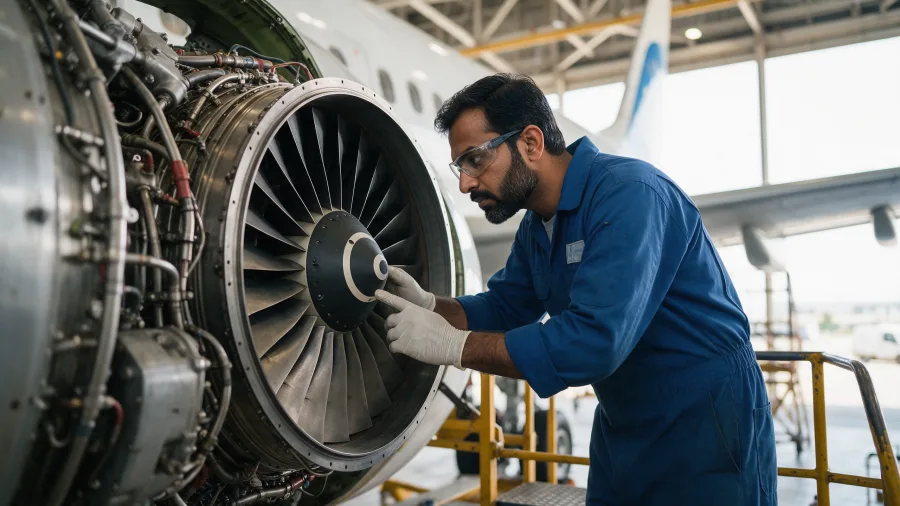
The 14 Biggest Challenges Aircraft Maintenance Engineers Face and How ATH Solves Them
The table below summarizes all fourteen challenges and the specific way ATH's AME program addresses each one, before the detailed breakdown that follows. Use it to jump to whichever one applies to your stage of the journey.
| # | Challenge | Why It's Hard | How ATH Solves It |
|---|---|---|---|
| 1 | PCAA/EASA licensing requirements | 16 progressive module exams plus foundational and specialized coursework | Sequenced two-year route, exams sat one module at a time |
| 2 | Bridging PCAA and EASA systems | Domestic and internationally recognized licenses follow different administrative paths | EASA Part-66 B1/B2 modules built in from semester one |
| 3 | Securing genuine OJT access | Real aircraft time depends on limited MRO/airline partner slots | OJT arranged through partner MROs, airlines, and maintenance organizations |
| 4 | Direct legal responsibility | A single signature carries safety and legal accountability for every flight | Human Factors, Aviation Legislation, and scenario-based assignments |
| 5 | Physically demanding environment | Long hours in hangars, on tarmacs, and in confined aircraft spaces | Hands-on training plus OJT on real aircraft before graduation |
| 6 | Rapid technological change | Predictive maintenance, composites, and modern avionics keep evolving | Syllabus covering avionics, digital systems, materials, and gas turbines |
| 7 | Entry-level job competition | Popular airline and MRO postings draw far more graduates than seats | EASA-standard training plus logged, supervised OJT |
| 8 | Irregular shifts and work-life balance | Aviation runs 24/7, so maintenance schedules follow it | Shift work covered in Human Factors and discussed openly in counselling |
| 9 | Physical and mental strain | Precision work under time and safety pressure, shift after shift | Mandatory Human Factors module on fatigue, stress, and error |
| 10 | Constant regulatory change | Airworthiness directives and service bulletins update continuously | Aviation Legislation module for both B1 and B2 |
| 11 | Financing training and early salaries | Tuition, exam fees, and OJT costs precede the first paycheck | Published fees, per-semester and per-exam payments, scholarships |
| 12 | Global mobility and license portability | Moving abroad usually means a license conversion process, not a straight transfer | EASA standard plus University of South Wales equivalence |
| 13 | Limited early mentorship | Fresh graduates need hands-on guidance that not every employer has time to give | Instructors with academic and hands-on industry backgrounds |
| 14 | Unpredictable career progression | Promotion depends on experience and category upgrades, not tenure alone | B1/B2 module coverage and a BSc (Hons) top-up route |
1. Meeting Strict PCAA and EASA Licensing Requirements
The first and most consistent challenge is the licensing pathway itself, which requires 16 separate EASA-aligned module exams sat progressively rather than one final test at the end. Aspiring AMEs must first meet the entry bar (a Matric or FSc certificate with at least 50% in Mathematics and Physics), then work through foundational modules (Mathematics, Physics, Electrical and Electronic Fundamentals, Digital Techniques, Materials and Hardware) before moving into specialized modules (Maintenance Practices, Aviation Legislation, Gas Turbines, Propulsion, and avionics systems).
- 16 module exams sat one at a time as each module is completed, each with its own individually payable fee.
- Two license categories to choose between, B1 (airframes, engines, mechanical/electrical systems) and B2 (avionics, electrical, and instrument systems), each requiring roughly 2,400 training hours.
- No shortcuts between foundational and specialized modules; each later exam assumes the earlier ones are already solid.
The practical fix is choosing an institute that schedules modules in a logical sequence and runs in-house EASA examinations, so students are not adding international travel costs and delays on top of an already long process.
A Sequenced, Module-by-Module EASA Pathway
ATH turns the 16-module load into a planned two-year route instead of leaving students to work out the order alone. Year 1 covers the foundations (Mathematics, Physics, Electrical and Electronic Fundamentals, Digital Techniques, Materials and Hardware, and Human Factors). Year 2 moves into Maintenance Practices, Aviation Legislation, aerodynamics and aircraft systems, and gas turbine engines.
- Six semesters of four months each, so no single term carries the whole syllabus.
- Exams sat one module at a time as each module is completed, never as one high-stakes final.
- Flexible entry: Matric with at least 50% in Mathematics and Physics, or FSc Pre-Engineering or Pre-Medical with at least 50%.
2. Bridging Pakistan's PCAA License with the EASA System
A PCAA license alone only certifies an engineer to work on Pakistan-registered aircraft domestically, which becomes a real limitation the moment a graduate wants to work for a foreign carrier or an MRO in the Gulf or Europe. An EASA Part-66 license, built on the same category structure, is recognized across the European Union and by many international operators, but getting one usually means a formal conversion process rather than a simple license swap.
Per EASA's own guidance on converting a non-EU license, engineers holding a license issued outside the EU need their qualifications assessed against Part-66 requirements, and any gaps (specific modules, experience hours, or examinations) have to be closed before a Part-66 license is issued. Training toward both PCAA and EASA module requirements from day one, rather than treating EASA as an afterthought, is what actually closes this gap early. For the full regulatory detail on why there is no shortcut, see ATH's dedicated guide on whether a Pakistani AME license converts to EASA or FAA.
EASA Part-66 Standards From the First Semester
ATH doesn't treat EASA as a later add-on. The program is built to European Union Aviation Safety Agency standards, with B1 and B2 license modules integrated into the coursework from day one. The Part-66 module knowledge a conversion assessor checks for is already on the timetable while you study, not something to chase after graduation, which is where most engineers lose the most time.

3. Securing Genuine On-the-Job Training (OJT) Access
On-the-job training is not optional paperwork, it is what regulators and employers actually check for before hiring, and it is also the hardest step to control personally since it depends on an institute's partner network rather than individual effort alone. Good OJT should include real, supervised work on live aircraft, not simulated-only exercises, sign-off from a certifying engineer, and enough logged hours to meet PCAA/EASA practical requirements.
This is one of the clearest reasons to check an institute's OJT partnerships before enrolling rather than after, since a strong classroom program with weak practical placement still leaves a graduate underprepared for licensing.
OJT Through Partner MROs and Airlines
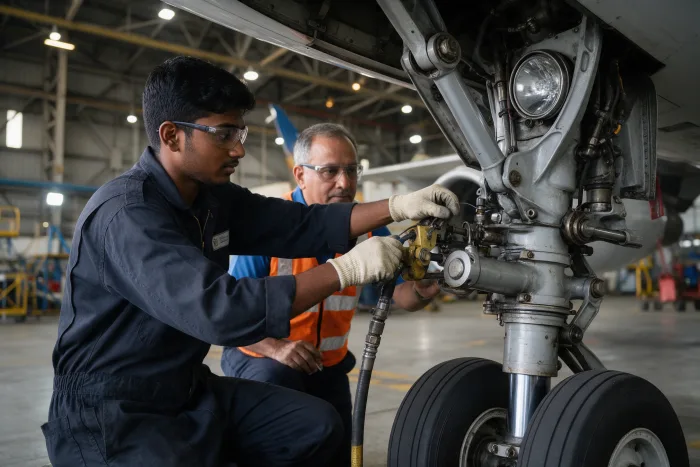
ATH arranges on-the-job training through partner MROs, airlines, and maintenance organizations, with supervised access to real aircraft rather than simulated-only exercises. Students don't have to cold-call hangars hoping for a slot.
- Supervised work on live aircraft through ATH's partner network.
- Transparent OJT cost, starting from PKR 8,000 depending on the partner and scope, listed upfront in the fee structure.
- Hands-on training built into the course, so students reach OJT already familiar with tools and procedures.
4. Carrying Direct Legal Responsibility for Passenger Safety
Every Certificate of Release to Service an AME signs is a legal declaration that an aircraft is fit to fly, which places direct responsibility for passenger safety on one individual's judgment. A study of U.S. aviation accident data cited in Colin Drury's research on human factors in aircraft maintenance found that maintenance-related factors contribute to roughly 18% of aircraft accidents, which is exactly why the profession treats documentation, double-checks, and sign-off discipline as core skills rather than bureaucratic overhead.
This weight does not go away with experience, it simply becomes more manageable as an engineer builds the habits (checklists, second inspections, and clear escalation paths for uncertainty) that keep a single error from becoming a single point of failure.
Training the Judgment Behind the Signature
The weight of a Certificate of Release to Service is taught at ATH, not left for the first job to reveal. Two mandatory modules target it directly: Human Factors, which covers human performance, error, and why mistakes happen under pressure, and Aviation Legislation, which covers the legal framework certifying staff work within. Assessment is assignment- and project-based, so students practise real fault-finding decisions and explain their reasoning long before anyone asks them to sign for an aircraft.
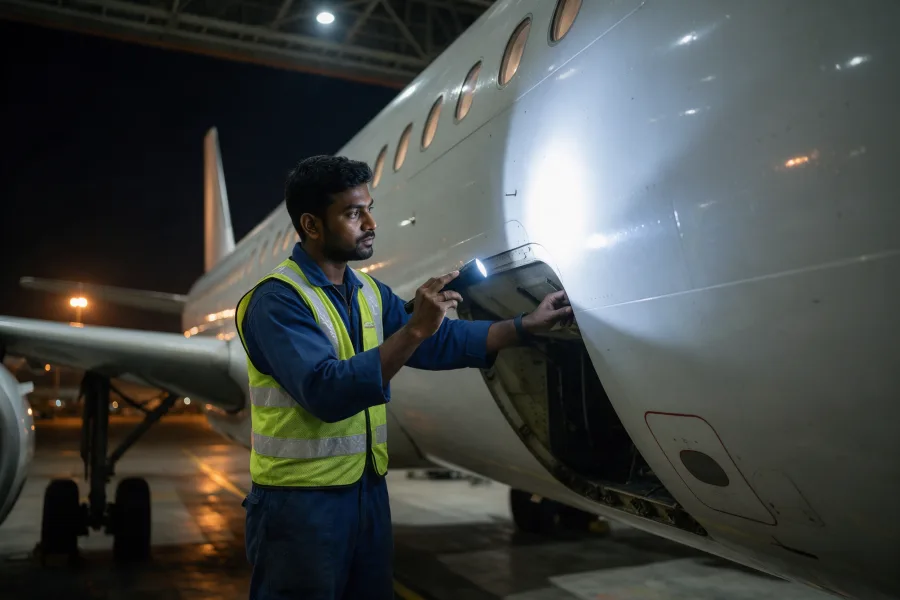
5. Working in Physically Demanding Hangar and Tarmac Conditions
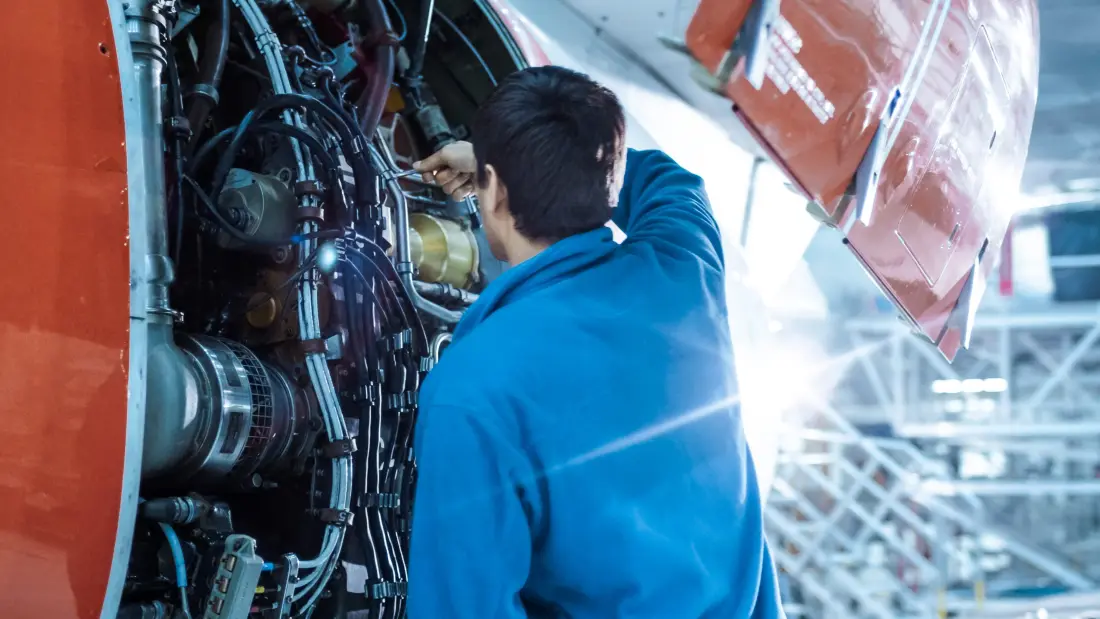
Aircraft maintenance is not office work, and the physical setting is a genuine, ongoing challenge rather than a one-time adjustment. Unlike desk-based roles, the job regularly involves:
- Long hours on hangars and tarmacs, often standing or in awkward positions inside confined aircraft spaces.
- Exposure to extreme weather, since aircraft need attention regardless of heat, cold, or monsoon conditions.
- Heavy tools and equipment, handled with precision even during long shifts.
- Noise and fumes from engines, ground equipment, and de-icing or cleaning chemicals.
Training programs that include real hangar hours from year one, rather than classroom-only theory until the final semester, give students a far more accurate sense of whether they can sustain this environment before they are financially and professionally committed to it.
Hands-On Training Before You Commit
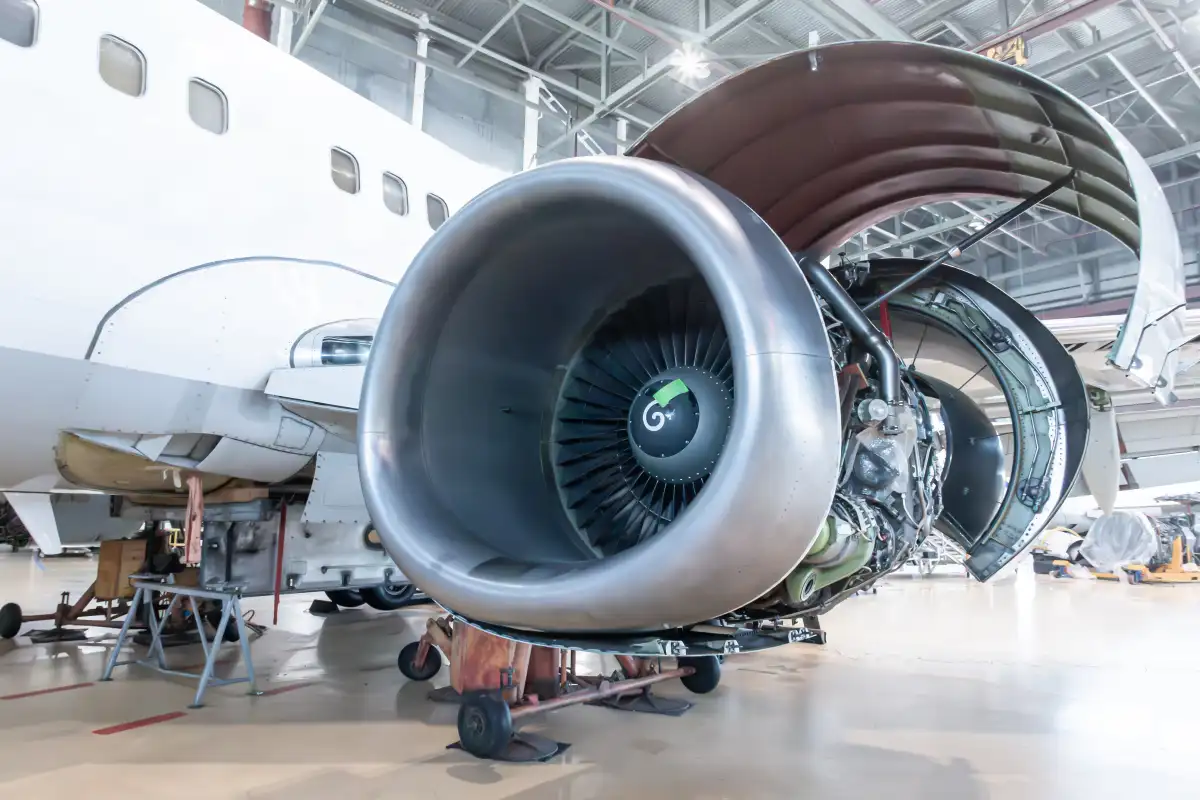
ATH's program blends classroom theory with practical, hands-on training, and OJT puts students on real aircraft before graduation. You find out how you handle noise, heat, heavy tools, and tight spaces while you're still training, not after signing your first contract. Want a feel for it before enrolling? Ask during a free counselling session at the Islamabad or Karachi campus.
6. Keeping Pace with Rapid Technological Change
Aviation technology moves faster than most licensing curricula can update, which forces every AME into continuous learning long after graduation. The areas changing fastest right now include:
- AI-assisted predictive maintenance, which flags likely component failures before they happen rather than waiting for scheduled inspection intervals.
- Composite materials replacing traditional metal airframe structures, requiring different repair techniques entirely.
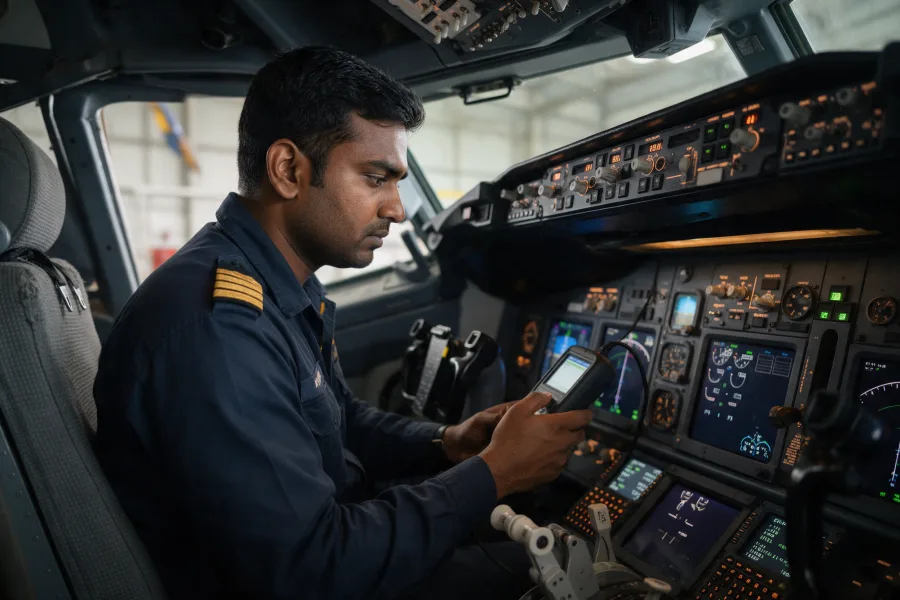
- Modern avionics and fly-by-wire systems, which shift more of the troubleshooting process into software diagnostics.
- Newer propulsion technology, including more electric and hybrid-electric systems entering regional and short-haul aircraft design.
Engineers who treat their license as a floor rather than a ceiling, and who budget time for manufacturer-specific and technology-specific training after licensing, are the ones who stay employable as fleets modernize.
A Syllabus Built Around Modern Aircraft Systems
ATH's curriculum covers the areas where aviation technology is moving fastest: Digital Techniques and electronic instrument systems, Materials and Hardware (including composite materials), avionics structures and systems for B2 students, and gas turbine engines. Adapting to new technology is written into the program's learning outcomes, so continuous learning becomes a habit during training instead of a shock after it.
7. Facing Intense Competition for Entry-Level Roles
The apparent contradiction in this industry is that it faces a well-documented technician shortage overall while entry-level graduates still compete hard for a limited number of first postings. Boeing's 2026 Pilot and Technician Outlook projects 728,000 new maintenance technicians will be needed globally through 2045, with South Asia specifically needing an estimated 48,000 of them. That shortage is concentrated at the licensed and experienced end of the career, not at the unlicensed entry-level end, which is where the real competition sits.
In practice, this means fresh graduates often face a genuine bottleneck at the OJT and first-licensing stage even while the industry as a whole is short-staffed further up the experience ladder. The graduates who move through that bottleneck fastest are usually the ones whose institute already has direct placement relationships with airlines and MROs, rather than those relying on cold applications after graduation.
Graduates Who Stand Out at the Entry Bottleneck
The entry-level queue rewards graduates who already look like engineers on paper. ATH graduates finish with:
- EASA-standard B1/B2 module training, which widens the pool of employers they can apply to beyond domestic postings.
- Supervised OJT experience through partner MROs and airlines, the first thing most recruiters check.
- Practical assignment work to talk about in interviews, since ATH assesses through real-world tasks rather than exams alone.
8. Managing Irregular Shifts and Work-Life Balance
Aviation operates 24 hours a day, seven days a week, and aircraft maintenance schedules follow that rhythm rather than a standard office calendar. AMEs commonly work rotating shifts, overnight duties, weekends, and public holidays, since aircraft need inspection and certification between every flight regardless of the hour.
- Rotational and night shifts are standard, not occasional, especially for line maintenance roles at busy airports.
- Weekend and holiday duty is routine, since flight schedules do not pause for either.
- Family and social planning requires more deliberate scheduling than in a fixed 9-to-5 role.
Engineers who plan for this reality early, rather than discovering it after their first rotation, tend to adapt with far less friction than those who assumed the job would resemble a standard engineering desk role.
No Surprises About the Schedule
ATH can't change how aviation runs, and it doesn't pretend to. What it does is make sure students understand the schedule before their first rotation. The Human Factors module covers fatigue, sleep, and shift work as part of the EASA syllabus, and OJT gives real exposure to maintenance schedules while students are still training. The free counselling session is the place to ask directly what shifts look like, so families can plan around them from the start.
9. Coping with Physical and Mental Strain on the Job
The combination of manual labor, prolonged concentration, and safety-critical decision-making makes physical and mental fatigue a real, ongoing challenge rather than an occasional bad week. Physically, the role involves repeated strain on the back, joints, and hearing from noise exposure. Mentally, the requirement to stay precise and alert during unscheduled defect rectification or tight turnaround windows adds sustained cognitive load.
The workplaces that manage this best build in structured rest between shifts, rotate physically demanding tasks across a team rather than concentrating them on one person, and treat fatigue reporting as a normal part of safety culture rather than a sign of weakness. Employers and training providers who take this seriously from the OJT stage onward tend to produce engineers who last longer in the profession rather than burning out in the first few years.
Human Factors as a Core Skill, Not a Footnote
Human Factors is a mandatory module at ATH for both B1 and B2, and it covers exactly the strain described above: stress, workload, fatigue, time pressure, and the common error traps the industry calls the "Dirty Dozen." Students learn to spot these risks in themselves and their teams early, which is the foundation of the safety culture that keeps engineers in the profession longer.
10. Staying Current with Regulatory and Compliance Changes
Regulatory compliance is not a one-time exam requirement, it is an ongoing professional obligation that follows an AME for their entire career. Regulators continuously issue airworthiness directives, service bulletins, and updated maintenance procedures, and failing to stay current with them can mean penalties, license suspension, or grounded aircraft.
- Airworthiness directives (ADs) that mandate specific inspections or modifications, often on a strict timeline.
- Manufacturer service bulletins that update maintenance procedures for specific components or systems.
- License and category revalidation requirements, which vary by regulator and category.
Engineers who build a habit of tracking these updates as part of their normal workflow, rather than catching up only before an audit, carry far less compliance risk over a full career.
Aviation Legislation Taught as a Working Habit
ATH's Aviation Legislation module, mandatory for both B1 and B2 and examined through its own separate MCQ papers, teaches the regulatory framework certifying staff operate in. A thorough understanding of aviation legislation and safety regulations is one of the program's stated learning outcomes, so tracking directives and bulletins feels like part of the job rather than an audit-week scramble.
11. Financing Training and Surviving Early-Career Salaries
Training to become an AME is a real financial commitment before a single paycheck arrives, and that upfront cost is one of the most concrete barriers aspiring engineers face. A representative 2-year program in Pakistan totals close to the figures below, separate from per-module exam fees and OJT costs that vary by training partner.
| Cost Component | Amount | Details |
|---|---|---|
| Admission Fee | PKR 150,000 | Non-refundable, one-time |
| Semester Fee | PKR 140,000 | Per semester, 6 semesters of 4 months each |
| Total core tuition | PKR 990,000 | Admission fee plus all 6 semester fees |
| EASA Exam Fee | €139 per exam | 16 exams total (~€2,224 overall), paid one module at a time |
| On-the-Job Training (OJT) | Starting from PKR 8,000 | Depends on partner organization and scope |
Once licensed, entry-level pay does not immediately match the size of that investment. According to SalaryExpert's 2026 compensation data for Karachi, entry-level AMEs earn roughly PKR 1.2 million a year, rising to around PKR 1.85 million at the senior level. ATH's own detailed AME salary breakdown for Pakistan shows Gulf-based roles typically paying two to three times the domestic rate once an engineer holds an EASA-recognized license, which is often the realistic path to closing this gap rather than domestic salary growth alone.
Transparent Fees, Spread-Out Payments, and Scholarships
ATH publishes its full fee structure upfront (the same figures in the table above), so there are no hidden costs halfway through the program.
- Semester-by-semester payments of PKR 140,000 instead of one lump sum.
- EASA exam fees paid per module, €139 each, due one month before each exam rather than all at once.
- Scholarships based on merit, financial need, and for students whose parents are government employees (eligibility confirmed during counselling).
- An EASA-standard qualification that points toward the higher-paying Gulf roles covered in the next section.
12. Navigating Global Mobility and License Portability
Many AMEs eventually consider working abroad for better pay and exposure, but licenses are not always directly transferable between countries. A PCAA-licensed engineer moving to Europe, for instance, typically needs the conversion process described earlier in this guide, and even an EASA license does not automatically satisfy every non-EU regulator's requirements without some additional paperwork or experience verification.
- License conversion timelines vary by receiving country and can take months, not weeks.
- Relocation logistics, including visas, housing, and cost of living, add real planning overhead on top of the paperwork.
- Cultural and workplace adaptation is its own adjustment, separate from the technical requirements.
Starting the EASA pathway alongside PCAA training, rather than after graduation, is the single biggest factor in how smoothly this transition goes later. ATH's guide on where a PCAA-licensed AME can work abroad covers the Gulf and UAE route in more detail.
A Qualification Designed to Travel
ATH trains to EASA Part-66 standards from the start, the foundation most international conversion routes build on. The program also carries a 2-year equivalence toward the University of South Wales' BSc (Hons) Aircraft Maintenance Engineering (other UK universities set their own entry requirements), which gives graduates a recognised UK academic route alongside the licence pathway.

13. Finding Mentorship Early in the Career
Young AME graduates often struggle in their first year or two because textbook knowledge and supervised hands-on judgment are genuinely different skills, and not every first employer has the time or structure to bridge that gap. Without a mentor actively walking a new engineer through real fault-finding, documentation habits, and workplace judgment calls, early-career confidence and progression both suffer.
This is one of the clearest places where the choice of training institute matters well past graduation day, since a program with instructors who have genuine field experience, not academic-only backgrounds, tends to produce graduates who arrive at their first job already comfortable asking the right questions.
Instructors With Real Hangar Experience
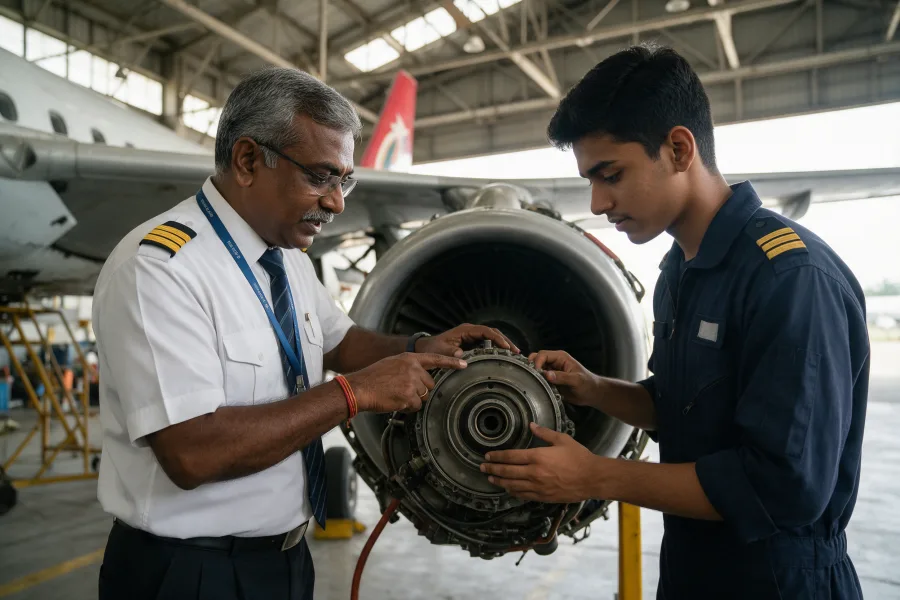
ATH selects instructors for a mix of academic and hands-on industry background, so students pick up fault-finding and documentation habits from people who have actually done the work. Assignment-based assessment means regular feedback on real problems rather than one grade at the end, and supervised OJT carries that guidance onto live aircraft. Graduates reach their first job already used to asking the right questions.
14. Dealing with Unpredictable Career Progression
Unlike roles with a fixed promotion ladder, AME career growth depends on a mix of experience, category upgrades, and organizational need rather than time served alone. Moving from a B1 or B2 license toward Category C certifying staff, for example, requires a minimum of three years of experience as certifying staff on top of the base license, and opportunities to take on base-maintenance sign-off authority depend on an employer actually having that need at the right time.
Engineers who plan an active path (which additional category or specialization to pursue next, and which employers actually offer that route) tend to see far more predictable growth than those who wait for progression to happen on its own.
Clear Routes for the Next Step
ATH gives graduates a planned path instead of leaving progression to chance.
- B1 and B2 modules both in the curriculum, so graduates understand both categories and can plan a category upgrade deliberately.
- A BSc (Hons) Aircraft Engineering Management top-up for supervisory and management-track roles.
- Further study options at universities worldwide, including the University of South Wales equivalence mentioned above.
How Aviation Training Hub Solves These Challenges at a Glance
This section reflects Aviation Training Hub's (ATH) own program methodology, not a third-party finding. Every challenge above traces back to one of four gaps: licensing, practical readiness, career economics, or ongoing support. ATH's AME program is structured to close each gap before graduation instead of leaving students to discover it on the job.
| Gap | Challenges | What ATH Does About It |
|---|---|---|
| Licensing and regulation | 1, 2, 10 | EASA Part-66 B1/B2 modules from semester one, exams sat one module at a time, and Aviation Legislation as a core module |
| Practical readiness | 3, 4, 5, 9 | Hands-on training, assignment-based assessment, a mandatory Human Factors module, and supervised OJT with partner MROs and airlines |
| Career economics | 7, 11, 12, 14 | Published fees, per-semester and per-exam payments, scholarships, the University of South Wales equivalence, and a BSc (Hons) top-up route |
| Pace and support | 6, 8, 13 | A modern-systems syllabus, honest counselling about shift work, and instructors with industry experience |
Despite These Challenges, Is an AME Career Still Worth It?
Yes, for most candidates the career remains worth pursuing, provided they go in with realistic expectations rather than a purely idealized view of aviation work. The same Boeing outlook that highlights entry-level competition also confirms a genuine 20-year shortage of licensed technicians, and Pakistan's own fleet growth adds a specific domestic pull: following a $645 million (Rs 135 billion for a 75% stake) privatization deal completed in early 2026, Pakistan International Airlines plans to grow its fleet from 18 aircraft to 38 by 2029, according to the U.S. government's trade market intelligence on Pakistan aviation. Every additional aircraft entering service needs a certifying signature behind it. ATH's own deeper look at whether AME is worth it in Pakistan walks through the full return-on-investment picture.
Before enrolling anywhere, use this short checklist to weigh the challenges above against a specific program:
- Verify PCAA and/or EASA Part-147 approval directly with the institute, not from marketing claims alone.
- Confirm in-house EASA exams so Challenge 1 doesn't also mean international travel for every module.
- Ask specifically about OJT partners and how many hours are genuinely supervised on live aircraft.
- Meet the instructors and ask about their industry background, not just academic credentials.
- Get the full fee breakdown in writing, including exam and OJT costs, not just tuition.
Conclusion
These are the biggest challenges Aircraft Maintenance Engineers face today: PCAA/EASA licensing, genuine OJT access, shift work, financial planning, and unpredictable growth, among the others covered above. They are consistent across the AME profession worldwide, but Pakistan's specific mix of privatization-driven fleet growth and a global technician shortage tilts the underlying trade-off in a new graduate's favor. The engineers who navigate these challenges most smoothly are rarely the ones who avoided them, they are the ones who chose a training path built to solve each one directly. That is the standard ATH's AME program is built around, from the first module exam to the first shift in a working hangar.
Frequently Asked Questions
Common questions about the challenges Aircraft Maintenance Engineers face
Most licensed engineers point to the combination of legal responsibility and irregular shifts rather than any one factor alone. Signing a Certificate of Release to Service under time pressure, on a rotating schedule, is what makes the role demanding in practice.
It can be, particularly around unscheduled defect rectification and tight turnaround windows, since maintenance-related factors are linked to roughly 18% of aircraft accidents in published human factors research. Structured rest, checklists, and a strong safety culture are what keep that stress manageable long-term.
Yes. Airworthiness directives, service bulletins, and new aircraft technology update continuously, so ongoing training is a career-long requirement, not something that ends at licensing.
Not automatically. A PCAA license alone covers Pakistan-registered aircraft domestically. Working abroad usually requires an EASA Part-66 conversion process or an equivalent step recognized by the destination country's regulator.
Core tuition for a 2-year program runs close to PKR 990,000 (admission fee plus six semester fees), plus €139 per EASA module exam (16 exams total) and OJT costs starting from PKR 8,000, which vary by training partner.
Yes, at the licensed and experienced end of the career. Boeing's 2026 outlook projects 728,000 new maintenance technicians needed globally through 2045, with 48,000 needed in South Asia alone, even though entry-level graduates still compete for a limited number of first postings.
The gap between training cost and entry-level pay. Entry-level salaries in Karachi run around PKR 1.2 million a year, which takes time to fully offset roughly PKR 990,000 in core tuition plus exam and OJT fees.
Choose an institute with confirmed OJT partnerships with real MROs or airlines before enrolling, and ask specifically how many supervised hours on live aircraft the program guarantees, rather than assuming any AME program includes genuine practical access.
Yes. Aviation operates 24/7, so rotational shifts, night duties, weekends, and public holidays are a standard part of the role, especially in line maintenance at busy airports.
For most candidates, yes. A genuine global technician shortage combined with Pakistan's fleet expansion, including PIA's planned growth from 18 to 38 aircraft by 2029, points to sustained demand for engineers who go in prepared for the challenges rather than surprised by them.