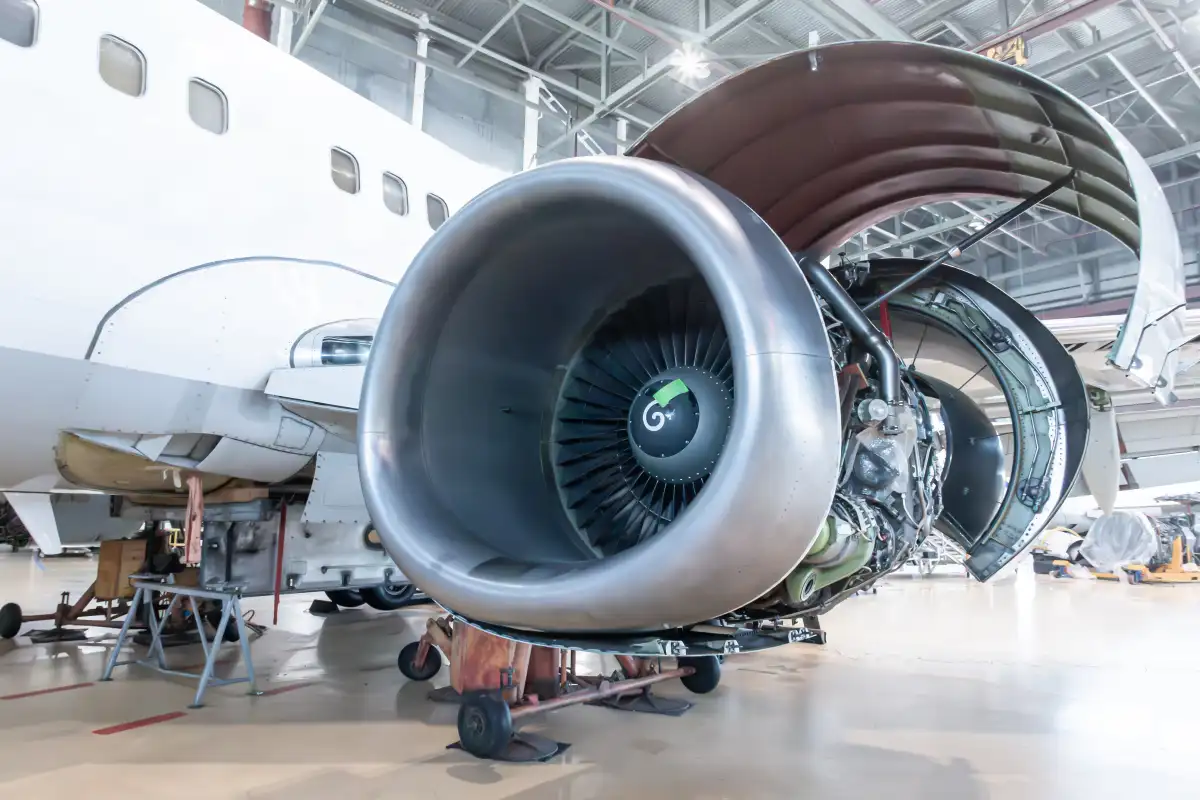
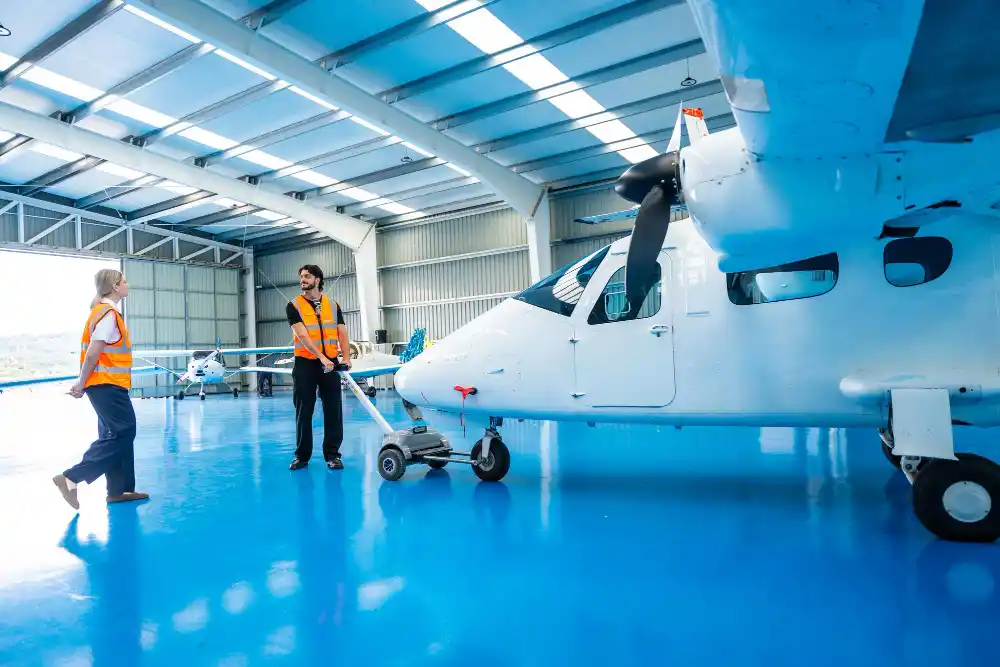
The highest-paying aviation careers in Pakistan are aviation management and airline piloting, with reported 2026 averages of PKR 2,003,200 and PKR 1,703,200 a year respectively. Aircraft Maintenance Engineering ranks mid-table on published salary data but near the top on return per rupee spent on training, because a licensed AME reaches senior pay for roughly one-ninth of what a commercial pilot licence costs.
That gap between what a career pays and what it costs to enter is the part almost every "highest-paying aviation jobs" list leaves out. Salary tables treat a PKR 8.9 million pilot training bill and a PKR 990,000 engineering programme as if they were the same starting line. They are not, and for most families in Pakistan weighing an aviation career, the difference decides which door is actually open.
This guide ranks the aviation careers that genuinely pay in Pakistan using 2026 salary data, then does the harder part: it shows what each one costs to enter, how long it takes to reach real money, and exactly where Aviation Training Hub (ATH) sees Aircraft Maintenance Engineering land once licensing and international portability are counted. Every figure below is sourced, and where the public data is unreliable, this guide says so instead of repeating it.
The Highest-Paying Aviation Careers in Pakistan, Ranked
Aviation managers and airline pilots lead the published salary rankings in Pakistan for 2026, followed by operations controllers, aeronautical engineers and air traffic controllers. The table below uses a single consistent 2026 dataset so the roles are actually comparable, rather than mixing sources that measure different things.
| Rank | Aviation Career | Average Annual Salary (PKR) | Reported Range (PKR) | vs National Average |
|---|---|---|---|---|
| 1 | Aviation / Airport Manager | 2,003,200 | 962,900 to 3,144,700 | 104% above |
| 2 | Airline Pilot (Captain / First Officer) | 1,703,200 | 903,500 to 2,593,900 | 73% above |
| 3 | Chief Pilot | 1,703,200 | 868,400 to 2,629,100 | 73% above |
| 4 | Aviation Operations Controller | 1,145,100 | 525,700 to 1,825,000 | 16% above |
| 5 | Aeronautical Engineer | 1,048,600 | 535,800 to 1,621,400 | 7% above |
| 6 | Air Traffic Controller | 1,031,200 | 475,700 to 1,645,600 | 5% above |
| 7 | Airline Cabin Crew | 942,700 | 462,300 to 1,476,700 | 4% below |
| 8 | Aircraft Maintenance Technician (unlicensed) | 464,400 | 232,900 to 719,100 | 53% below |
All figures are 2026 averages from WorldSalaries' Pakistan dataset, measured against a national average salary of PKR 983,100. Two things about this table matter more than the ordering itself.
- Aircraft Maintenance Engineer is missing. Not because it pays badly, but because most public salary datasets have no clean AME category at all. The nearest entry, "aircraft maintenance technician" at PKR 464,400, describes unlicensed hands-on work, which is a different job from a licence-holding certifying engineer.
- The ranges matter more than the averages. An aviation manager averaging PKR 2,003,200 has a floor of PKR 962,900. A career's average tells you what the middle of the market looks like; the range tells you what your first job and your tenth year look like.
The next section explains why AME keeps slipping out of tables like this one, and what the real number looks like when you correct for it.
Why AME Ranks Lower on Salary Tables Than It Does in Real Pay
AME under-ranks on public salary data because the datasets are too small and the job title is too loosely defined, not because licensed engineers earn less. The clearest illustration is PayScale's Pakistan page for the role, which reports an average base salary of PKR 112,222 per year from a sample of just 14 salary profiles, with a 10th percentile of PKR 25,000 and a 90th percentile of PKR 5,000,000.
A dataset where the top decile earns two hundred times the bottom decile is not describing one job. It is averaging apprentices, unlicensed technicians, workshop staff and fully licensed certifying engineers into a single line.
You can check the raw spread yourself on the PayScale AME Pakistan page, last updated September 2025. Three specific problems break AME salary reporting in Pakistan:
- Title collision. "AME," "aircraft technician," "aircraft mechanic" and "aeronautical engineer" get used interchangeably by employers and by survey respondents, even though they sit at different licence levels and pay bands. ATH covers this distinction in detail in its guide to AME vs aeronautical engineering in Pakistan.
- Sample size. Fourteen self-reported profiles cannot describe a national market. Datasets covering pilots and managers draw on far larger pools, which is partly why those roles look more stable on paper.
- Licence blindness. No mainstream salary aggregator separates a licence holder from a non-licence holder. In maintenance, that single distinction is the largest pay variable there is, larger than city, larger than employer, larger than years served.
ATH's own market tracking, published in its Aircraft Maintenance Engineer salary guide for Pakistan, puts a fully licensed entry-level AME at roughly PKR 1.1 to 1.3 million a year, mid-career at PKR 1.4 to 1.6 million, and senior certifying staff between PKR 1.7 million and PKR 3.8 million or more. Slot the licensed mid-career figure into the ranked table above and AME lands around fourth place. Slot the senior certifying figure in and it clears every role on the list except the most senior management posts.
What Each High-Paying Aviation Career Actually Pays
Averages hide the shape of a career. What follows is what each of the highest-paying aviation careers in Pakistan looks like from the first pay slip to the tenth year, and what specifically moves the number inside each one.
Aviation and Airport Manager
Aviation management is the highest-paid aviation career in Pakistan on published averages, at PKR 2,003,200 a year, with a reported ceiling near PKR 3,144,700. The floor of PKR 962,900 is the important half of that: management roles are rarely entry points, so a graduate typically spends five to eight years in operations, ground handling or commercial roles first.
- What moves the pay: size of the station or airport, whether the employer is a carrier or a handling company, and profit and loss responsibility.
- The catch: the number of senior management seats in Pakistani aviation is small and turnover is slow.
Airline Pilot
Airline pilots average PKR 1,703,200 a year in Pakistan with a reported range of PKR 903,500 to PKR 2,593,900, and captains on widebody international routes sit well above that band. Pilot pay is also the most structured in aviation: it moves with hours flown, type rating, seat (first officer or captain) and route category rather than with negotiation.
- What moves the pay: total flight hours, type rating on the aircraft the airline actually operates, and whether the roster is domestic or international.
- The catch: the entry cost. An integrated CPL with instrument rating at Karachi Aero Club is quoted at PKR 8,957,797 including tax, before medical, CAA licensing and examination fees. Hour-building and type rating costs come after that.
Aircraft Maintenance Engineer (Licensed)
A licensed AME in Pakistan earns roughly PKR 1.1 to 1.3 million a year on entry and PKR 1.7 to 3.8 million or more as senior certifying staff, which places the role between air traffic control and airline piloting on the national table. The licence is the entire story. An unlicensed technician doing similar hands-on work averages PKR 464,400.
The certifying authority matters as much as the licence itself. A Part-66 licence recognised across European and Gulf operators travels; a purely local certificate does not.
- What moves the pay: licence category (A, B1, B2 or C), type ratings held, and whether you hold certifying authority to release an aircraft back to service.
- The catch: the exams are genuinely hard and the licence takes years of combined study and documented experience to complete.
If you are choosing between the two engineering licence tracks, ATH's breakdown of B1 vs B2 licence categories covers which one suits mechanical versus avionics work, and what each unlocks in terms of certifying rights.
Air Traffic Controller
Air traffic controllers in Pakistan average PKR 1,031,200 a year, roughly 5% above the national average, with a reported range of PKR 475,700 to PKR 1,645,600. Recruitment runs almost entirely through the civil aviation authority, which makes the career stable but the entry point narrow and intake-dependent.
- What moves the pay: rating held (aerodrome, approach, area), unit traffic volume, and public sector grade progression.
- The catch: selection is competitive and intakes are irregular. You cannot simply train and apply the way you can with an engineering licence.
Aviation Operations Controller
Operations controllers and flight dispatchers average PKR 1,145,100 a year, 16% above the national average, with a range of PKR 525,700 to PKR 1,825,000. This is one of the few genuinely well-paid aviation careers with a short training runway, usually measured in months rather than years.
- What moves the pay: dispatch licensing, fleet complexity, and whether the role covers international flight planning.
- The catch: shift work, permanent night rotations, and a ceiling that arrives faster than in licensed technical roles.
Aeronautical Engineer
Aeronautical engineers average PKR 1,048,600 a year in Pakistan, only 7% above the national average, with a range of PKR 535,800 to PKR 1,621,400. This surprises people, because a four-year engineering degree feels like it should out-earn a two-year licensed programme.
It often does not, and the reason is structural. Aeronautical engineering is a design and analysis discipline, and Pakistan has limited aircraft design and manufacturing industry to absorb those graduates. Maintenance, by contrast, is demanded wherever aircraft fly.
- What moves the pay: employer type (defence, research, MRO), postgraduate qualifications, and specialisation.
- The catch: a narrow local job market relative to the number of graduates produced each year.
Airline Cabin Crew
Cabin crew in Pakistan average PKR 942,700 a year, marginally below the national average, ranging from PKR 462,300 to PKR 1,476,700. Layover allowances and international rostering can lift real take-home meaningfully above base, which is why reported figures vary so much.
- What moves the pay: international versus domestic routes, seniority, purser or senior crew promotion, and per diem structure.
- The catch: the shortest training runway of any aviation career, but also the flattest long-term salary curve.
ATH compares this path directly against engineering and management in its guide to choosing between AME, cabin crew and airport management.
Aircraft Maintenance Technician (Unlicensed)
Unlicensed maintenance technicians average PKR 464,400 a year, 53% below Pakistan's national average, with a ceiling of PKR 719,100. This is the single most important number on this page, because it is what the same work pays without a licence attached to it.
- What moves the pay: almost nothing, until a licence is obtained.
- The catch: many people enter aviation maintenance through this route intending to "get licensed later," and never do, because the exams require sustained study alongside full-time shift work.
What Each Aviation Career Costs to Enter, and How Fast It Pays Back
Entry cost changes the ranking more than salary does. A career paying PKR 1.7 million a year that costs PKR 8.9 million to enter is a slower financial proposition than one paying PKR 1.2 million that costs PKR 990,000, and for most Pakistani households it is also a fundamentally different decision.
| Career Path | Typical Training Cost | Time to First Licensed Job | Realistic First-Year Pay (PKR) | Rough Payback Period |
|---|---|---|---|---|
| Airline Pilot (integrated CPL + IR) | PKR 8,957,797 plus medical, CAA and exam fees | 1 to 2 years training, then hour-building and type rating | Variable; often low or unpaid during hour-building | Long, commonly a decade or more |
| Aircraft Maintenance Engineer (EASA Part-66 route) | PKR 990,000 tuition plus €139 per exam across 16 exams, OJT from PKR 8,000 | 2 years of coursework, exams sat progressively, plus documented experience | 1,100,000 to 1,300,000 once licensed | Short, commonly 1 to 2 years of licensed earnings |
| Aviation / Airport Management | Degree-level fees, varies widely by institution | 3 to 4 years, plus 5 to 8 years to reach management | Entry operations pay, well below the management average | Medium, back-loaded |
| Air Traffic Controller | Largely employer-funded after selection | Dependent on intake cycles | Around 475,700 at the reported floor | Short if selected, indefinite if not |
| Cabin Crew | Low; much training is airline-provided | Weeks to months | 462,300 to 942,700 | Very short, but with a low ceiling |
ATH's Aircraft Maintenance Engineering fee figures above are the published programme costs: a non-refundable admission fee of PKR 150,000, a semester fee of PKR 140,000 across six semesters of four months each, EASA exams at €139 each across 16 exams payable one month before each sitting, and on-the-job training starting from PKR 8,000 depending on the partner and scope. The full breakdown sits on the ATH fee structure page.
Note that the PKR and euro figures are separate and should stay that way. Tuition is paid in rupees on a semester schedule; exam fees are paid in euros, exam by exam, over the length of the programme rather than upfront.
Where AME Ranks Once You Add the International Route
AME becomes the highest-earning realistic aviation career for most Pakistani entrants once international mobility is counted, because a recognised maintenance licence is portable in a way most aviation qualifications are not. A Pakistani commercial pilot licence generally requires conversion and fresh type rating investment to fly abroad. A recognised Part-66 maintenance licence is understood directly by operators and Part-145 organisations across Europe and the Gulf.
The EASA Part-66 licence categories define exactly what each licence holder may certify, and that shared definition is what makes the qualification travel. Category A covers minor scheduled line maintenance and simple defect rectification. Categories B1 and B2 cover mechanical and avionics certification respectively, and Category C covers base maintenance release at aircraft level.
ATH's salary tracking puts Gulf entry-level licensed engineer packages at roughly USD 3,800 to 4,900 per month, and UAE packages in the region of AED 140,000 to 180,000 annually and tax free, typically alongside accommodation, transport and travel benefits. Full detail sits in ATH's AME salary guide. Set against a Pakistan-based average of PKR 1.1 to 1.6 million, the licence rather than the job title is what produces the jump.
- Portable: Part-66 maintenance licences, type ratings recognised by the operator, documented Part-145 experience.
- Semi-portable: flight crew licences, subject to conversion, medicals and re-rating in the destination state.
- Largely local: air traffic control ratings and public-sector aviation management grades, which are tied to the employing authority.
Which Aviation Careers Are Actually Hiring
Maintenance is the largest single hiring category in global aviation, ahead of both pilots and cabin crew in absolute technician numbers. Boeing's Pilot and Technician Outlook forecasts demand for 728,000 new maintenance technicians worldwide between 2026 and 2045, against 674,000 new pilots and 1,023,000 new cabin crew, for a total of more than 2.4 million new aviation personnel.
Two features of that forecast matter for anyone in Pakistan reading a salary table:
- Technician demand exceeds pilot demand by roughly 54,000 positions over the period, so the better-paid-on-paper career is also the harder one to be hired into.
- Cabin crew demand is the largest by volume, which is exactly why the role sits below the national average on pay. Supply follows demand, and easy entry keeps wages flat.
Domestically, the picture is one of a fleet being rebuilt rather than one already large. According to US International Trade Administration market intelligence published in February 2026, Pakistan International Airlines operated 18 aircraft post-privatisation with a projected fleet of 38 aircraft by 2029, expanding from more than 30 destinations to over 40. Every additional airframe carries a fixed, non-negotiable maintenance requirement, and those requirements are met by licensed engineers, not by additional cabin crew.
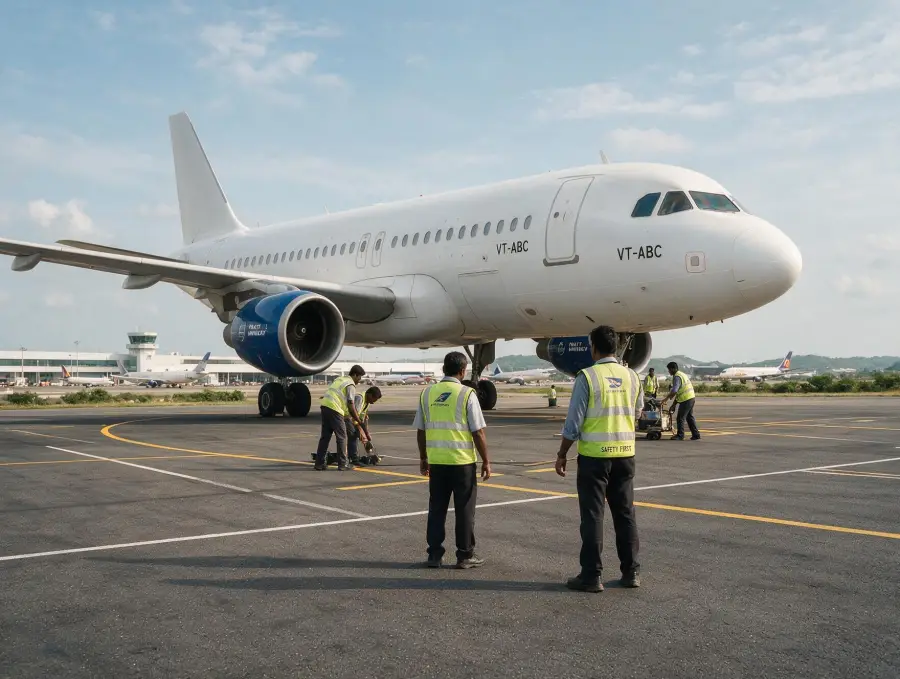
Which Aviation Career Grows Fastest After Year One?
Licensed technical careers have the steepest salary curves in Pakistani aviation, because each additional licence category, type rating or certifying authority produces a discrete pay step rather than an incremental raise. Careers with no licensing ladder flatten early.
| Career | Entry to Senior Multiple | What Triggers Each Step Up | Curve Shape |
|---|---|---|---|
| Aircraft Maintenance Engineer | Roughly 3x on ATH's tracked ranges | Licence category, type ratings, certifying authority | Steep and step-shaped |
| Airline Pilot | Roughly 2.9x across the reported range | Hours, type rating, upgrade to captain | Steep but slow to start |
| Aviation / Airport Manager | Roughly 3.3x across the reported range | Scope of responsibility, station size | Back-loaded |
| Air Traffic Controller | Roughly 3.5x across the reported range | Ratings and public-sector grade progression | Gradual and predictable |
| Cabin Crew | Roughly 3.2x across the reported range | Seniority and purser promotion | Flat, with a low absolute ceiling |
The multiples look similar across careers, which is precisely the trap. A 3.2x multiple starting from PKR 462,300 ends at PKR 1,476,700. A 3x multiple starting from PKR 1,100,000 ends above PKR 3,000,000. Percentage growth flatters low-paying careers; absolute figures do not.
How Aviation Training Hub Structures Training Around the Higher-Paying Licensed Roles
At Aviation Training Hub, the programme is built around a single observation about Pakistani aviation pay: the licence, not the years served, is what moves a maintenance salary. That shapes how the two-year Aircraft Maintenance Engineering programme is sequenced.
Students study across six semesters of four months each, working through the EASA Part-66 module set that includes Mathematics (M1), Physics (M2) and Electrical Fundamentals (M3) in the earlier stages, then Aviation Legislation (M10), Aeroplane Aerodynamics (M11) and Gas Turbines (M15) as the syllabus specialises. Exams are sat progressively rather than banked to the end, so a student is accumulating verified module passes throughout the programme rather than facing all 16 at once.
The programme is aimed at Part-66 AML Categories B1 and B2 specifically, because those are the categories that carry certifying rights and therefore the pay steps described earlier on this page. Entry sits at Matric with a minimum of 50% in Mathematics and Physics, or FSc Pre-Medical or Pre-Engineering with at least 50%, which keeps the route open to students who would be priced out of a commercial pilot pathway entirely.
On-the-job training is arranged through ATH's industry partner network, which includes Etihad Airways, Serene Air, Askari Aviation and MRO Gulf, because documented Part-145 experience is the part of the licence that cannot be studied for. Students who want to add a management layer on top of the licence continue to the BSc (Hons) Aircraft Engineering Management top-up, which is the route into the engineering-management roles that sit at the top of the salary table.
ATH does not publish placement or outcome claims it cannot evidence. What it can state plainly is the structure above and the reasoning behind it: sequence the exams, secure the documented experience, target the categories that carry certifying authority.
Common Mistakes People Make Comparing Aviation Salaries in Pakistan
Most bad aviation career decisions in Pakistan trace back to five specific reading errors, not to bad luck. Each one is avoidable in about ten minutes of checking.
- Reading an average without its sample size. PayScale's AME figure of PKR 112,222 rests on 14 profiles with a 200x spread between percentiles. An average from a sample that small is a curiosity, not a benchmark.
- Comparing a licensed role to an unlicensed one by job title. "Aircraft maintenance technician" at PKR 464,400 and a licensed certifying engineer are two different careers that share a work environment. Titles are not licences.
- Ignoring entry cost entirely. A career is not high-paying if the qualification costs nine times more than an alternative that reaches a comparable band. Cost and salary belong in the same table, which is why they appear in one above.
- Assuming international pay applies from day one. Gulf and European packages are real, but they generally require the licence, type ratings and documented experience first. They are a year-three outcome, not a year-one one.
- Treating percentage growth as if it were money. A 3.2x multiple on a small base still lands below a 3x multiple on a large one. Compare the end figures, not the multipliers.
ATH addresses the underlying question behind most of these directly in its analysis of whether Aircraft Maintenance Engineering is worth it in Pakistan.
How to Choose Between the Highest-Paying Aviation Careers
The right aviation career in Pakistan is decided by four constraints, in this order: what you can fund, how long you can go without earning, whether you want to work abroad, and whether you can pass a technical exam sequence. Salary is the fifth question, not the first.
Work through the checklist below honestly and it usually eliminates three of the five paths within a few minutes.
- Can your household fund PKR 9 million or more without borrowing against a house? If not, the commercial pilot route is not realistically open, and the honest thing is to remove it from the list rather than plan around it.
- Can you go two years with no income while studying? The licensed engineering route needs that runway. Cabin crew and ground operations do not, but they cap out lower.
- Do you want the option to work abroad? If yes, prioritise a qualification that is recognised outside Pakistan. Maintenance licences travel best; air traffic control ratings travel worst.
- Are you comfortable with a long exam sequence? Sixteen EASA module exams is a real commitment. If exam-heavy study is a genuine weakness, operations and dispatch roles reach respectable pay with far less of it.
- Do you prefer a licence ladder or a promotion ladder? Licences give you control over your own progression. Management progression depends on a seat opening above you.
So Where Does AME Actually Rank?
Aircraft Maintenance Engineering ranks third on realistic mid-career pay in Pakistan, behind aviation management and airline piloting, and first on return relative to training cost. That combination is what makes it the strongest value proposition on this page for most entrants, and it holds up under three separate tests.
| Test | Winner | Why |
|---|---|---|
| Highest published average salary | Aviation / Airport Manager | PKR 2,003,200 a year, but rarely an entry-level role |
| Highest realistic senior earnings | Airline Pilot | Structured pay that scales with hours and command |
| Best return on training cost | Aircraft Maintenance Engineer | PKR 990,000 tuition against PKR 1.1 to 3.8 million licensed earnings |
| Most portable internationally | Aircraft Maintenance Engineer | Part-66 licence recognised by Gulf and European operators |
| Fastest to a first pay slip | Cabin Crew | Weeks of training, but the lowest long-term ceiling |
If the question is which aviation career in Pakistan pays the most in absolute terms, the answer is aviation management or airline piloting, and both of those come with entry barriers most candidates will not clear. If the question is which of the highest-paying aviation careers in Pakistan is realistically reachable, portable, and priced within range of an ordinary household, AME ranks first, and the gap is not close.
One honest caveat. None of these figures are guarantees. Salary data for Pakistani aviation is thin, self-reported and volatile, employer by employer. Treat every number on this page as a well-sourced indication of the market rather than a promise, and verify current pay directly with employers before committing to any pathway.
Want to know where you would realistically land on this table? Speak to the Aviation Training Hub team about the EASA Part-66 Aircraft Maintenance Engineering programme and map out your route to a licensed role.
Book Your Free Counselling Session