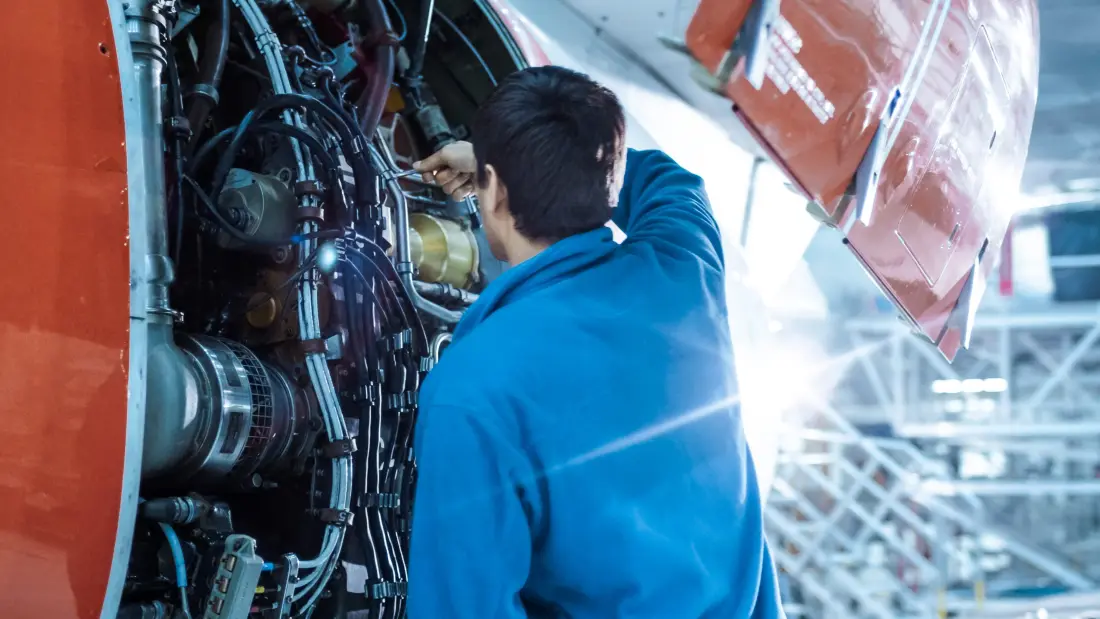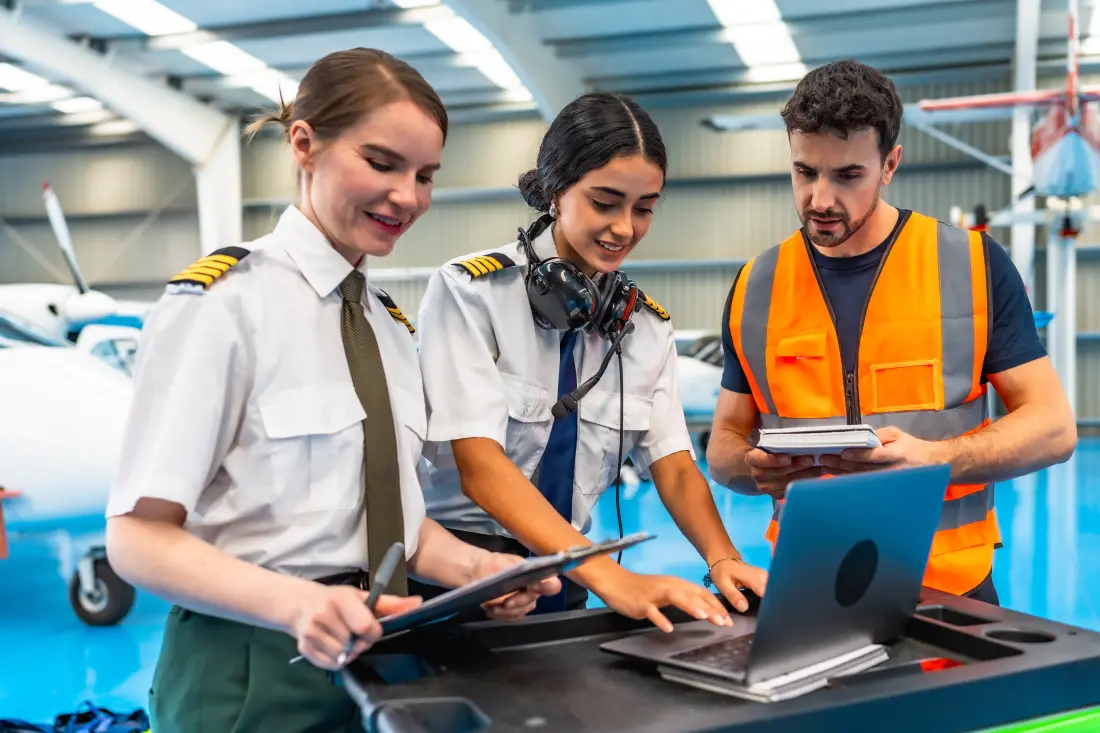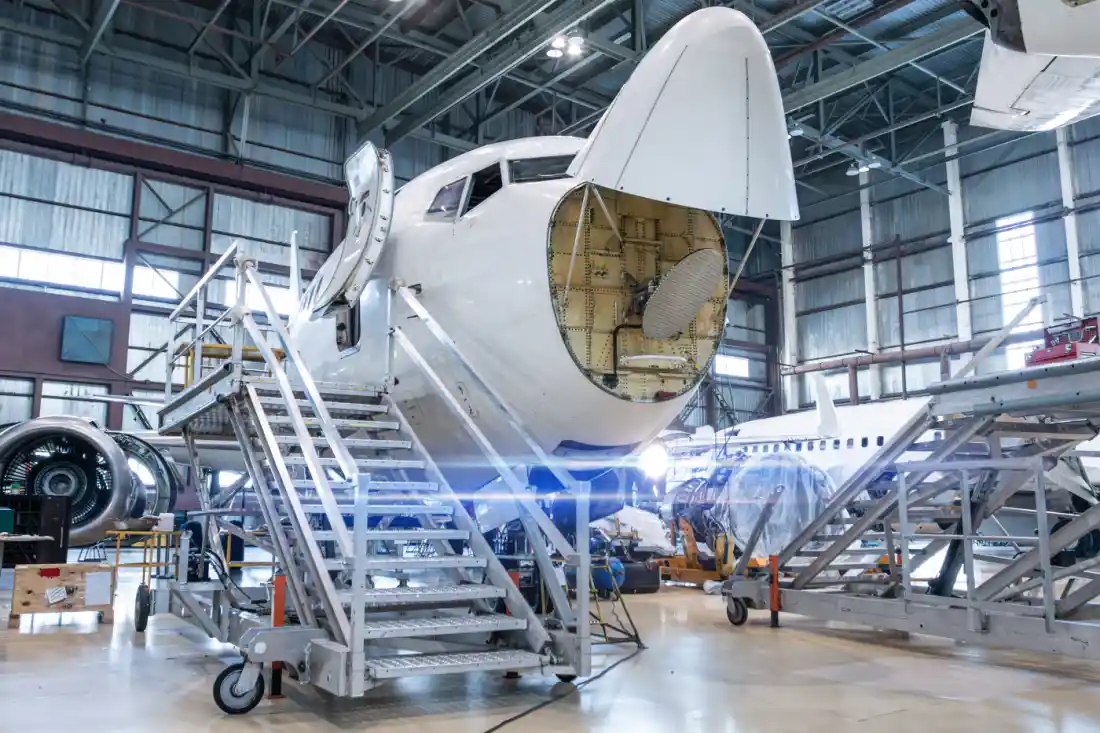
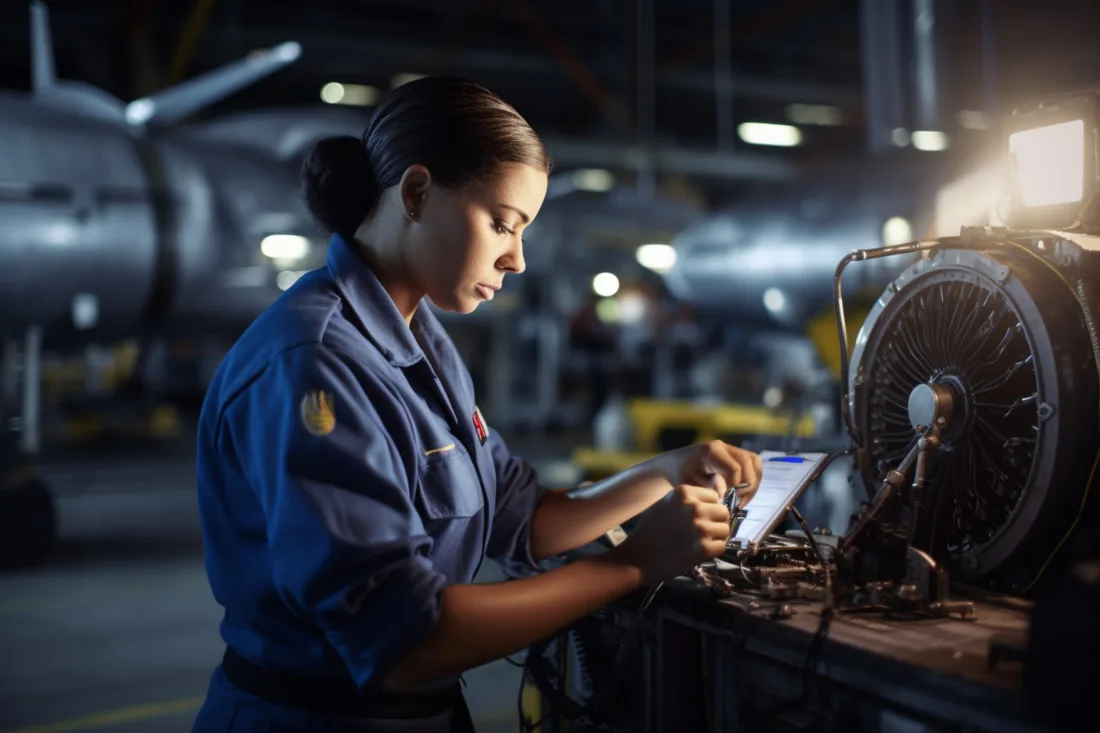
An AME career for women in Pakistan is a realistic, licence-based path. The Pakistan Civil Aviation Authority (PCAA) tests every candidate on the same modules, whatever their gender. Women are still a small minority, about 3% of licensed maintenance staff worldwide, so the field has room for you, but you should plan for shift work and a mostly male workplace.
Demand is not the problem. Boeing's 2026 Pilot and Technician Outlook projects 728,000 new maintenance technicians worldwide through 2045, including 48,000 in South Asia. This guide from Aviation Training Hub (ATH) covers what the work involves, who qualifies, what training costs, what the job pays, and the challenges women should know about before applying.
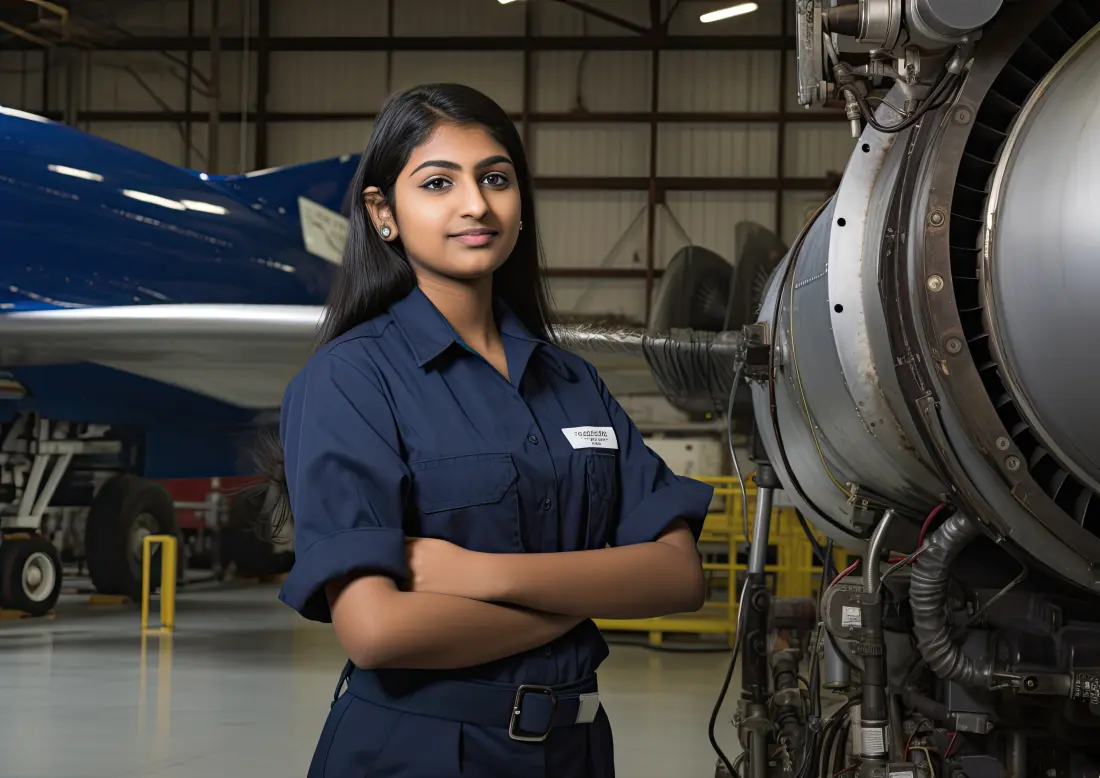
What Is Aircraft Maintenance Engineering?
Aircraft maintenance engineering is the licensed profession of inspecting, repairing and certifying aircraft so they are safe to fly. An Aircraft Maintenance Engineer (AME) is the person whose signature releases an aircraft back into service after maintenance. That responsibility is why the licence matters more than any job title.
It is not the same as aeronautical engineering. An aeronautical engineer designs aircraft and systems, usually through a four-year degree. An AME works on aircraft that already exist, and our guide to AME vs aeronautical engineering in Pakistan compares the two in detail. Day to day, an AME's work usually falls into five jobs:
- Inspect airframes, engines and systems against approved maintenance programmes.
- Troubleshoot defects reported by pilots or found during checks.
- Repair and replace components using approved data and tooling.
- Certify the work and release the aircraft to service (B1 and B2 licence holders).
- Document every task so the aircraft's records stand up to an audit.
For a fuller picture, read what an aircraft maintenance engineer actually does each day.
Is an AME Career for Women a Realistic Choice in Pakistan?
Yes. The licensing system tests knowledge and practical competence, not gender, and employers worldwide are short of licensed technicians. What makes the choice harder is not ability. It is that few women have gone before you, so role models, mentors and workplace habits are still catching up.
The numbers show both the gap and the opening:
| Measure | Figure | Source |
|---|---|---|
| Women among licensed maintenance engineers and technicians, worldwide (2021) | 3.0%, up from 2.7% in 2016 | ICAO via Uniting Aviation |
| Women among licensed maintenance staff, Asia Pacific | 4.4% (highest of any region) | ICAO via Uniting Aviation |
| Women among US aircraft maintenance technicians | 2.6% | Women in Aviation International, via AviationPros |
| New maintenance technicians needed worldwide, 2026 to 2045 | 728,000 | Boeing Pilot and Technician Outlook 2026 |
| New maintenance technicians needed in South Asia | 48,000 | Boeing Pilot and Technician Outlook 2026 |
Read those figures together. Women hold a tiny share of a profession that needs hundreds of thousands of new people. Asia Pacific, our region, already has the highest share of women in licensed maintenance roles, which may suggest the barriers are cultural and informational more than technical.
Pakistan has its own examples. In an Arab News report from Karachi, aircraft maintenance technician Subhana Anwer described the job as demanding, with heavy study and late-night shifts, while colleague Komal Khalid said the belief that maintenance is men's work is becoming outdated.
What Career Opportunities Do Women Have After AME?
A licensed AME can work in airline line maintenance, base maintenance hangars, avionics shops, technical records, quality assurance, component repair, training and regulation. Most of these roles are open to anyone holding the licence, and several do not involve heavy physical work.
| Role | What you do | Typical employer |
|---|---|---|
| Line maintenance engineer | Turnaround checks, defect fixes, certification between flights | Airlines, ground handlers at airports |
| Base maintenance engineer | Heavy checks and overhauls inside a hangar | Airline hangars, maintenance organisations |
| Avionics engineer (B2) | Electrical, instrument and navigation systems | Airlines, avionics workshops |
| Technical records and planning | Maintenance schedules, airworthiness records, parts tracking | Airlines, operators, maintenance organisations |
| Quality and safety auditor | Audits work against regulations and company procedures | Airlines, regulators, approved organisations |
| Component workshop technician | Bench testing and repair of removed parts | Repair stations, airlines |
| Instructor | Teaches module theory and practical skills | Approved training institutes |
Our guide to the top employers hiring aircraft maintenance engineers in Pakistan lists who recruits locally, and the guide for PCAA-licensed AMEs working abroad covers the Gulf and beyond.

What Skills Does a Successful AME Career Need?
A successful AME combines solid maths and physics, careful hands-on skill and disciplined paperwork. None of these is gender-specific, and all of them can be trained. Employers value the habit of following procedure exactly more than raw strength.
- Maths and physics fundamentals. Every Part-66 module builds on them, and entry requires at least 50% in both subjects.
- Technical English. Maintenance manuals, task cards and exams are in English, so reading precisely matters.
- Attention to procedure. You follow approved data step by step, and shortcuts are how accidents start.
- Hand skills and tool control. Safe use of torque tools, test equipment and lifting aids is examined in practical training.
- Clear documentation. If it is not recorded, it was not done, and the record is what the regulator reads.
- Communication and teamwork. Hangar shifts hand over work between people, so clear handovers prevent errors.
Our detailed list of skills needed to become an aircraft maintenance engineer goes deeper on each one.
What Is the Work Environment Like for an AME?
The work environment is a hangar or an airport apron: noisy, shift-based, and run to strict safety rules. Personal protective equipment (PPE) such as ear protection, safety shoes and gloves is standard for everyone. How demanding your day feels depends heavily on whether you work line or base maintenance.
| Line maintenance | Base maintenance | |
|---|---|---|
| Where | Airport apron, gate, small line stations | Hangar, usually at a main base |
| Typical work | Quick checks and defect fixes between flights | Planned heavy checks, inspections, modifications |
| Pressure | Time pressure from departure schedules | Long task lists and team coordination |
| Hours | Rotating shifts, nights and weekends are common | More predictable shifts, though nights occur |
| Weather | Exposed to heat, rain and wind | Mostly indoors |
In Pakistan's summers, apron work in extreme heat is a real consideration. Many women who prefer predictable hours move toward hangar, avionics, planning or quality roles. Our comparison of line maintenance vs base maintenance shows a typical day in each.
What Are the Eligibility Requirements and Licensing Steps in Pakistan?
To start AME training in Pakistan you need Matric or FSc (Pre-Engineering or Pre-Medical) with at least 50% in Mathematics and Physics. A-Level and American High School Diploma holders generally need an IBCC equivalence certificate first. After training, the licence itself comes from the PCAA, not from the institute.
- Meet the entry criteria. At least 50% in Maths and Physics, plus an entry test and interview at ATH.
- Join a PCAA-approved or EASA Part-147 approved institute. Approval decides whether your training counts toward the licence.
- Pass the module exams. The Part-66 B1 and B2 syllabus is assessed in 16 module exams, taken progressively. The EASA Part-66 FAQ explains the licence categories.
- Complete verified on-the-job training (OJT). You log practical work on real aircraft with an approved organisation.
- Get a Class II medical certificate. It is required before the licence is issued.
- Apply to the PCAA. The application is made directly to the Pakistan Civil Aviation Authority under ANO-066.
The full process, with categories A, B1, B2, B3 and C, is in our guide to the AME licence in Pakistan: PCAA requirements, exams and eligibility. Not sure which category suits you? Read B1 vs B2: which aircraft maintenance category to choose.

How Much Does AME Training Cost?
AME training at ATH costs PKR 990,000 in tuition over two years, plus EASA exam fees of €139 per exam across 16 exams. The fee schedule is published and has no separate rate by gender. Cost and exam stress are why some students finish coursework but never get licensed, according to AviationPros, so plan the full amount before you enrol.
| Fee | Amount | Details |
|---|---|---|
| Admission fee | PKR 150,000 | One-time, non-refundable |
| Semester fee | PKR 140,000 | 6 semesters of 4 months each (PKR 840,000 in total) |
| Total tuition | PKR 990,000 | Admission plus six semesters |
| EASA exam fee | €139 per exam | Paid one month before each exam; 16 exams, about €2,224 in total |
| On-the-job training (OJT) | From PKR 8,000 | Depends on the partner organisation and scope |
Exam fees are paid separately and exam by exam, so they do not need to be found upfront. The current schedule is on ATH's fee structure page, and the AME course duration, fees and eligibility guide explains each line.
What Does an AME Earn in Pakistan?
A licensed AME in Pakistan typically earns about PKR 1.1 to 1.3 million a year at entry level, rising with licence category, employer and experience. Pay is tied to grade and responsibility, not to the gender of the person holding the licence, though no employer can promise a figure.
| Experience level | Monthly (PKR) | Annual (PKR) |
|---|---|---|
| Entry (1 to 3 years) | About 90,000 to 110,000 | About 1.1 to 1.3 million |
| Mid (3 to 8 years) | About 115,000 to 135,000 | About 1.4 to 1.6 million |
| Senior (8+ years) | About 140,000 to 320,000+ | About 1.7 to 3.8 million+ |
These are ATH's directional estimates built from salary-aggregator data, not an official pay scale, and trainee stipends during OJT are much lower. Check live job postings before you decide. The full breakdown, including Gulf pay, is in our aircraft maintenance engineer salary in Pakistan for 2026 guide.
What Does Career Growth Look Like After AME?
Growth in AME follows the licence: you start as a trainee, earn B1 or B2 certifying rights, add aircraft type endorsements, then move into supervision, planning, quality or management. Each step needs documented experience, so progress is steady rather than fast.
- Trainee or OJT technician. You work under supervision and log tasks.
- Licensed engineer (B1 or B2). You hold certifying privileges on aircraft types you are endorsed for.
- Type-rated certifying engineer. Type courses on specific aircraft widen the fleets you can sign off.
- Team lead or shift supervisor. You coordinate crews and release decisions.
- Specialist or manager. Planning, quality, technical services, training or Category C base maintenance roles.
For the market picture, see our aircraft maintenance engineer job outlook for 2026 and beyond.
How Does AME Compare With Other Aviation Careers for Women?
AME is the most hands-on and licence-driven aviation career, with the lowest public visibility and the least passenger contact. Pilots and cabin crew are far more visible, while airport management is more office-based. The right choice depends on whether you want to work with machines, people or systems.
| Career | Entry route | Where you work | Main trade-off |
|---|---|---|---|
| Aircraft maintenance engineer | 2-year approved course plus PCAA licence | Hangars, aprons, workshops | Shift work and a male-dominated floor |
| Commercial pilot | Flight training and licences | Cockpit, airline schedules | High training cost; women are about 7% of pilots worldwide, per Women in Aviation International |
| Cabin crew | Airline recruitment and safety training | In the aircraft cabin | Irregular roster, time away from home |
| Airport management | Degree or diploma in aviation management | Terminals and operations offices | Less technical, fewer licensed roles |
| Aeronautical engineer | 4-year engineering degree | Design offices, manufacturers | Designs aircraft but does not certify them |
Our guides compare AME vs pilot and AME vs cabin crew vs airport management in more depth. The wider market is mapped in aviation scope in Pakistan: 6 career paths and real salaries.

What Challenges Do Women Face in Aircraft Maintenance?
The main challenges are shift work, a minority position at work, the cost and stress of the exam route, and family expectations around hours and travel. None of them is a reason you cannot succeed, but all of them deserve a plan before you start.
| Challenge | What it looks like | What helps |
|---|---|---|
| Shift and night work | Heavy checks often happen when aircraft are grounded overnight | Ask employers about rosters; consider hangar, planning or avionics roles |
| Minority at work | Few women on the hangar floor, fewer in leadership | Find a mentor early; join a professional network |
| Exam cost and stress | Some graduates never get licensed because of test anxiety and expense, according to AviationPros | Budget for all 16 exams; practise past questions; sit exams as each module ends |
| Physical demands | Confined spaces, standing, tool handling | Training in lifting aids and team lifts; many tasks are inspection and troubleshooting |
| Low visibility of the career | Maintenance happens out of sight, so schools and families rarely suggest it | Visit a campus; speak to working engineers before deciding |
| Relocation | Jobs cluster at major airports and hangars | Check where your target employer is based before choosing a specialism |
The same AviationPros report notes the average US mechanic is 53 while female mechanics average 45, so the profession is ageing and employers are actively looking for new entrants. For the wider list, read the biggest challenges aircraft maintenance engineers face.
How Does Aviation Training Hub Structure AME Training? (ATH's Perspective)
This section describes ATH's own programme structure. It is not a third-party finding. ATH's Aircraft Maintenance Engineering programme runs for two years full time across six semesters of four months. It is delivered on campus in Islamabad and Karachi and covers the Part-66 B1 and B2 modules.
| Feature | How ATH runs it |
|---|---|
| Duration | 2 years, 6 semesters of 4 months |
| Campuses | Islamabad (Quaid Avenue, Gulrez Phase 2) and Karachi (Karam Tower, Gulistan-e-Johar) |
| Intakes | January, April, July, September and November |
| Entry criteria | Matric or FSc with at least 50% in Mathematics and Physics; the criteria are the same for every applicant |
| Assessment | Assignment-based coursework, with EASA module exams sat progressively |
| Practical training | OJT with partner organisations, running alongside coursework |
We publish criteria, fees and module plans openly because families deserve to check them before visiting. If you are a parent or a student comparing institutes, put these questions to any AME school, including ours:
- Is the institute PCAA approved or EASA Part-147 approved, and can you see the approval?
- Which organisations host OJT, and how are placements arranged?
- What is the total cost, including all exam fees and OJT?
- What are class timings, and how far is the campus from public transport?
- Can you speak to current students or graduates before paying a fee?
The step-by-step route is also set out in our step-by-step guide to becoming an aircraft maintenance engineer in Pakistan, and the timeline in how long it takes to get an aircraft maintenance engineering licence.

How Can Women Build a Strong AME Career?
Build the career in order: fundamentals first, an approved institute second, documented practical experience third, and a mentor throughout. Treating the licence as a project with milestones helps you avoid the delays that catch many students.
- Strengthen maths and physics before day one. Every module assumes them.
- Choose an approved institute. Unapproved training may not count toward your PCAA licence.
- Start your logbook from the first practical session. Records are rebuilt badly later.
- Sit module exams as each module ends. Knowledge fades quickly, and each failed attempt costs the fee again.
- Pick B1 or B2 deliberately. B1 leans mechanical, B2 leans avionics and electrical.
- Find a mentor. A working engineer can explain shift life, employers and interview questions better than any brochure.
- Plan type training. Employers sometimes sponsor type courses for engineers who are already licensed.

What Is the Future of Aircraft Maintenance for Women?
The future is favourable for new entrants. Boeing expects 728,000 new technicians worldwide through 2045 and 48,000 in South Asia alone, while modern fleets add digital records and predictive maintenance tools. That shifts part of the job from lifting and fitting toward data, diagnostics and documentation.
For women, this matters in two ways. A growing shortage gives employers a practical reason to recruit beyond their traditional pool. And a more digital workflow widens the range of roles, from technical records to reliability analysis. No outcome is guaranteed, but the direction of demand is clear. Our pillar guide on aviation scope in Pakistan tracks the local market, and our Aircraft Maintenance Engineering page lists the current programme and intake dates.
What Mistakes Do Women Make When Choosing an AME Career?
- Assuming a certificate equals a licence. Only the PCAA licence lets you certify aircraft.
- Choosing an unapproved institute because it is cheaper. Check approval before paying admission.
- Ignoring the exam budget. Sixteen exams at €139 each add up to about €2,224.
- Underestimating shifts. Ask about rosters during the interview stage, not after you are hired.
- Choosing only on salary. Fit with the work, location and hours decides whether you stay in the profession.
Last updated: October 2026. Figures reviewed against the sources linked in this guide.
Conclusion: Is an AME Career for Women Worth It?
An AME career for women in Pakistan is worth serious consideration if you want a licensed, technical profession with strong global demand. The route is the same for everyone: meet the entry criteria, train at an approved institute, pass the module exams, log practical experience and earn your PCAA licence. Women remain about 3% of licensed maintenance staff worldwide, which is a gap and an opening at the same time.
If you are weighing it up, visit a campus, speak to working engineers and compare institutes using the checklist above. When you are ready, our admissions team can walk you through eligibility, fees and intake dates for Islamabad and Karachi.
Frequently Asked Questions
Common questions about an AME career for women in Pakistan
Yes, for women who enjoy technical work and can manage shift work. The PCAA licence is the same for everyone, and Boeing projects 48,000 new technicians will be needed in South Asia through 2045. Women are still only about 3% of licensed maintenance staff worldwide.
Yes. Nothing in the entry criteria or licensing rules restricts the profession by gender. You need Matric or FSc with at least 50% in Maths and Physics, approved training, passing module exams and a PCAA licence.
Matric or FSc (Pre-Engineering or Pre-Medical) with at least 50% in Mathematics and Physics. A-Level and American High School Diploma holders generally need an IBCC equivalence certificate first. ATH also runs an entry test and interview.
Often, but not always. Line maintenance and heavy checks commonly involve nights and weekends. Roles in technical records, planning, quality and workshops usually have more predictable hours. Ask any employer about rosters before accepting an offer.
About four years on the standard route: roughly 24 months of approved training and module exams, followed by up to two years of documented practical experience. Timelines vary by route and employer.
Tuition is PKR 990,000 (PKR 150,000 admission plus six semesters at PKR 140,000). EASA exams cost €139 each across 16 exams, about €2,224 in total, and OJT starts from PKR 8,000. The same fees apply to every student.
Choose B1 if you prefer airframes, engines and mechanical systems. Choose B2 if you prefer avionics, electrical and instrument systems. Both lead to certifying roles, and the B1 vs B2 guide on athorg.uk compares them.
Less than most people expect. Heavy tasks use jacks, cranes and team lifts, and much of the work is inspection, troubleshooting and documentation. Confined spaces and long standing hours are real, so ask about the physical side during practical training.
Possibly. The PCAA licence under ANO-066 follows the EASA Part-66 syllabus, but each country's authority and employer decides recognition. Check the target country's requirements, and read ATH's guide on working abroad as a PCAA-licensed AME.